Elisha Kent Kane
The Love-Life of Dr. Kane
By Lauren Maddox
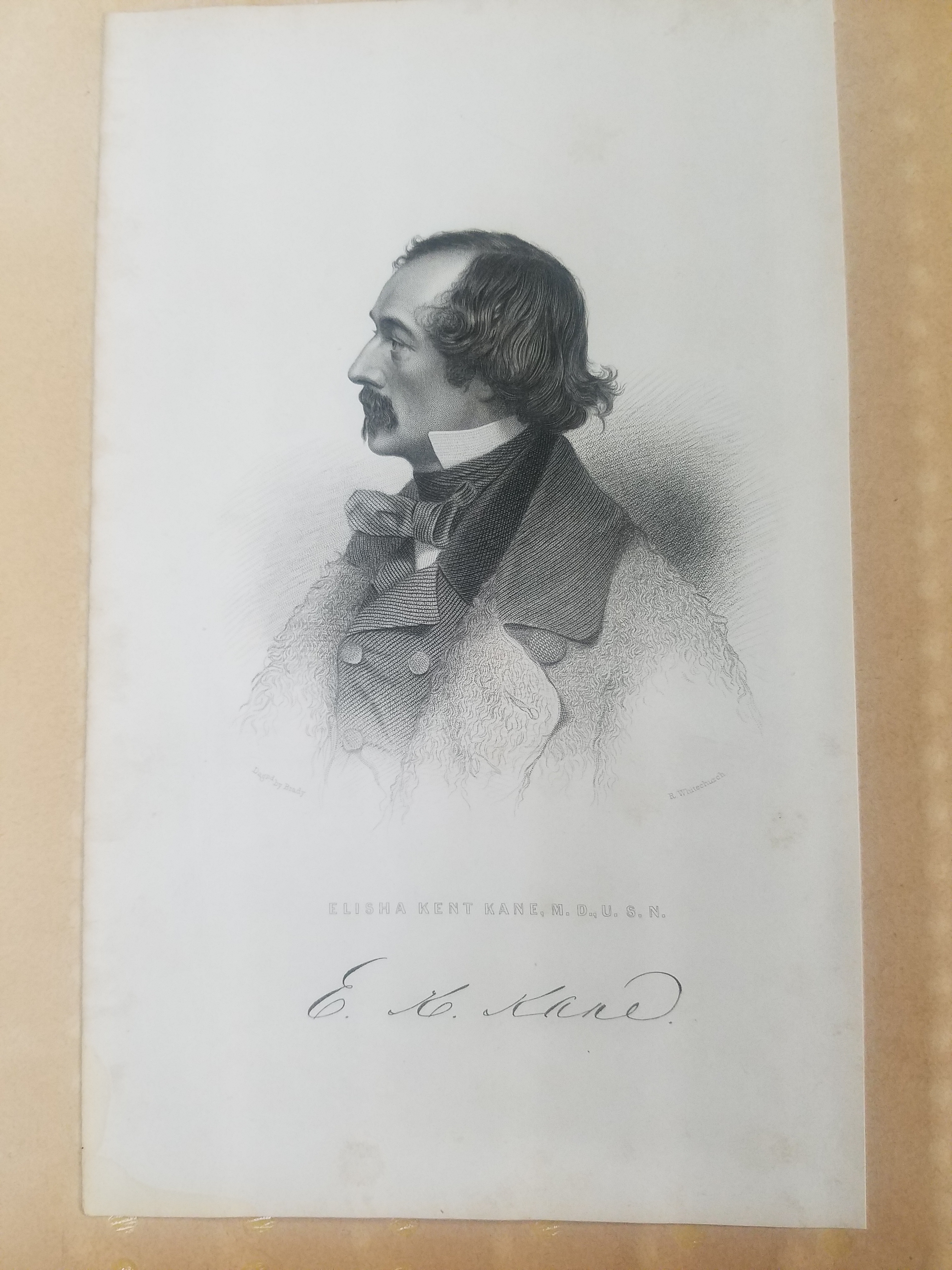
Click the link to see this Portrait of Kane from the Edmund Mills Scrapbooks in the AGSL Archives
Elisha Kent Kane, who appeared in last week’s post about the lost Franklin expedition, lived a life of adventure, and his harrowing escape from the arctic became an iconic expedition in the era of romance and arctic exploration. The accomplished explorer died tragically after his return from the second Grinnell expedition; extreme climate and malnutrition had wreaked havoc on his health. He died just two years later in Havana, Cuba, where he had traveled with his family in the hopes of recovering in the warmer climate. His life of intrigue and excitement didn’t end in the arctic, however; apparently Kane also had a titillating love life. After his death in 1857, a rather scandalous legal dispute began: Margaret Fox, claiming to be Kane’s secret wife, took Kane’s family to court for withholding her inheritance.
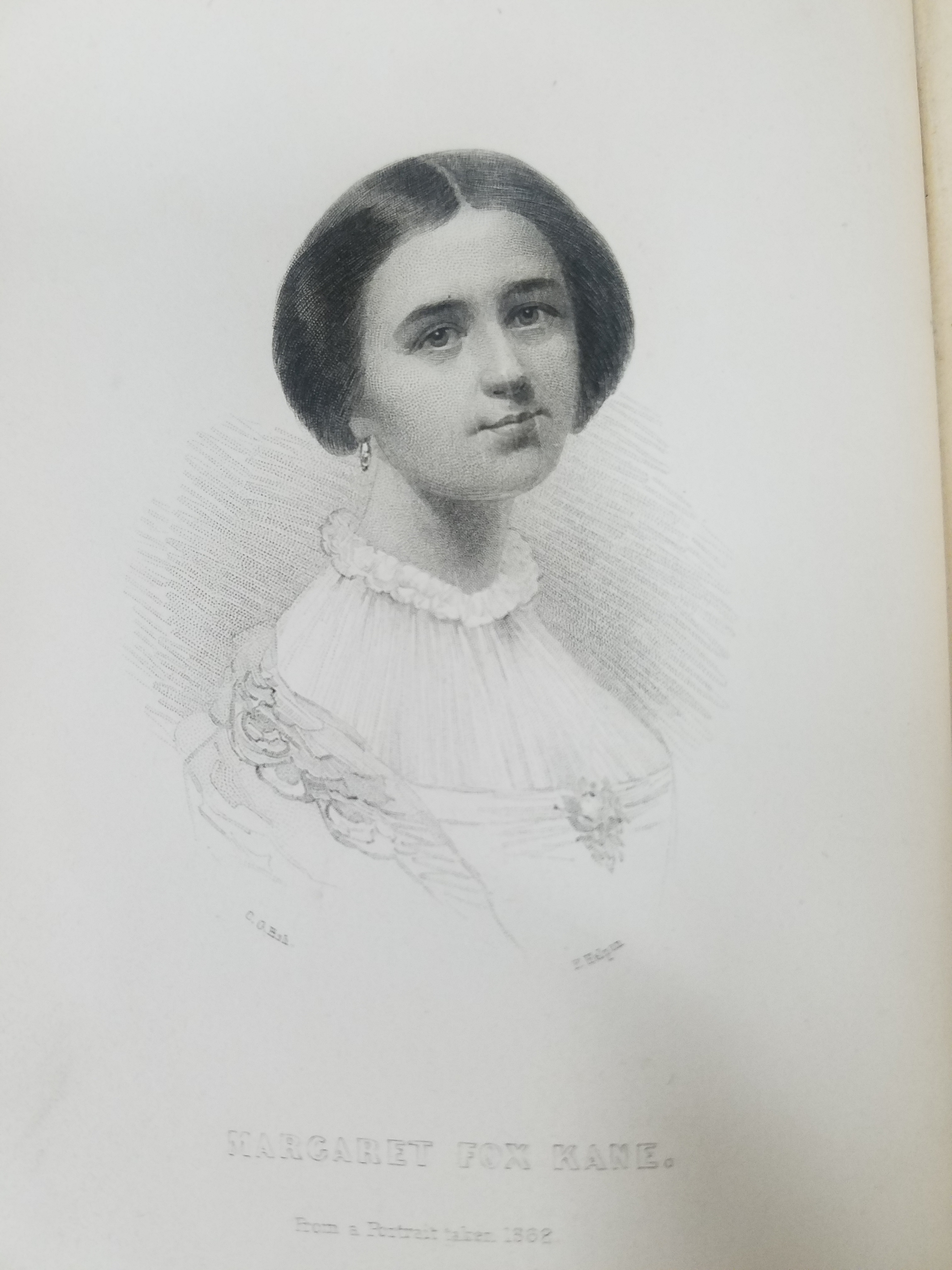
Click the link to see the Portrait of Margaret from The Love-Life of Dr. Kane
Margaret Fox was the middlest of the famous spiritualist Fox sisters. Margaret and her younger sister became famous in 1848 for supposedly communing with the entity that haunted their house in Hydesville, New York. The girls rocketed to fame and began giving demonstrations of their spiritual powers the next year. By 1850, the girls were holding public seances in New York. She and her younger sister continued their journey to spiritualist stardom under the management of their oldest sister Leah; the trio would spend years enjoying success as the centerpieces of seances attended by the well-to-do and famous.
The AGS Library has in its rare collections a first edition copy of Margaret’s tell-all book The Love-Life of Dr. Kane, in which she claims to have secretly married Kane and publishes their personal correspondence to prove it. The book was gifted to the AGSL in 1922 by Edmund Mills from his collection of arctic books. The book, published in 1866, is prefaced and introduced by an unnamed author sympathetic to Margaret’s position in her legal battle with the Kane family and includes a memoir giving a narrative telling of the illicit love-match.
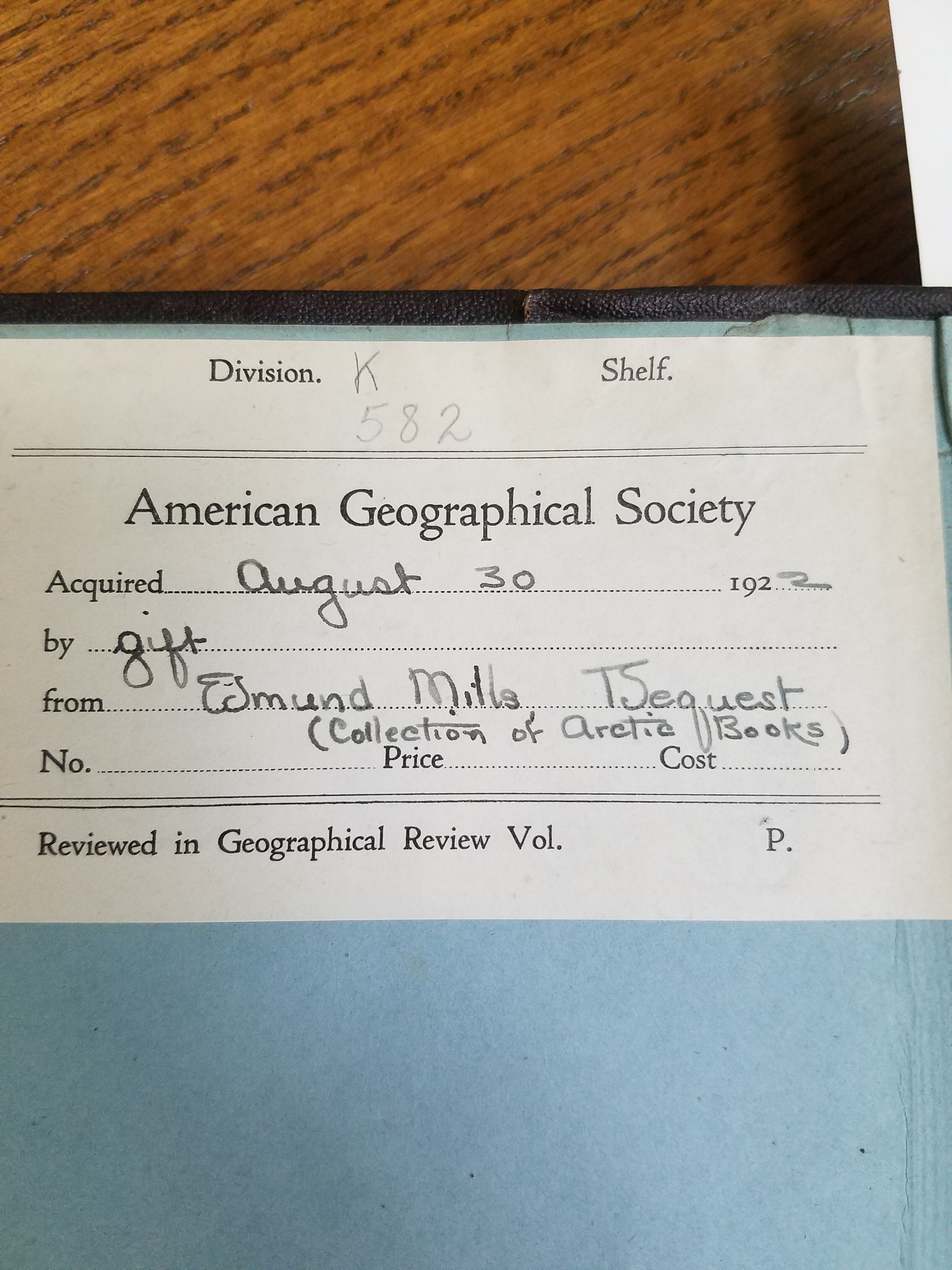
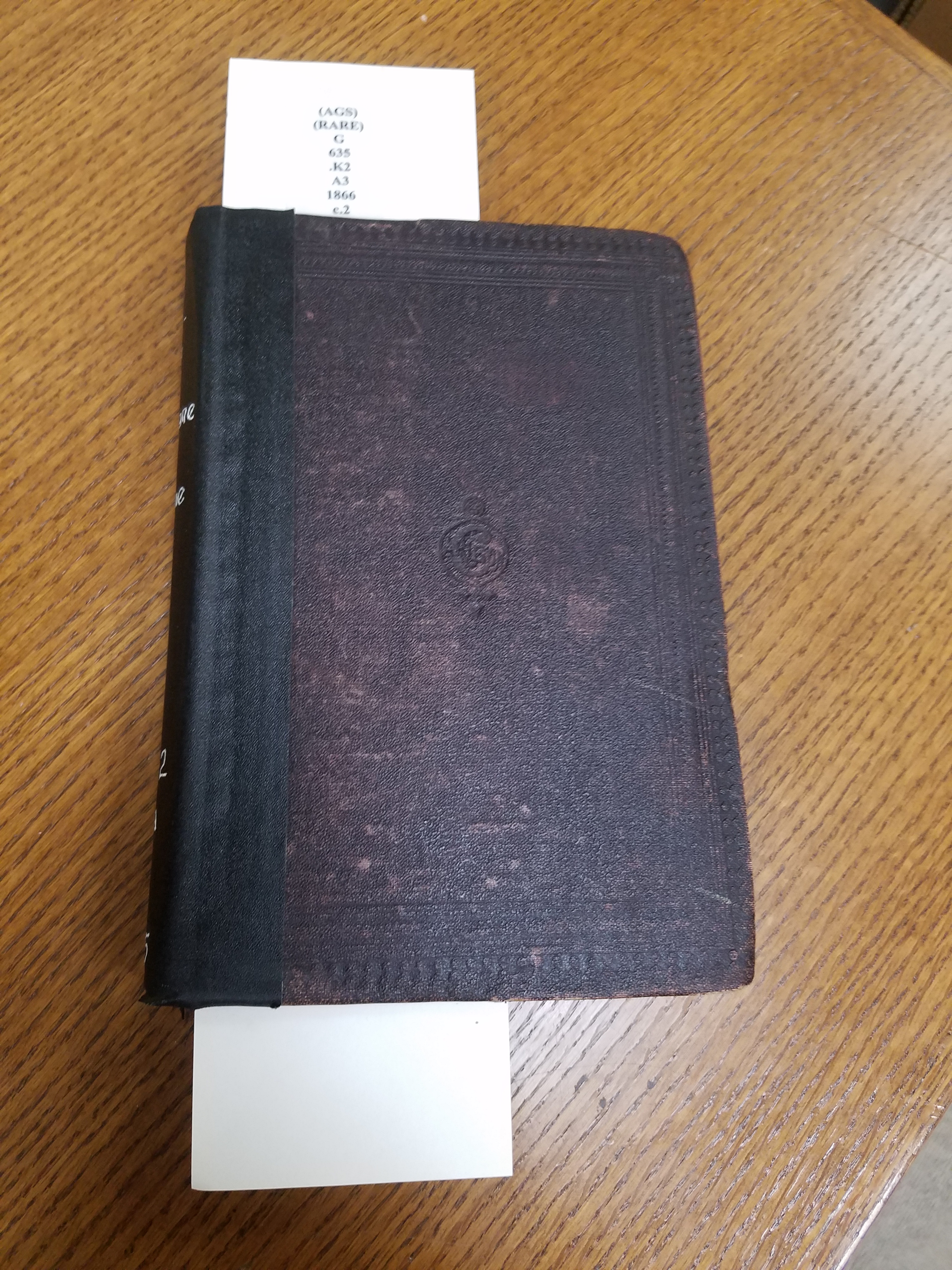
The preface first apologizes for the indecency of publishing love letters and “that which was never intended to meet the public eye,” but goes on to explain that the publication of these private letters, considered too “sacred” by Margaret to publish previously, will save her reputation from the slander she suffered by keeping them private. According to the preface, Kane had left a small inheritance to Margaret as his wife. Their marriage was vehemently denied by the surviving Kane family, and any mention of it in the press was quickly disparaged. Margaret, widowed and without an income, was forced confront the Kane family about the sum left to her by her late husband. After several disputes, several of which involved Elisha Kane’s brother breaking financial agreements, Margaret decided to publish the letters.
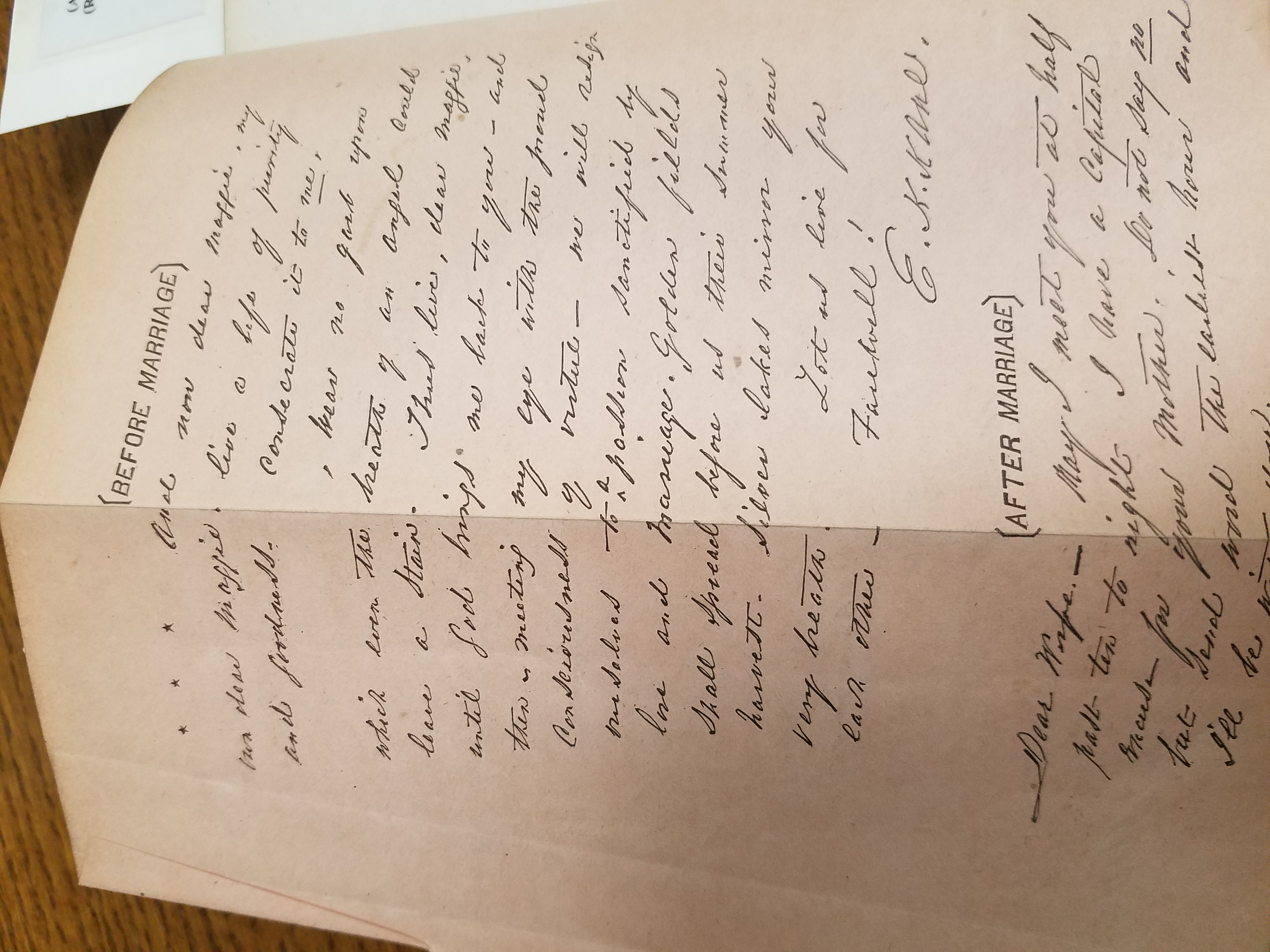
Fold out copy of letters in Kane’s handwriting tucked between the preface and introduction 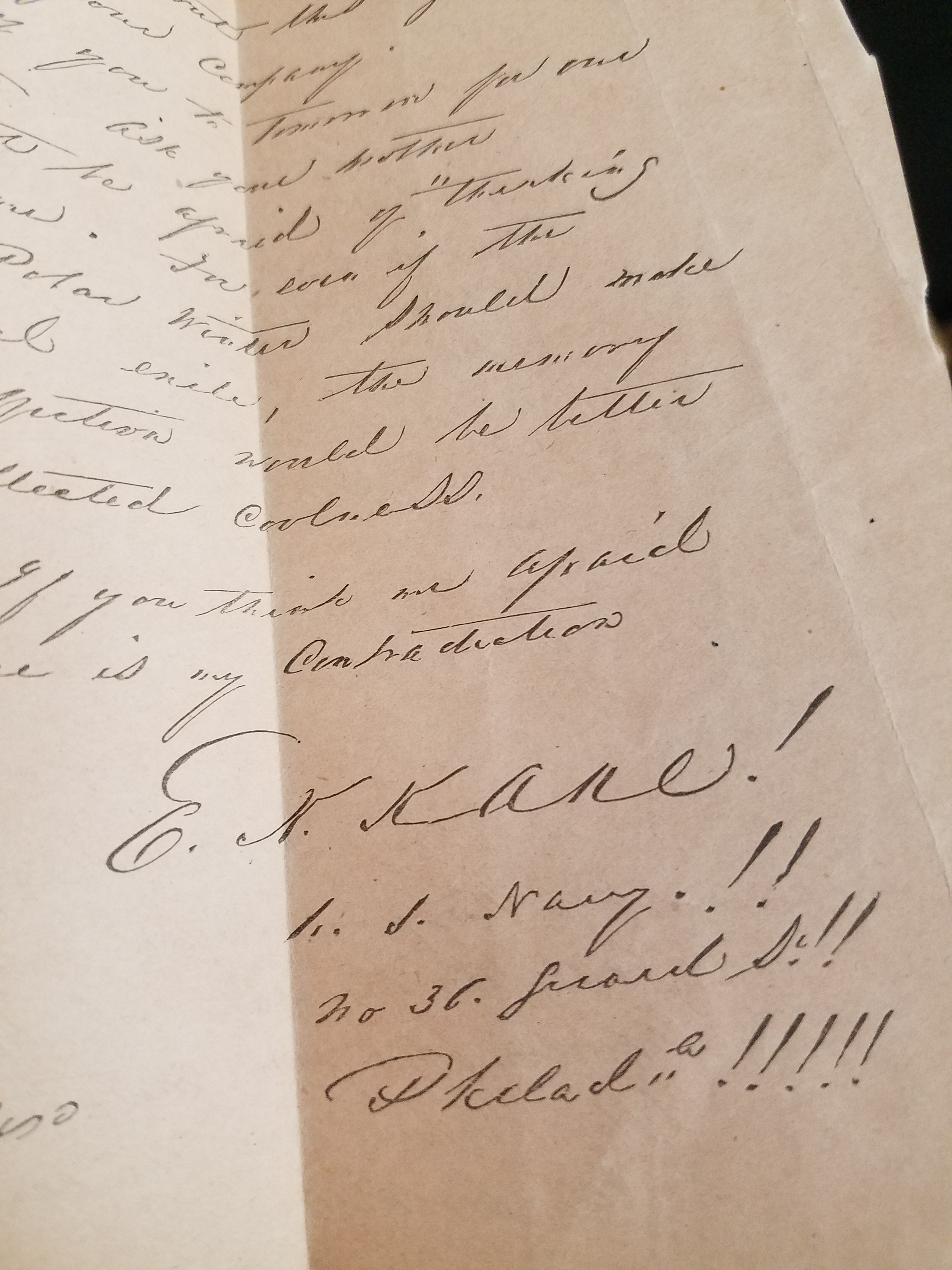
Kane’s signature
The introduction casts Kane and Margaret as star-crossed lovers kept apart by her occupation as a spiritualist, lack of social position, and his own family’s objections to her reputation. The anonymous author, rather romantically, declares, “How deep and strong that love must have been, to come off victorious from such a conflict!” Then finally, the Memoir chapter begins with the story of how the two met and the letters that they exchanged over the course their courtship. The author describes Kane’s falling in love with Margaret at first sight when he found her in Webb’s Union Hotel bridal parlor the autumn of 1852, preparing for a seance. Their epistolary romance began just days later when Kane slipped Margaret a note asking, “Were you ever in love?” And Margaret replied, “Ask the spirits.”
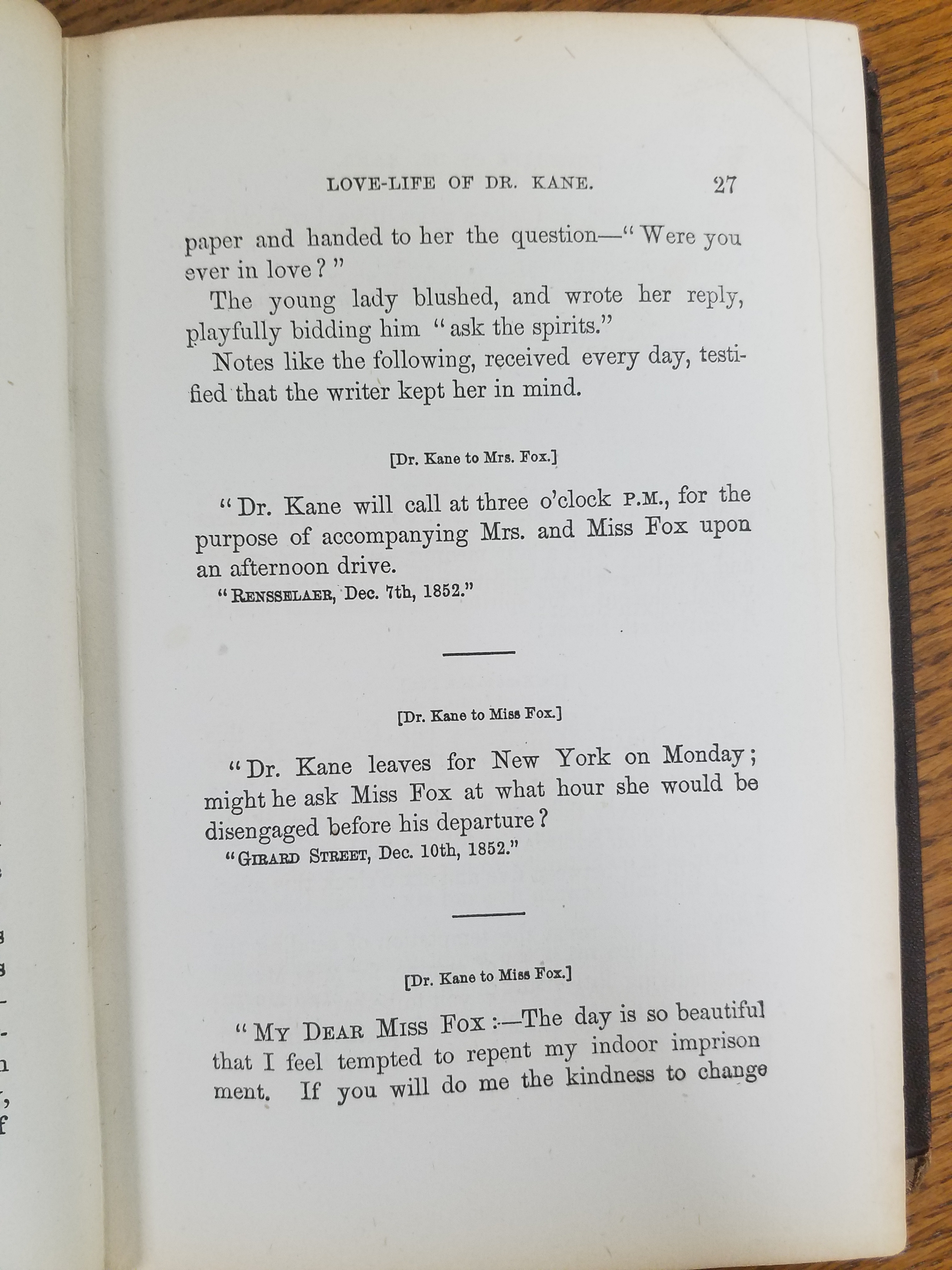
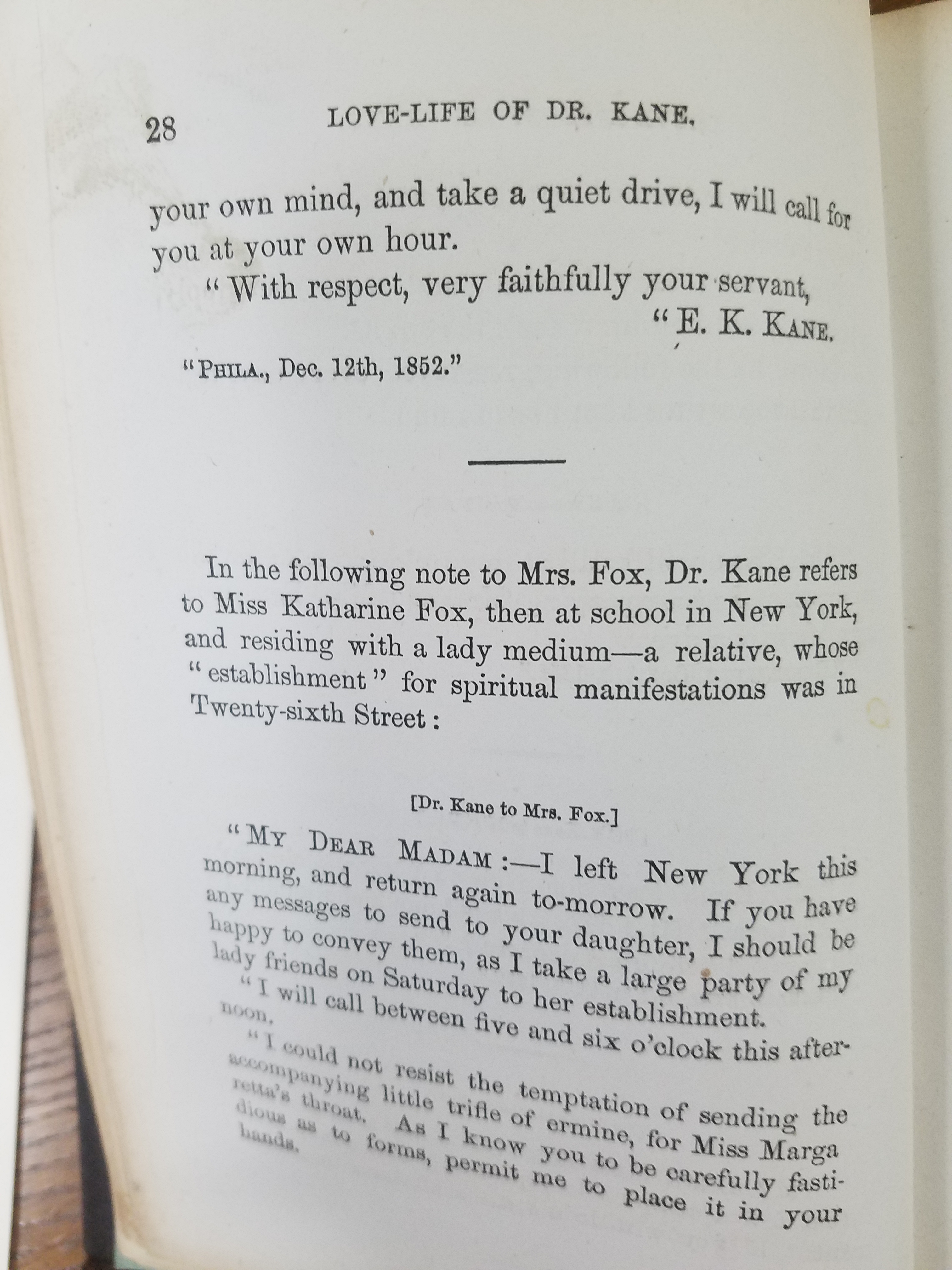
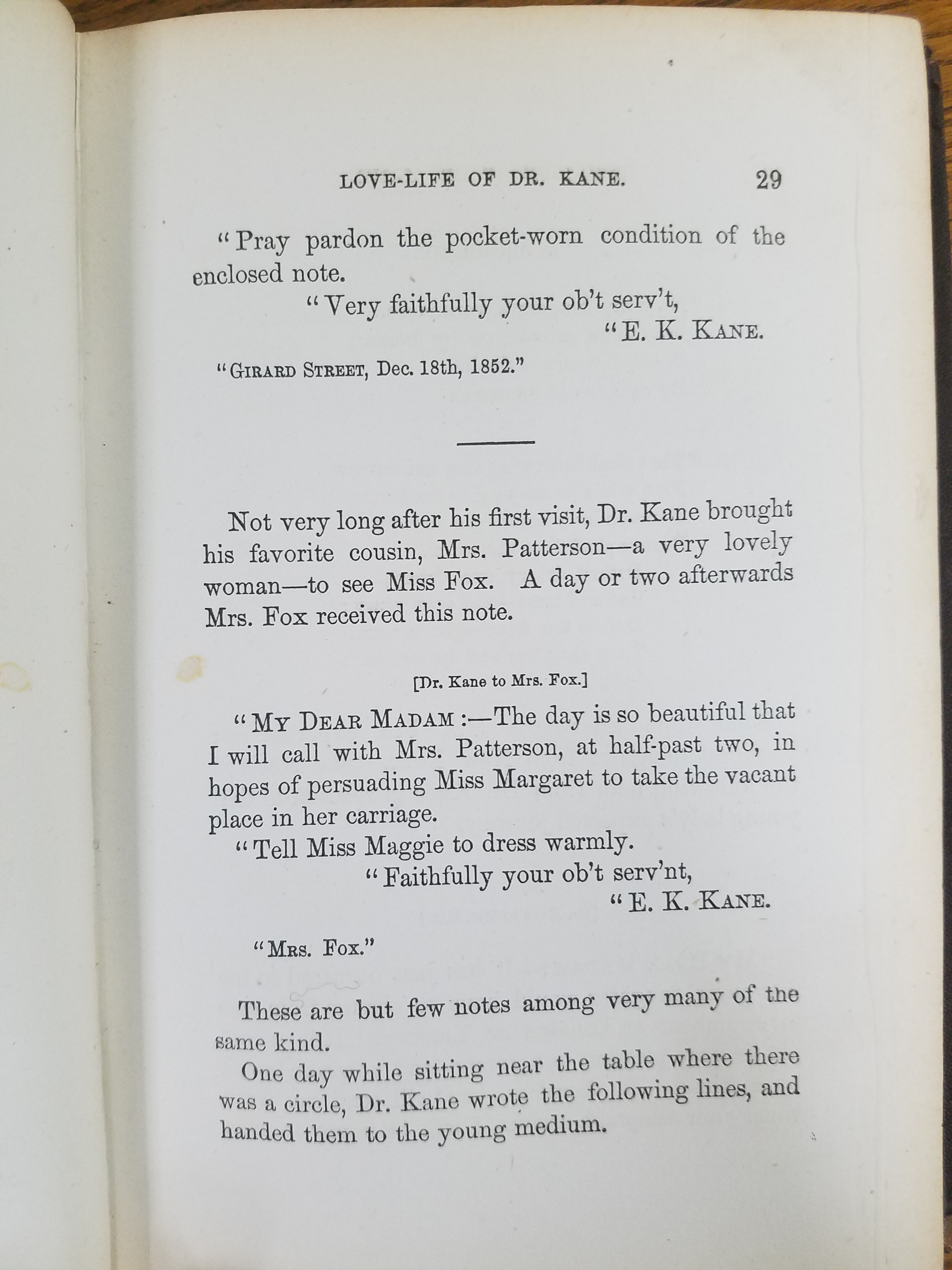
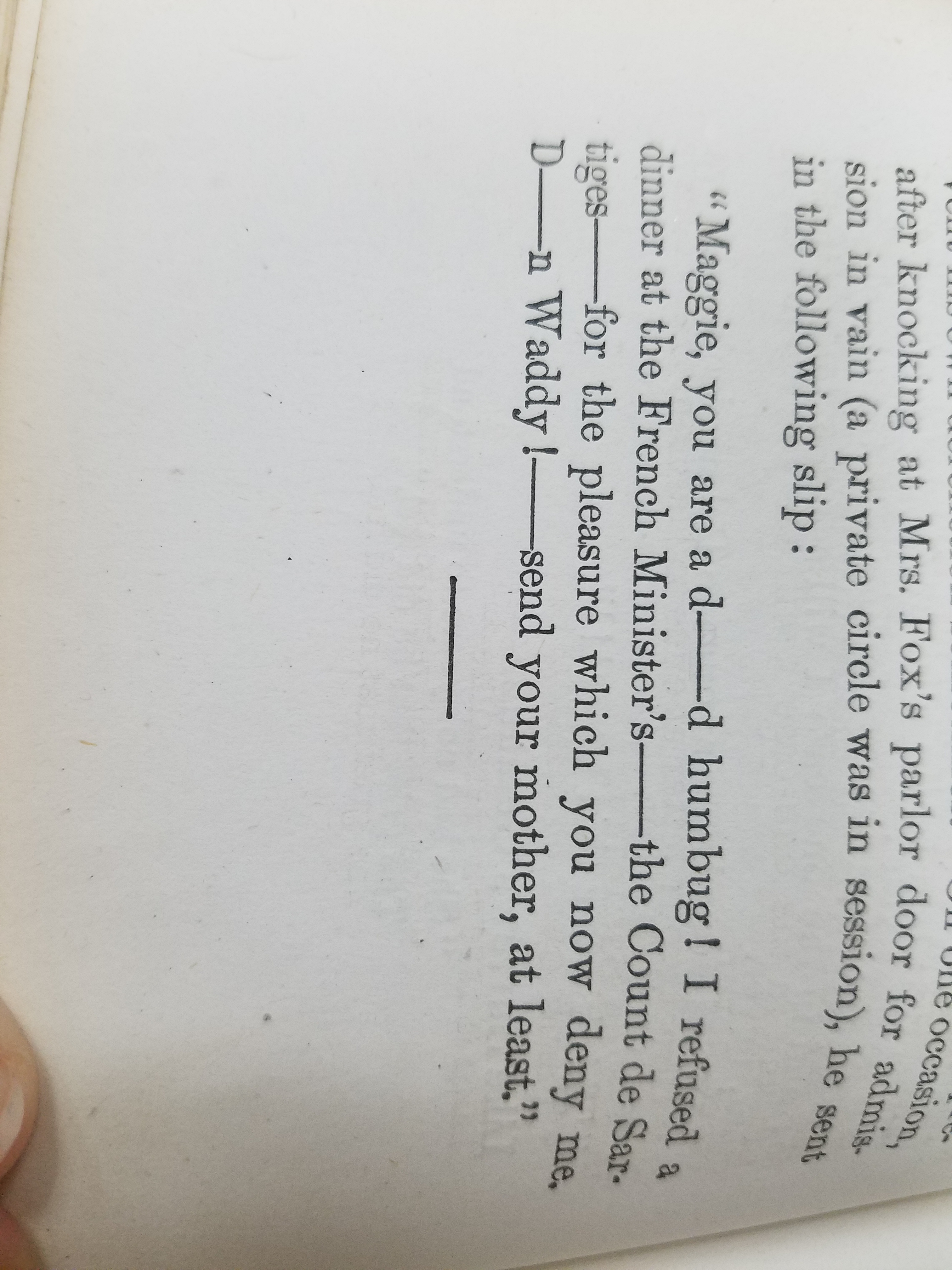
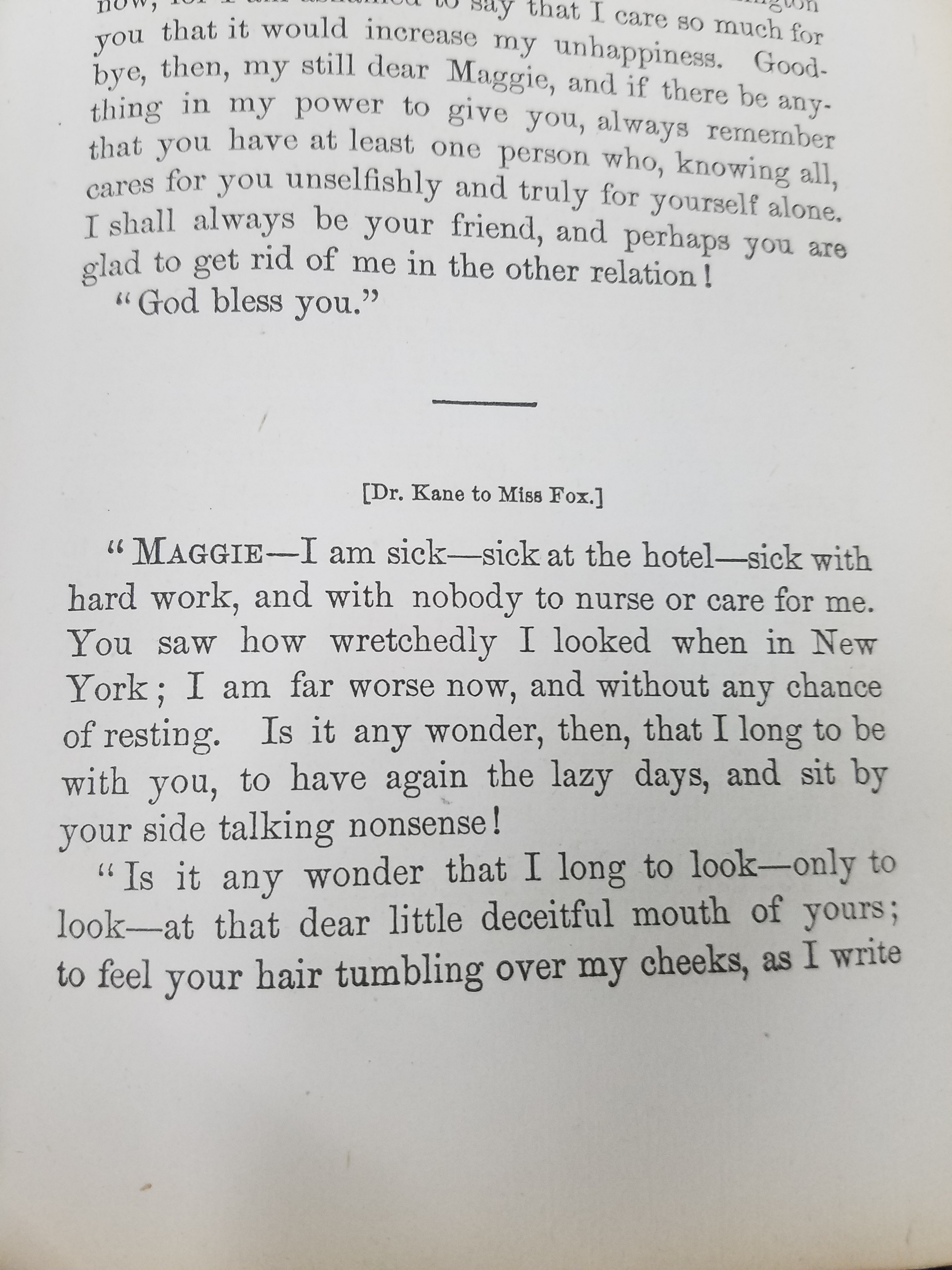
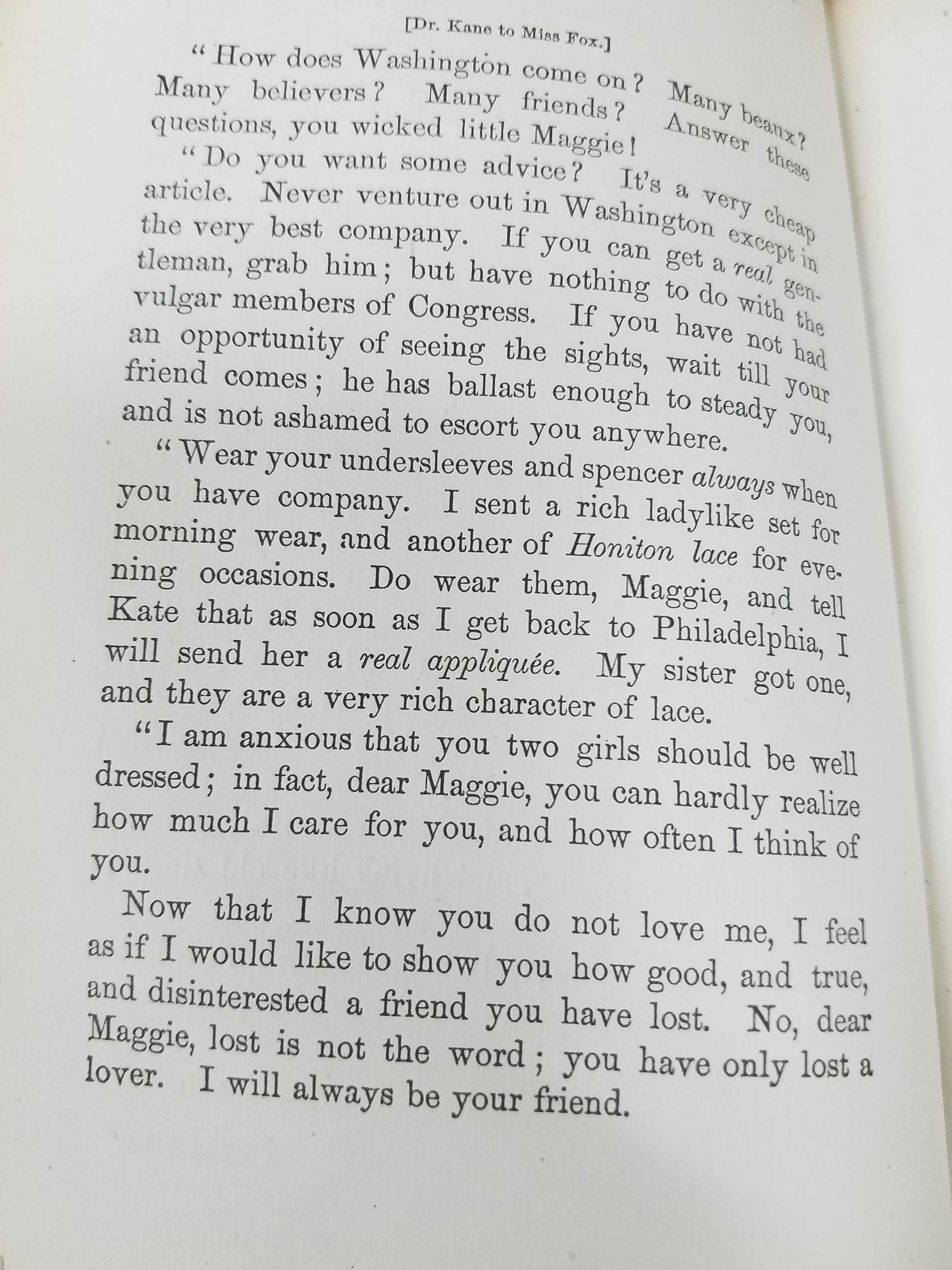
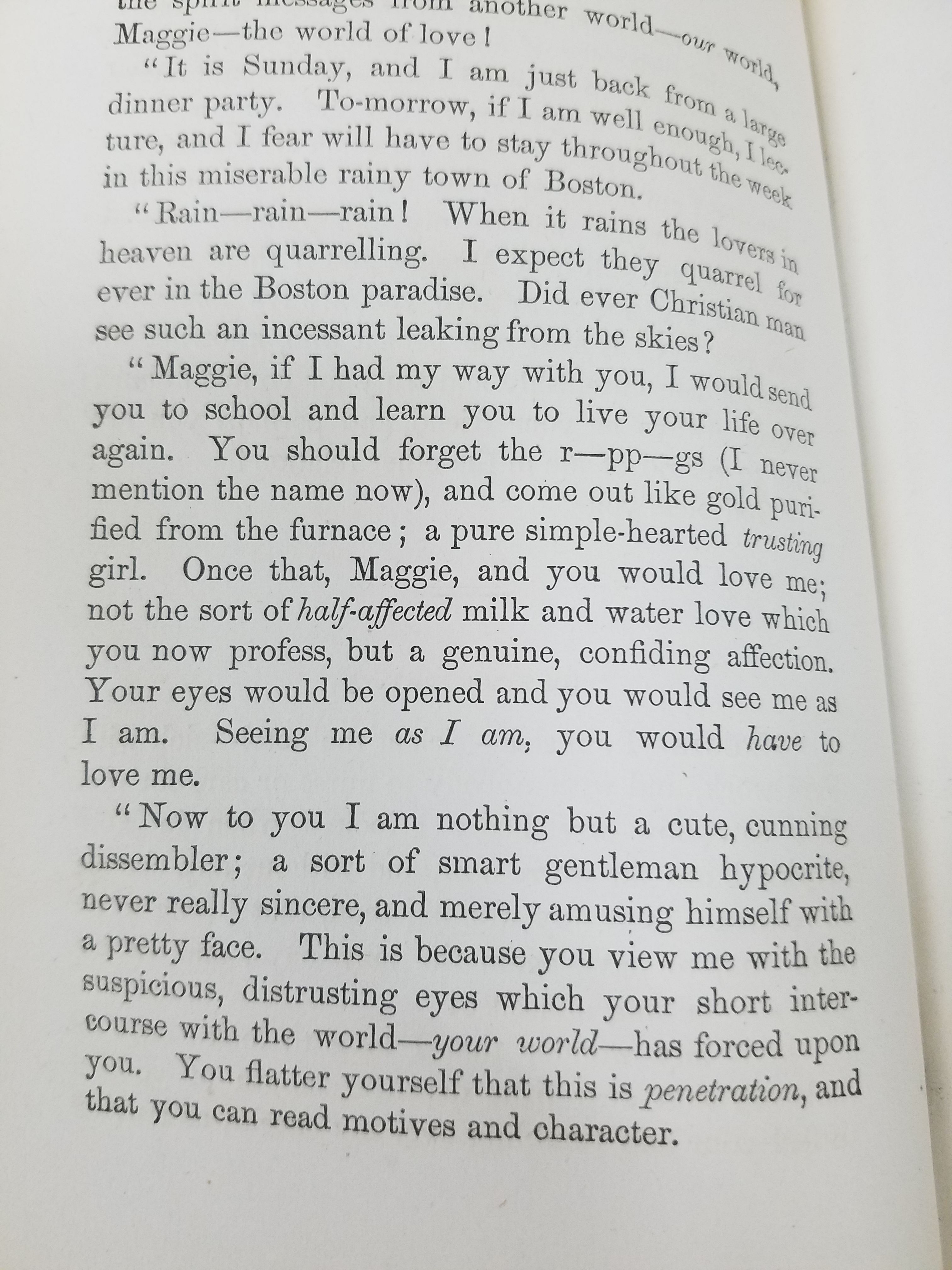
The romance, as told by the collection of letters, was tumultuous. Kane often denounced Margaret for not being affectionate enough, for continuing her work as a medium, or any number of sundry offenses. And his long absences, during which he sent Margaret to school to be educated until his return, were also a struggle. Though Henry Grinnell often wrote to Margaret to update her about Kane’s progress, the long separations created even more tension between the two. His family rejected Margaret so vehemently that her mother was forced to bar Kane from seeing her for fear of Margaret’s feelings or reputation being injured. Kane continued to seek Margaret out, and even asked her to marry him when he saw her on the street. She refused, but the press caught wind of their so-called engagement and maligned her in the papers. Kane never officially denied their engagement, which helped the gossip continue. Years passed, but in 1856, after Kane’s return from the second Grinnell expedition and the death of one of his close friends, Kane proposed to Margaret again. This time, more officially. But the two would not actually be married until days before he left for Cuba to recover his health– in the Fox’s parlor, Kane declared, in front of Margaret’s mother as their witness, that they were husband and wife. The book cites several legal precedents for this kind of common law marriage, assuring readers that the two were rightfully, if not publicly, married that night. The tone of Kane’s letters changes after this; he begins calling Margaret his beloved wife, but is filled with dread by his continually declining health. He tells Margaret that his greatest fear is dying away from her– which is, of course, what happens. And their marriage, which they had both vowed to keep secret until his return from Cuba, was never officially acknowledged by the Kane family. Margaret converted to Catholicism after Kane’s death and spent her days disavowing her own family’s legacy as mediums.
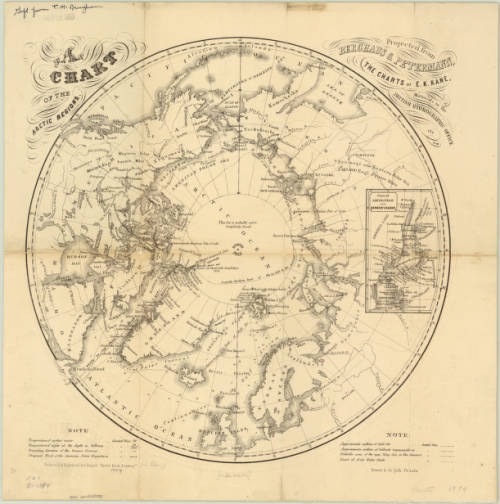
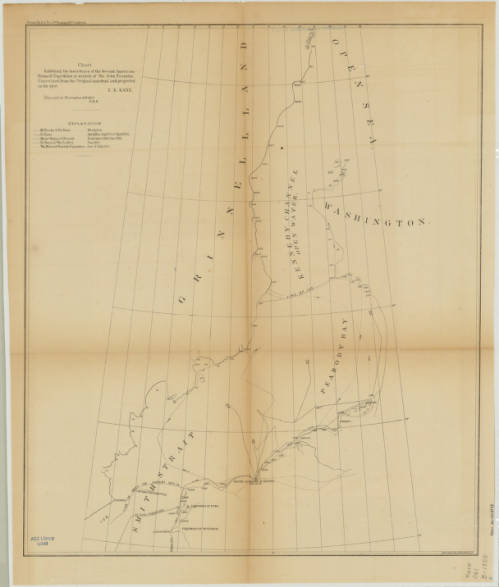
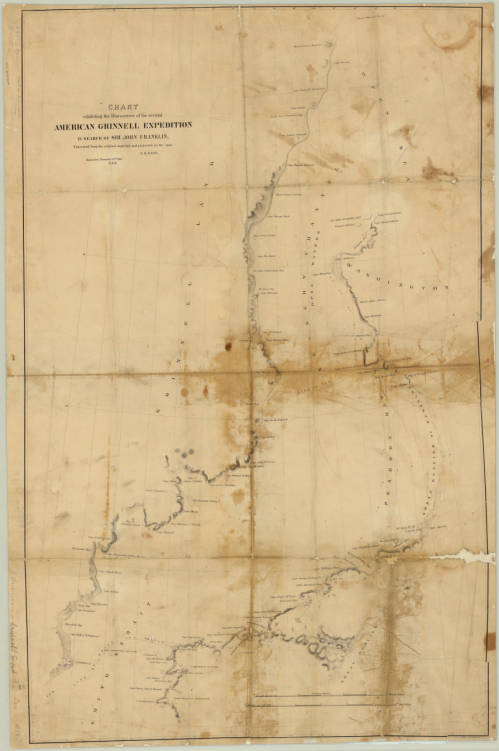
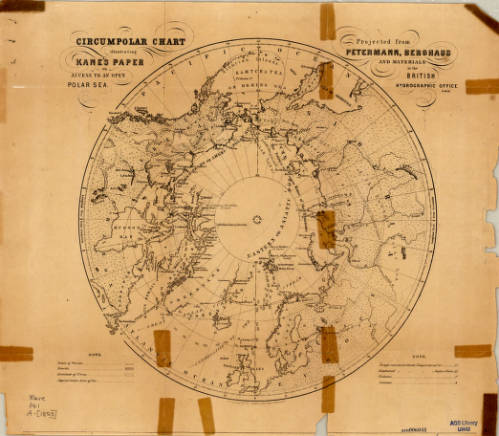
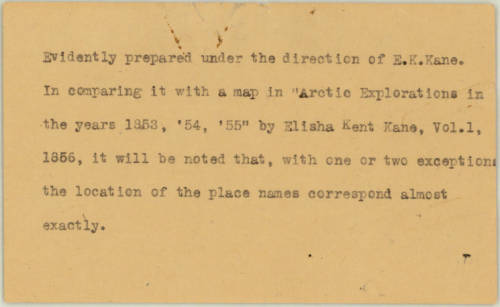
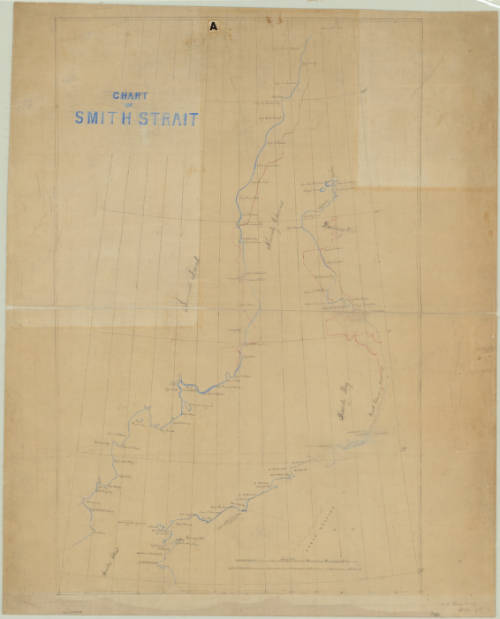
The introduction of The Love-Life of Dr. Kane claims that a man’s love letters “[reveal his] inner life and soul.” Elisha Kent Kane was a larger-than-life man who gave his life to the pursuit of discovering the unknown. The correspondence collected and published by Margaret Fox show us that Kane was also just a man, with a life and love beyond what we know. The AGSL has several maps by Kane in its collection, reminding us of his many contributions to the American Geographical Society. Below are just some of the items in the AGSL archives: his 1853 circumpolar charts and his surveys of the arctic during the Grinnell expeditions.