Correspondence
American Geographical Society Councilman Roosevelt and his Geographer
By Lauren Maddox
The American Geographical Society’s council has been host to some famous and interesting members– Rockefellers and Tiffanys, even. But even with a cast of fascinating characters, it’s hard to outshine Franklin D. Roosevelt.
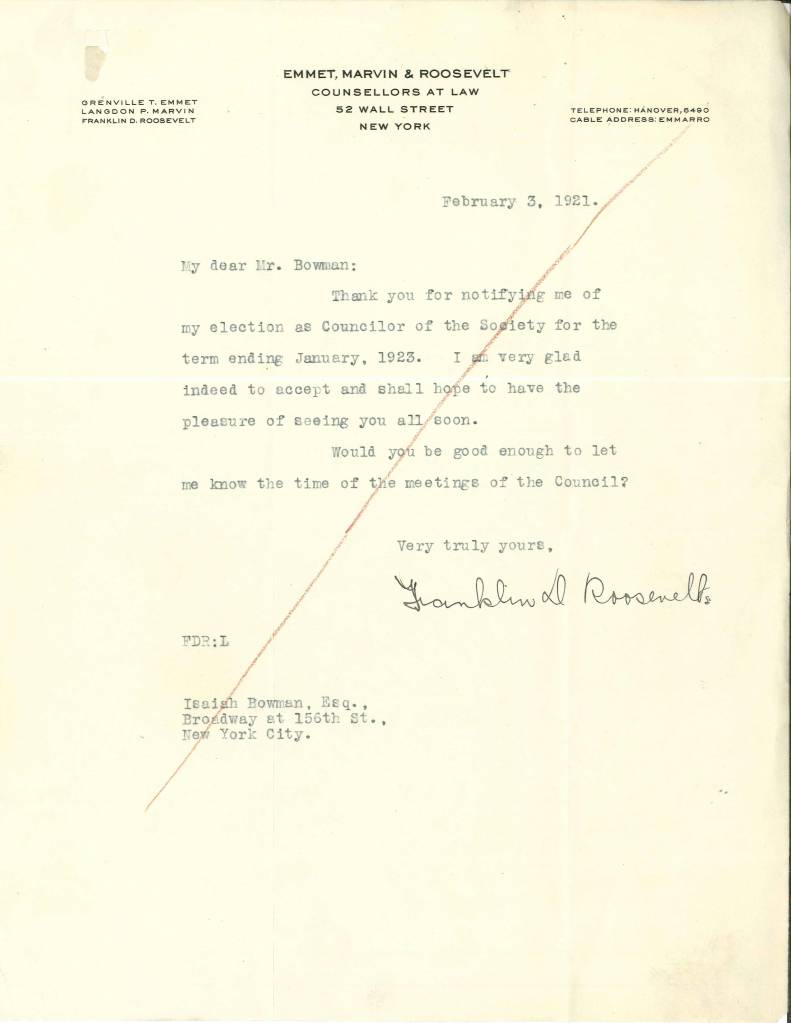
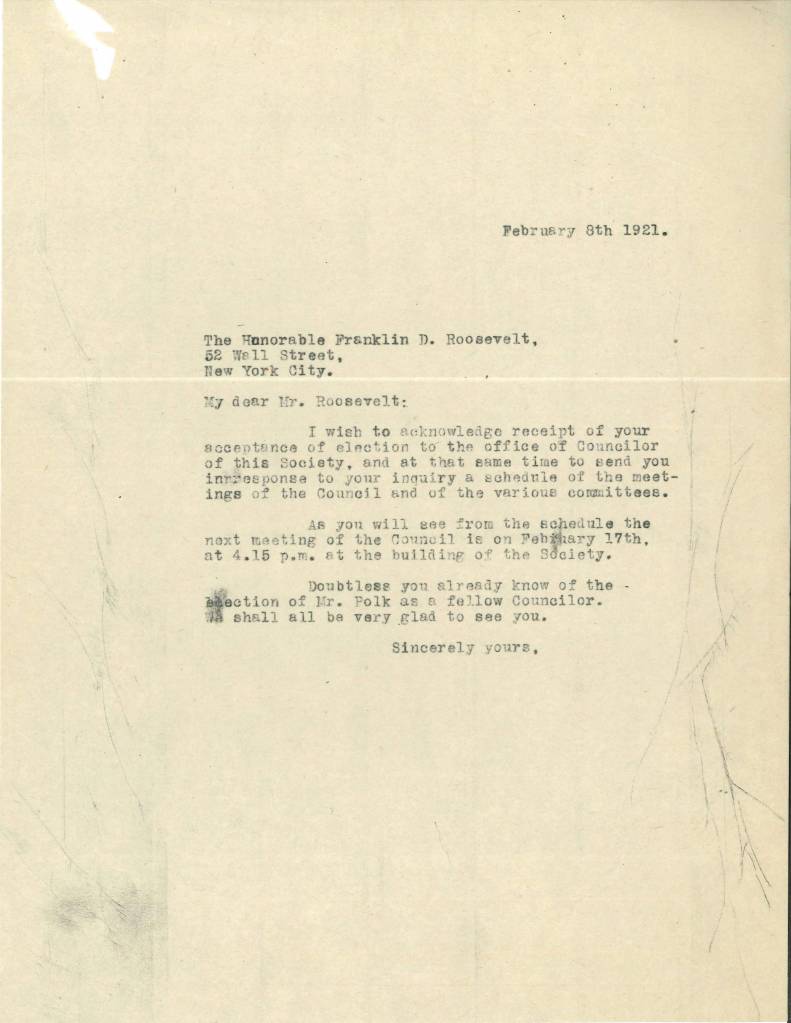
Through Roosevelt and Bowman’s letters, we can track the progression of Roosevelt’s health and his political career. Roosevelt often sent letters apologizing for his absence from AGS Council meetings, due to travel and health problems both.
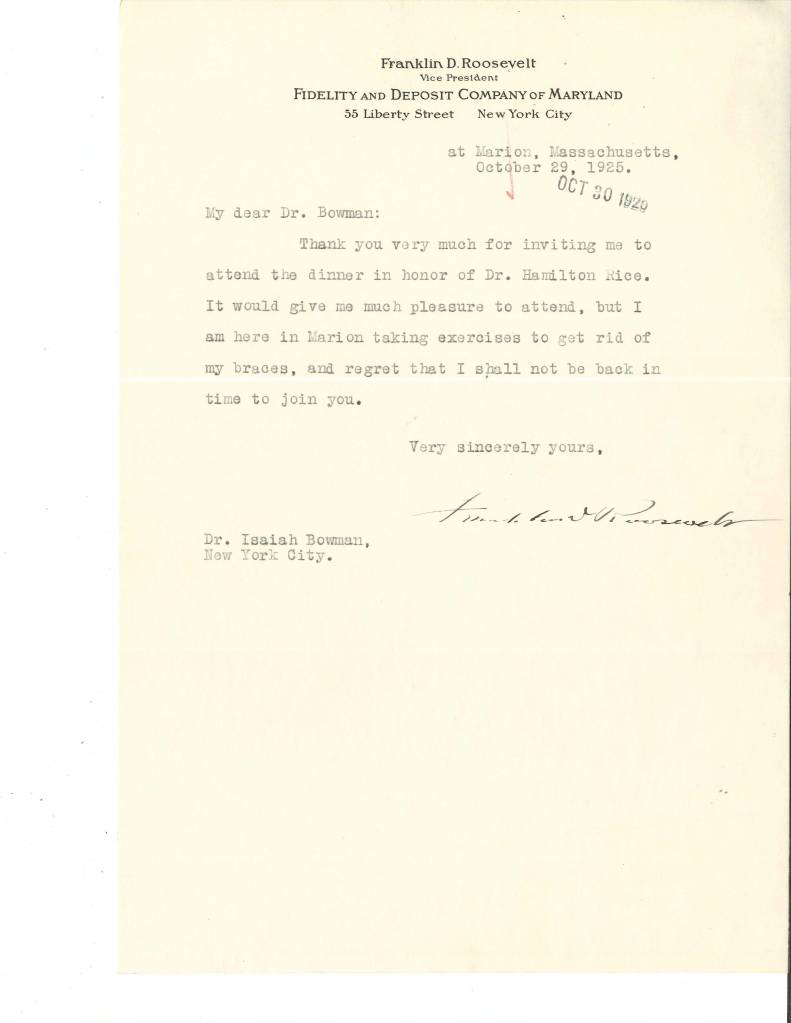
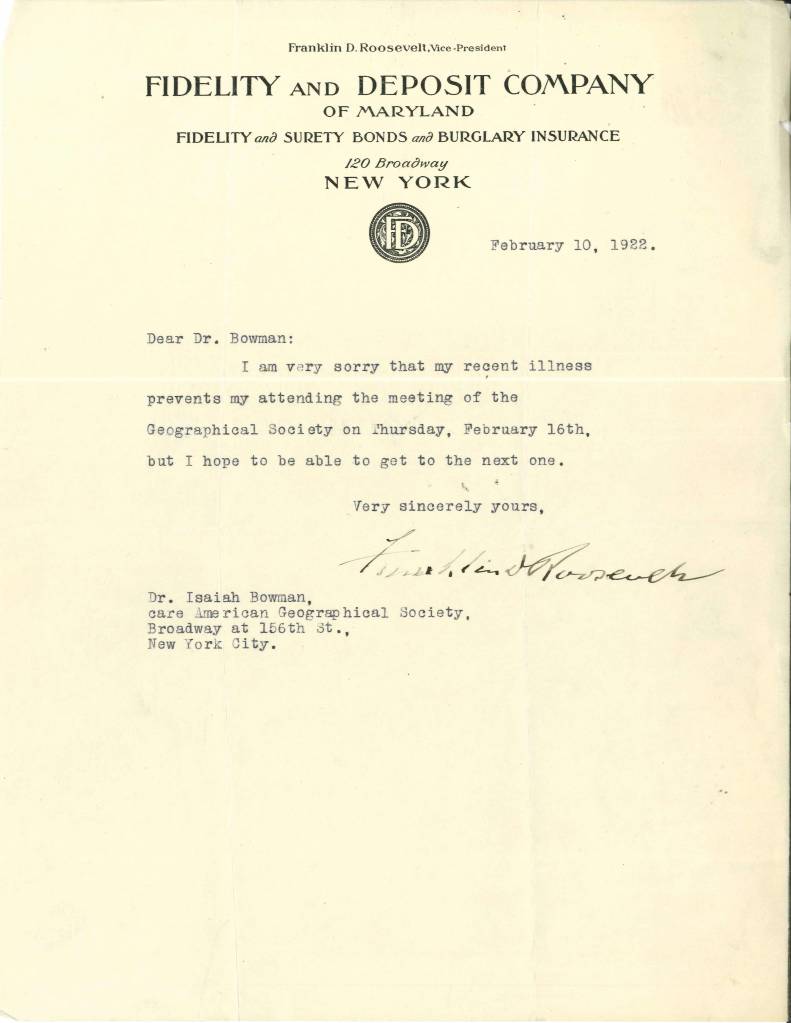
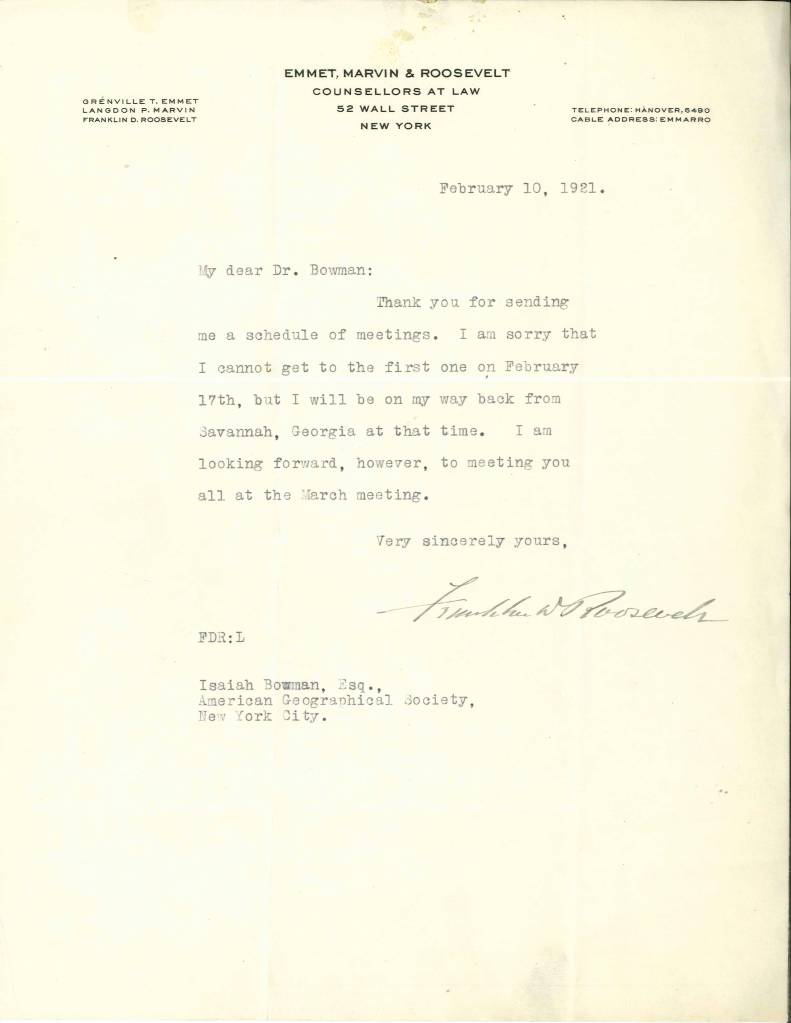
As Roosevelt’s political career progressed, his ability to attend council meetings and participate in Society work was greatly hampered. He was elected governor and then president during his tenure on the council! In 1932, he was forced to resign from his position as council member in light of his impending Presidency. Roosevelt served on the American Geographical Society’s council for more than 10 years– he was a busy man but always believed in the Society’s mission and continued to think kindly of them after his obligations to his office prevented him from participating on the council.
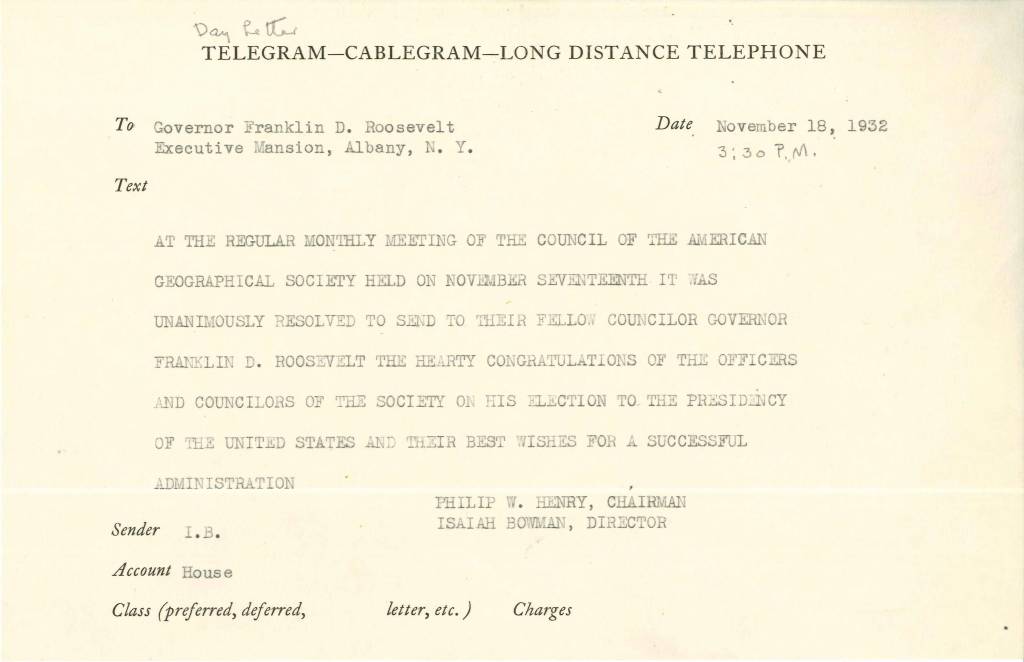
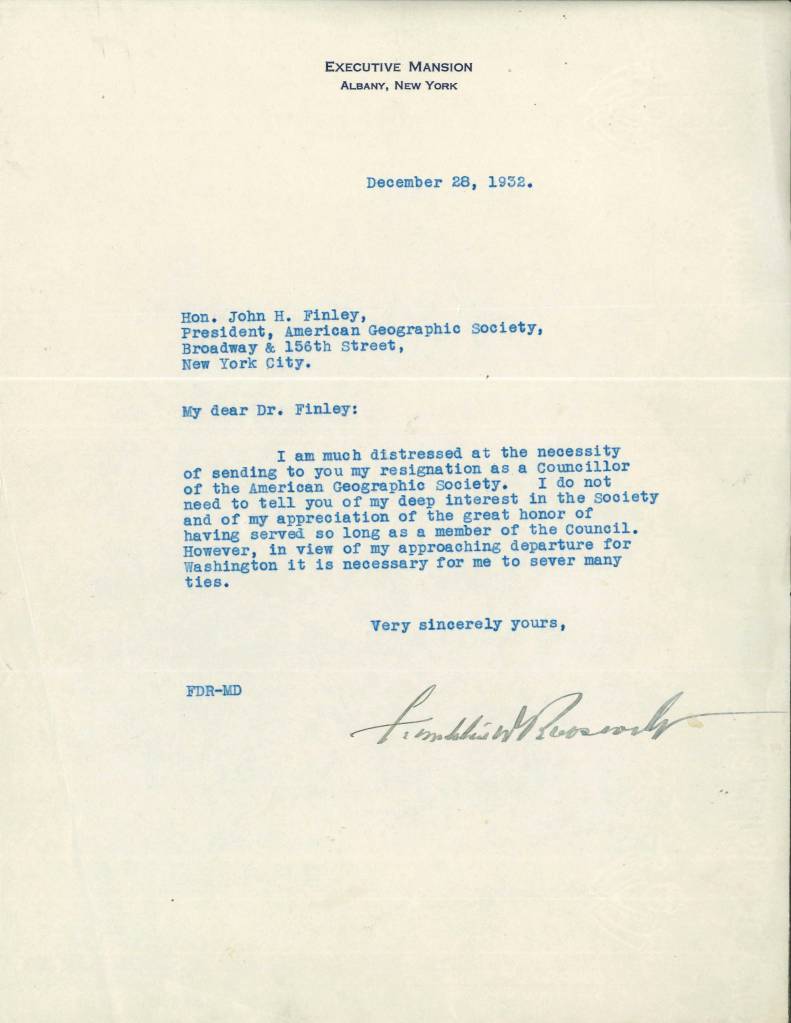
Roosevelt’s relationship with the AGS of New York didn’t end with his resignation from the council, however. The two men continued to correspond, and Roosevelt made Isaiah Bowman a State Department adviser during World War II.
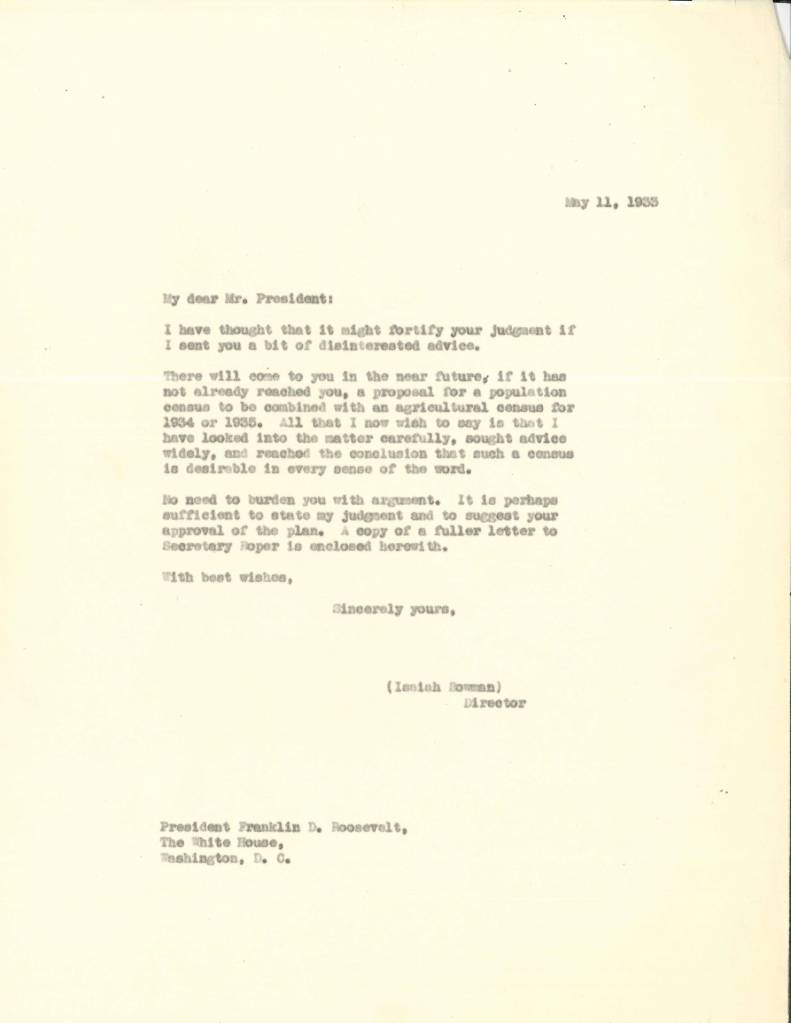
This wasn’t the first time Isaiah Bowman had gained the confidence of a President; in 1917, he offered the AGS’s resources to the government and became close to Woodrow Wilson. His insight played a key role in how territory was distributed as part of the Paris Peace Conference in 1919. It wasn’t surprising that FDR would keep Bowman and his geographical and cartographic resources in mind during World War II. As an adviser in the State Department, Bowman participated in the Dumbarton Oaks Conference and the San Francisco Conference, which established the United Nations. During this time, Bowman was still President of John Hopkins, and he established the Applied Physics Laboratory, where technologies like the Proximity Fuze were created. Bowman was a useful man for the president to rely on.
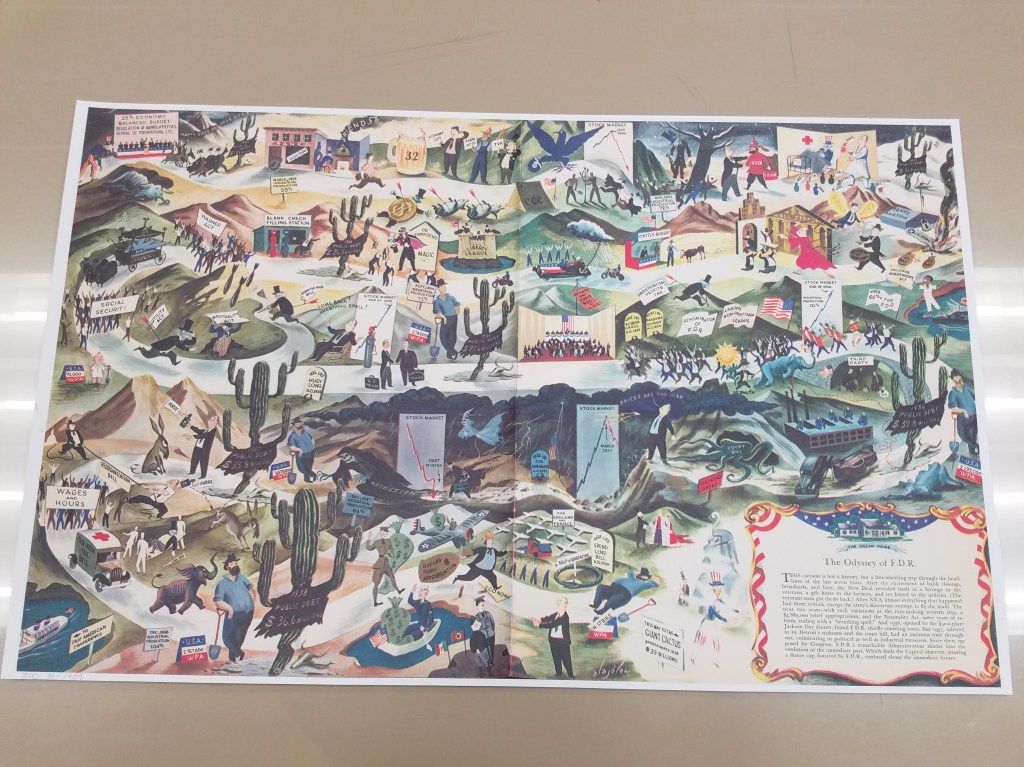
“The Odyssey of FDR” is an unflattering map of FDR’s political exploits up to 1939.
It was, however, surprising that Roosevelt enlisted Bowman to help find and establish refuge for Jewish emigrants displaced by the war. Bowman was a known antisemite who put policies into place at John Hopkins to limit the number of Jewish students admitted to the school. Neil Smith’s American Empire: Roosevelt’s Geographer and the Prelude to Globalization revealed Bowman’s prejudiced policies at John Hopkins and his treatment of Jewish students there. Unsurprisingly, Bowman’s search for refuge for Jewish emigrants lead him to five different countries, not one of which was the United States.
The collection of Roosevelt’s and Bowman’s letters in the AGSL collections help track the rise of Roosevelt to power, and the years-long relationship he maintained with the American Geographical Society and its leadership. Reading through their letters lets us watch as history unfolds before us all over again– and reminds us of the private lives that influence our public histories.
You can find more about Roosevelt and Bowman at the Archives of the American Geographical Society digital collection: https://uwm.edu/lib-collections/agsny/
The Mysterious Case of Ernest G. Lemcke
By Lauren Maddox
Sometimes I like to pull back the curtain a bit for you– show you some of the behind-the-scenes work that goes on unseen at the AGSL. I was given a special project a few months ago that I thought the readers of this blog would be interested in hearing about.
Some things about me you need to know: I love puzzles and I have never seen Mission Impossible. Most of the AGSL staff loves puzzles; we are currently working on a 4,000 piece puzzle (which you can see if you visit us!). Generally, my work at the AGSL has me at a desk writing– that’s my job. But sometimes someone gives me something different to work on.
Susan Peschel stopped by my desk with a nondescript beige box.
“Your mission, should you choose to accept it–” she stopped to ask me if I remembered Mission Impossible. I didn’t, but I had at least heard the quote before. Susan told me that she had a puzzle for me (and that it might explode once she walked away).
The problem with the box, which had traveled with the AGSL’s collection from New York to Milwaukee in the 70s, was that it had never been archived. The papers in the box were unsorted– no one even knew what they were. By all appearances, the collection of handwritten pages and letters seemed random. There were maps in the pile, but they were either hand-drawn or, stranger, road maps that had been drawn over. My mission (and I did accept it) was to figure out what we had and then to put it into some semblance of order.
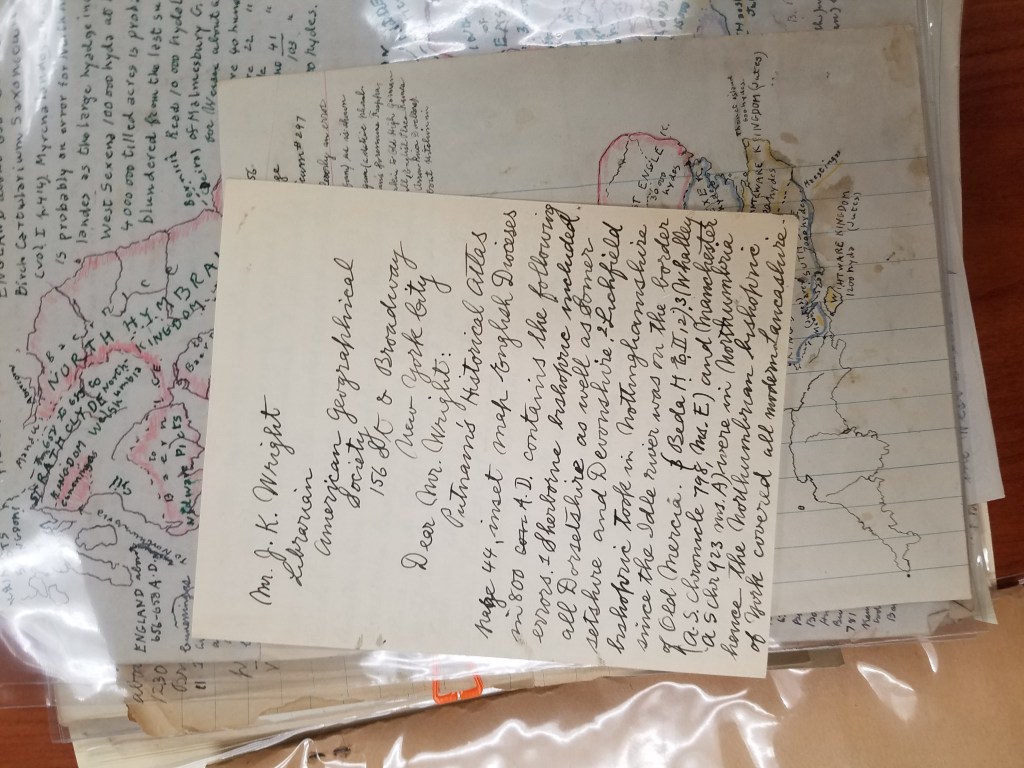
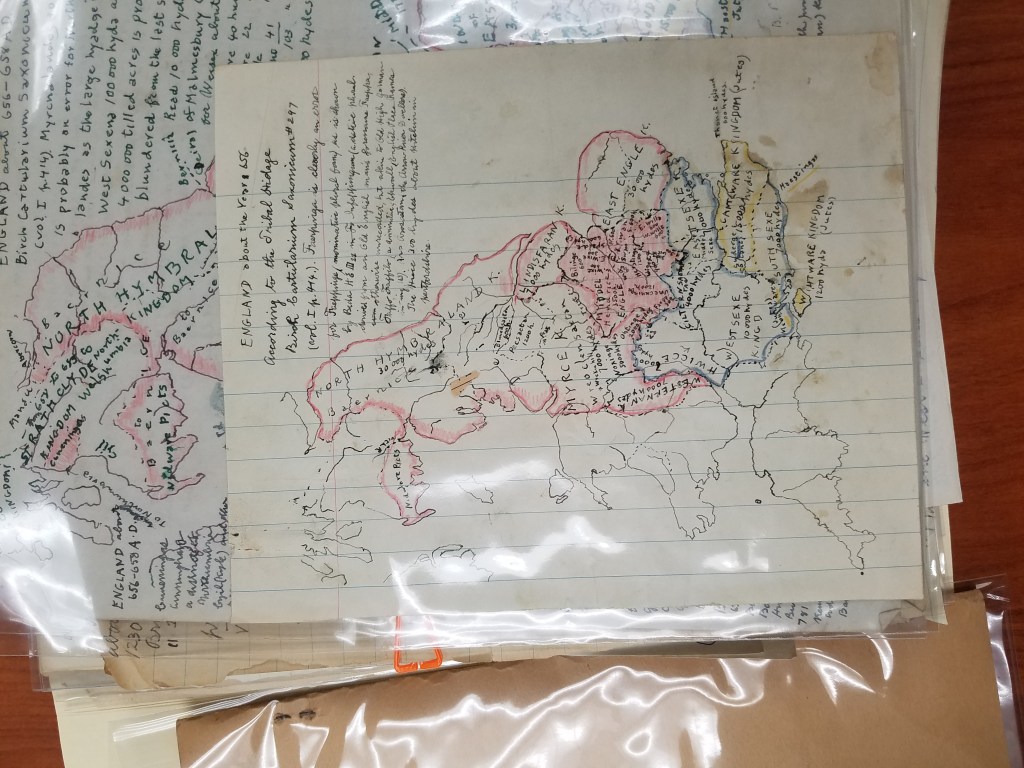
We didn’t know much, but we did know his name: Ernest G. Lemcke. We knew he was a card-carrying member of the American Geographical Society of New York because we have a record of his membership dues:
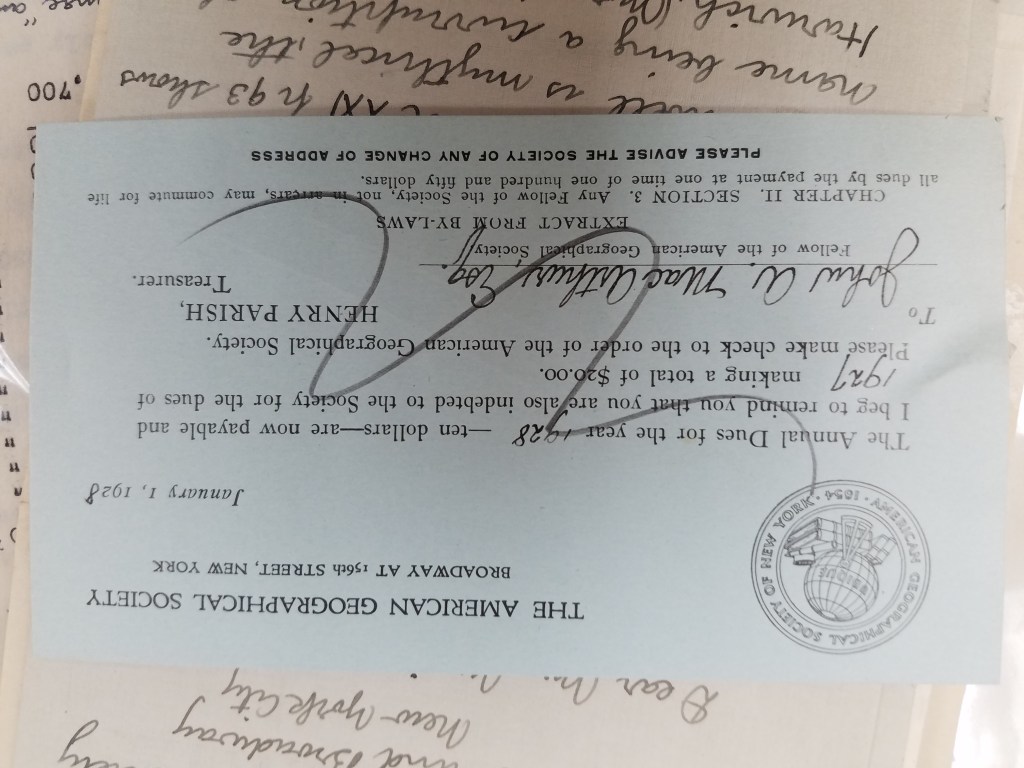
He wrote a trove of letters to Ena L. Yonge and John K. Wright. He bought a roadmap in 1926 and hand-drew a medieval military event in England from the 1300s. He was a book publisher in New York– which I discovered because some of his stationery had letterhead from Lemcke&Buechner, “Booksellers, publishers, importers.”
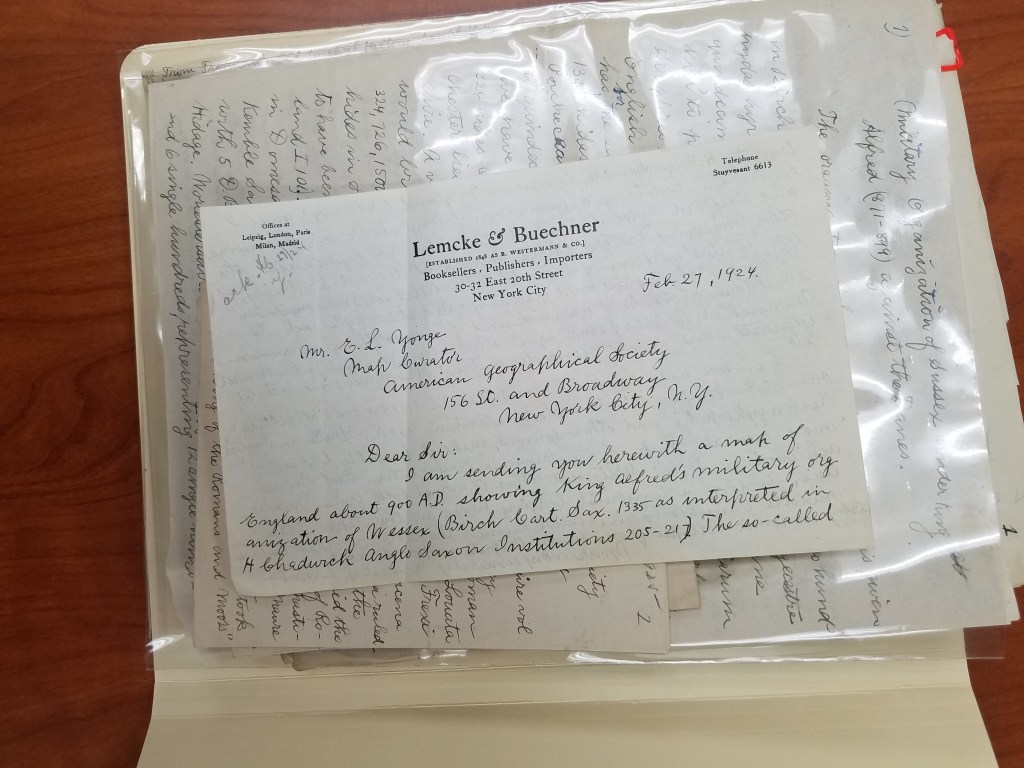
Part of the trouble with deciphering the box was figuring out what was meant for who. The maps were easy– Ena L. Yonge was map curator for the AGS of New York at the time, and his maps often came with a letter explaining what they were. But the partial manuscripts, many handwritten first drafts, and article corrections for the AGS’s periodical were mysterious and dense.
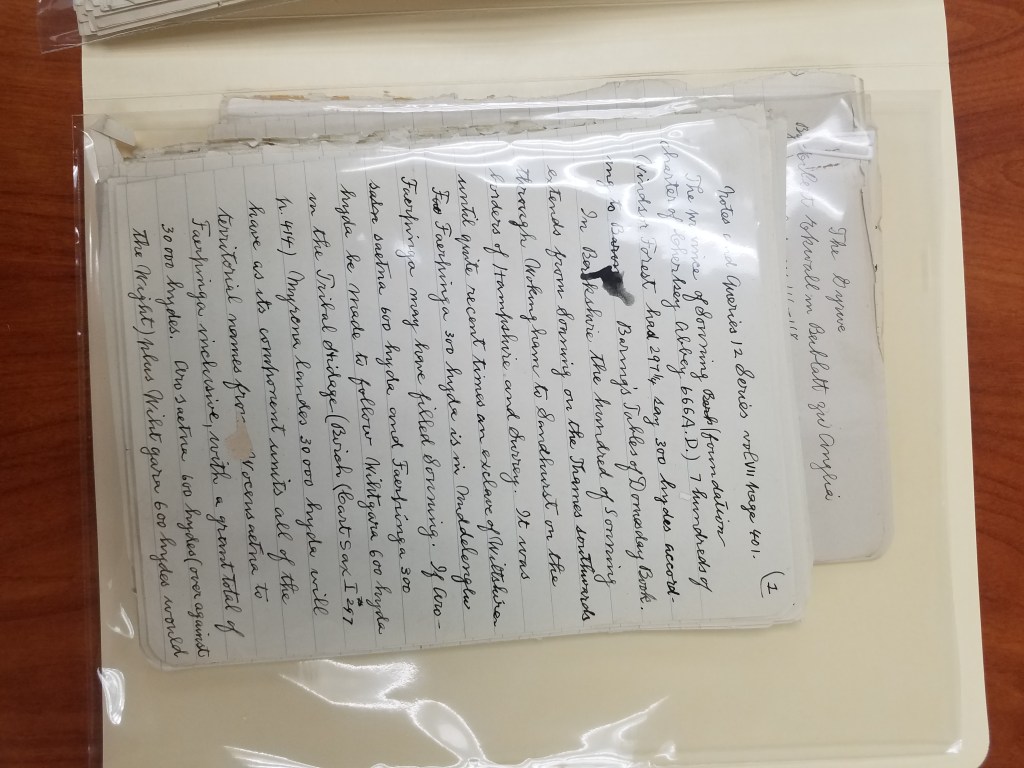
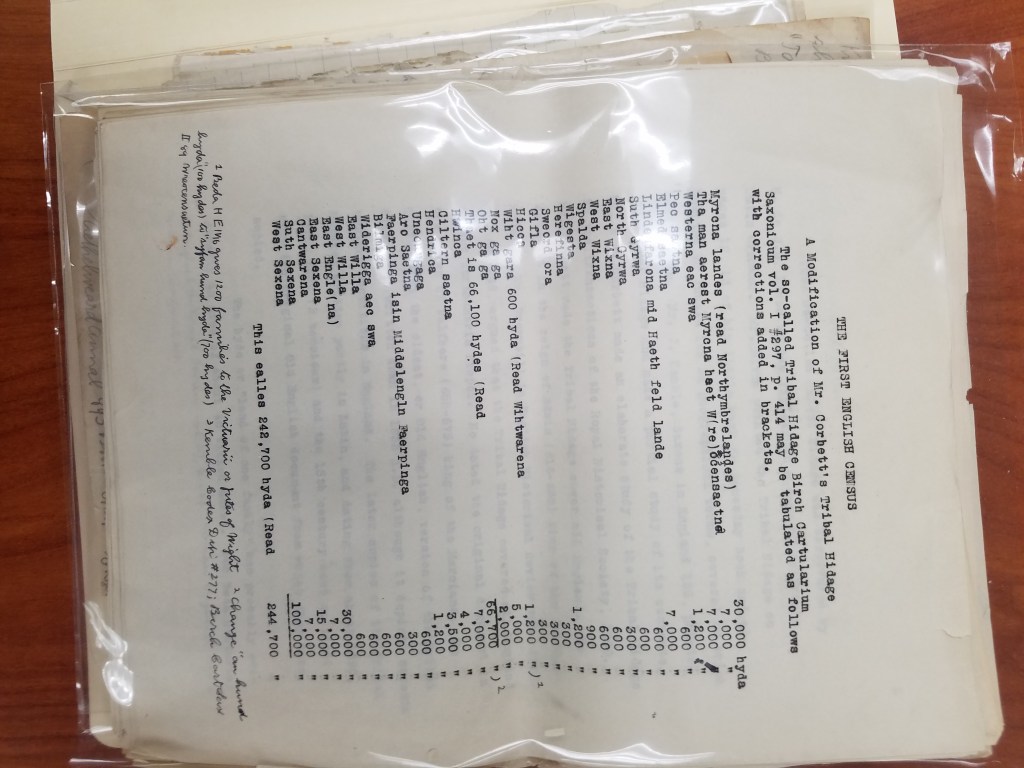
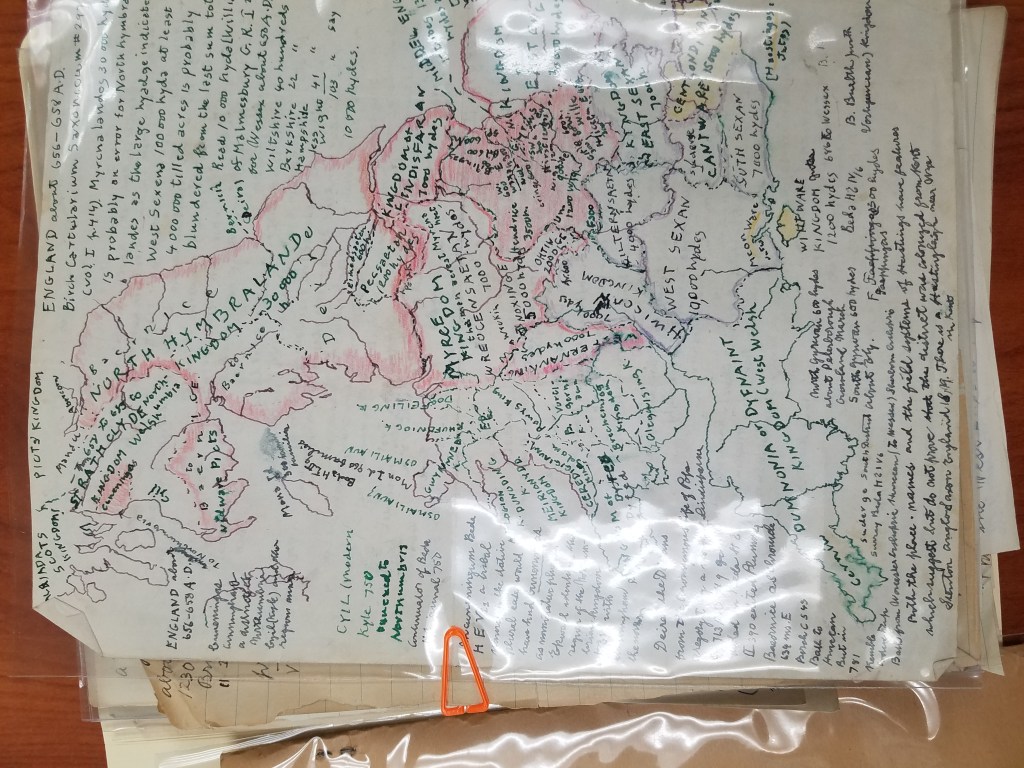
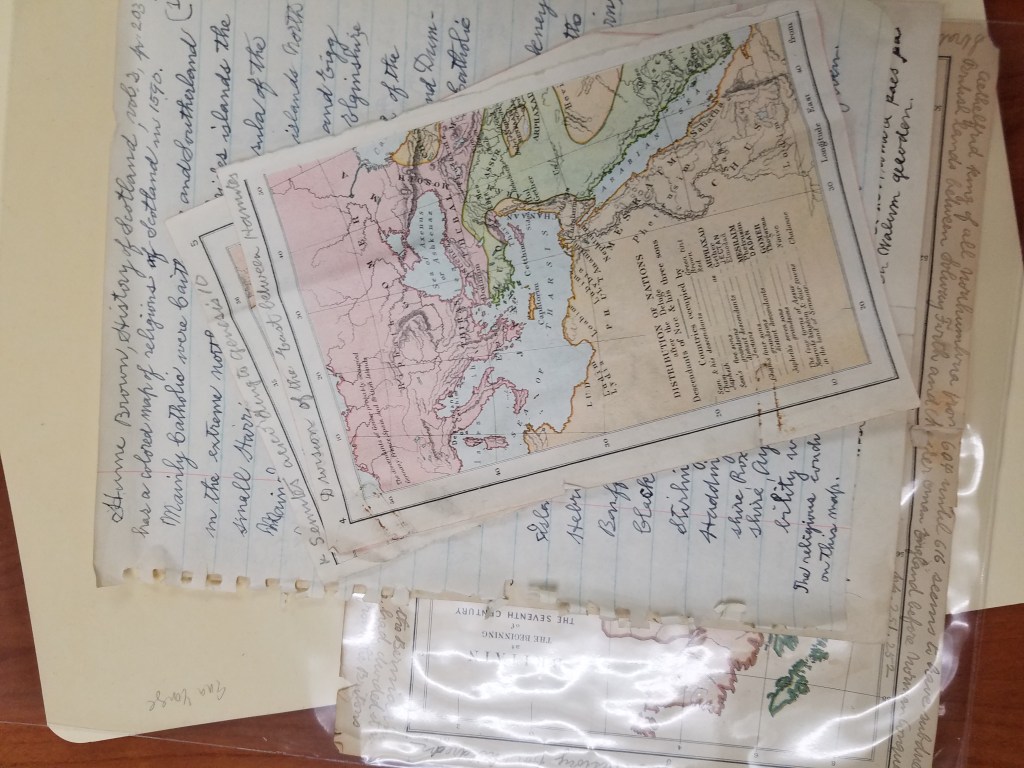
After many fruitless Google searches, I learned a few things about Lemcke: besides being a book publisher, he was also a historian with several books out, many specifically interested in the “Tribal Hidage” in Wessex. As it turns out, the University of New Hampshire also has a collection of Lemcke papers! Which was how I tracked down some of his publications and discovered that the many handwritten pages about a “tribal hidage” and the first English Census were partial drafts of his later, completed publications.
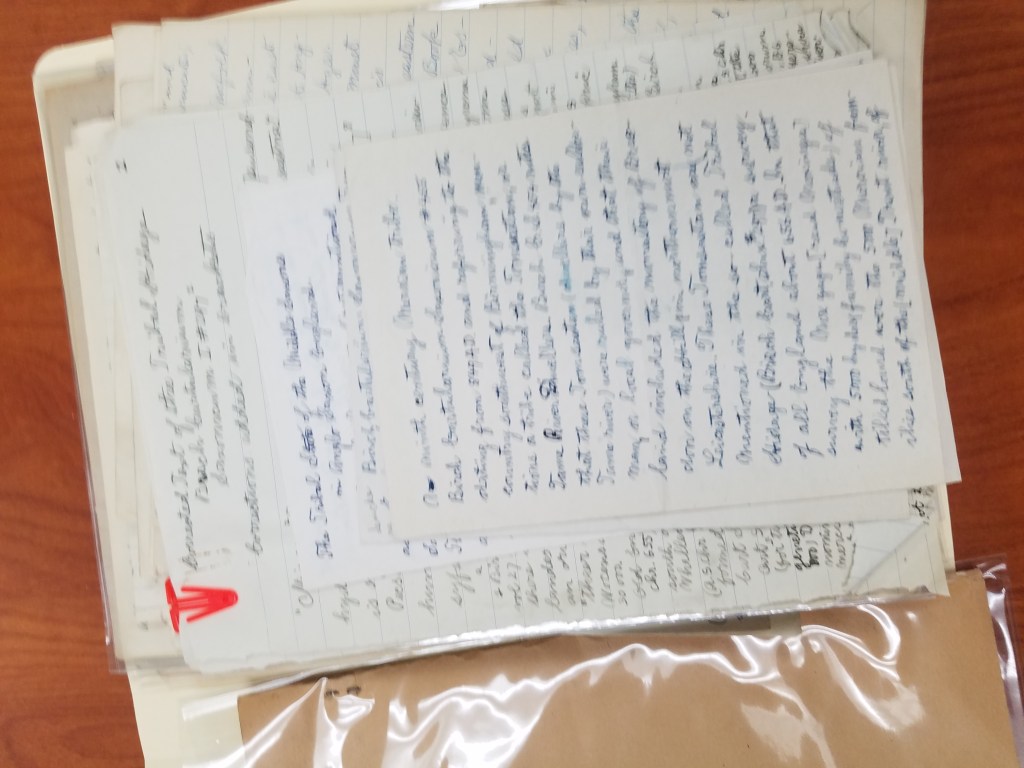
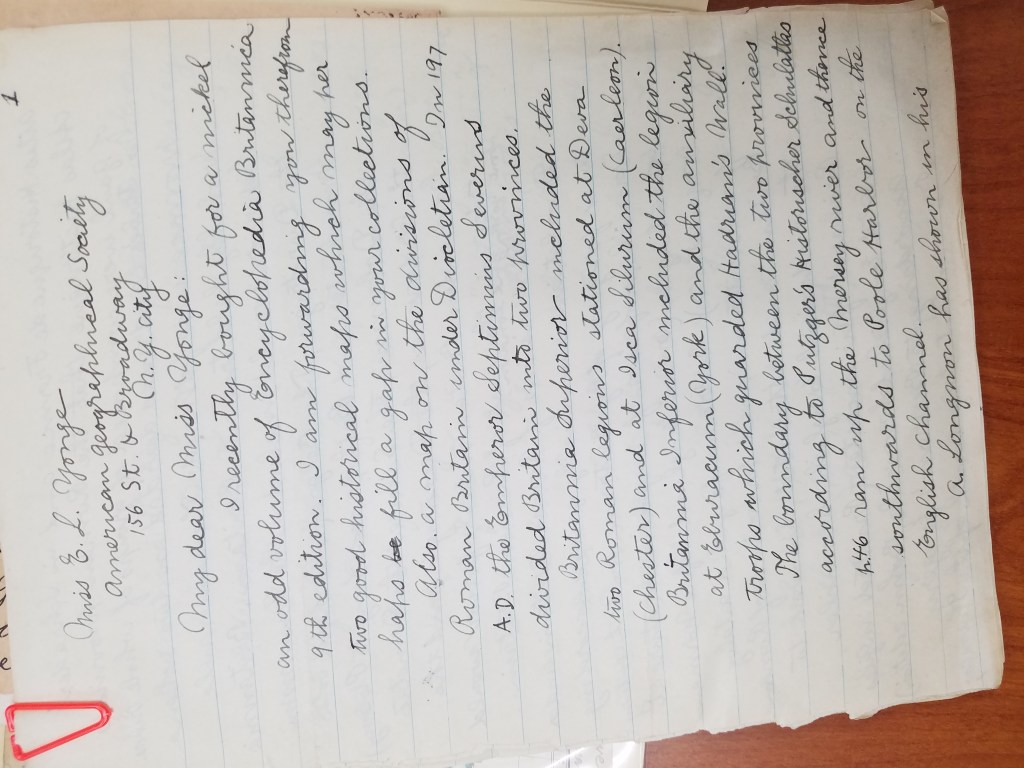
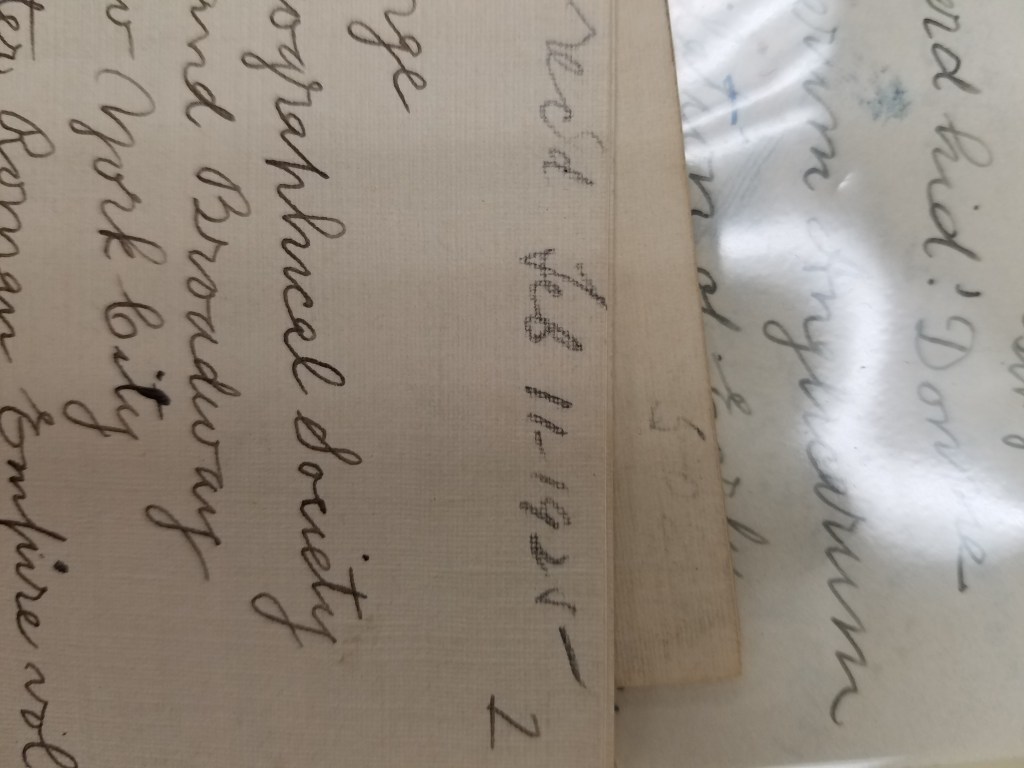
Now that I had a better idea of what we had, I came to the next part of the puzzle: putting it in order. I started with separating the things that were obviously addressed to Yonge or Wright. Maps were obviously meant for Yonge, and corresponded with letters that he had sent. John K. Wright was once director of the AGS of New York, but that didn’t help place many of Lemcke’s letters. But as it turned out, before he was director, Wright was the editor of the AGS’s regular publication from 1920-1956. This was exactly the period of time Lemcke was writing. The periodical corrections, then, seemed to be for the editor of the publication. And after reading Lemcke’s letters, I found him explaining corrections to his manuscript to Wright.
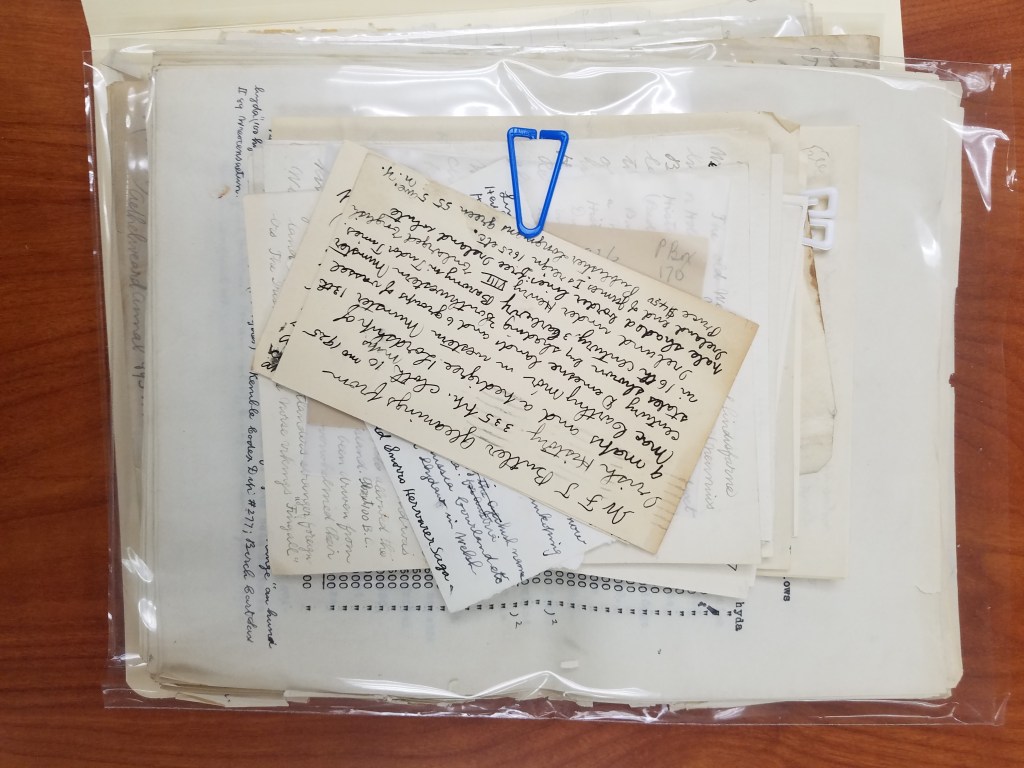
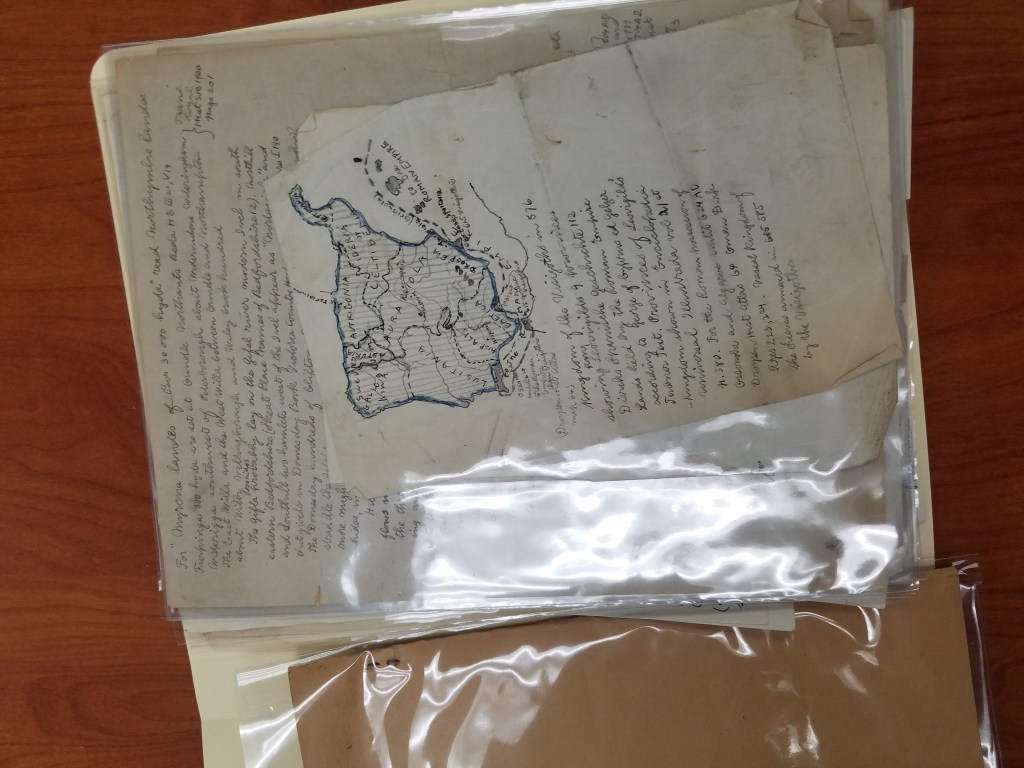
Once the letters were sorted by recipient, I started to put them in a chronological order. Some of the letters were dated– those were easy. But many of the letters weren’t dated. For several of them, I found a reference he made to an article he had just read, which helped me place it in the chronology. But many more had to be dated by their relationship to the other letters, which made for some puzzling work.
After finishing the work of putting the box in order, it was time to have it officially archived. This was definitely out of my expertise, so I reached out to fellow graduate intern Georgia Brown, who consulted our curator, Marcy Bidney, about what to do with the box.
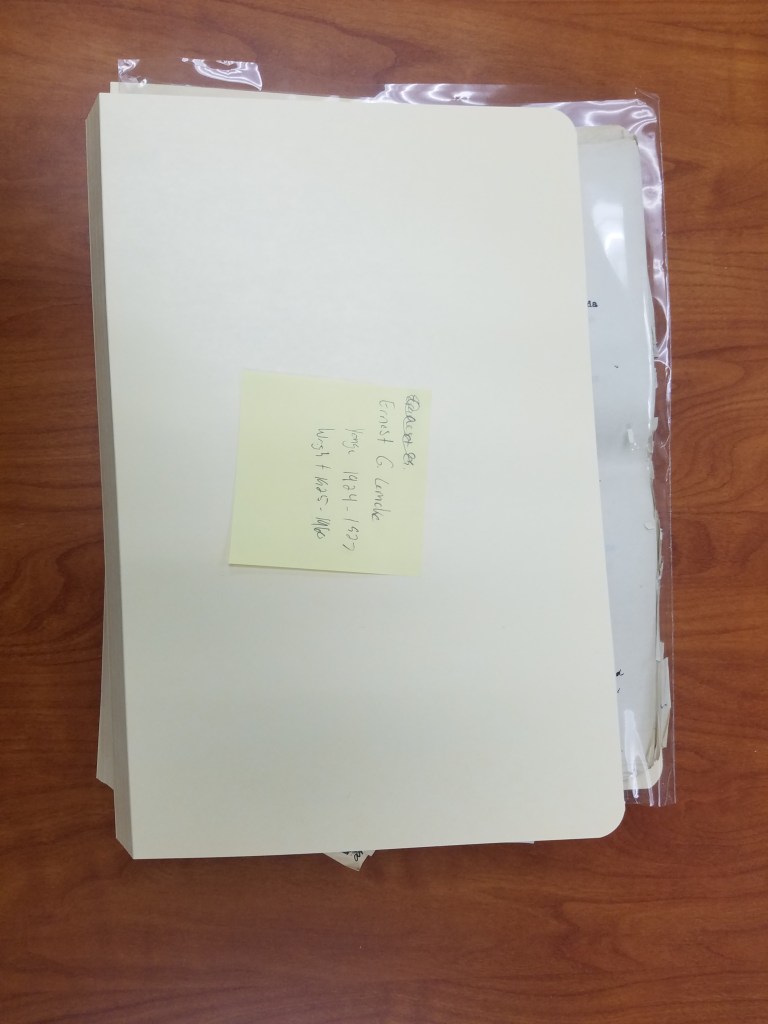
Soon, the Lemcke papers will be officially archived! Since all of his correspondence was addressed to Ena L. Yonge and John K. Wright, the letters will be incorporated into their existing correspondence collections, cataloged, and made available for viewing! And now, with a little puzzling, we have put a years-old AGSL mystery to rest.
The Love-Life of Dr. Kane
By Lauren Maddox
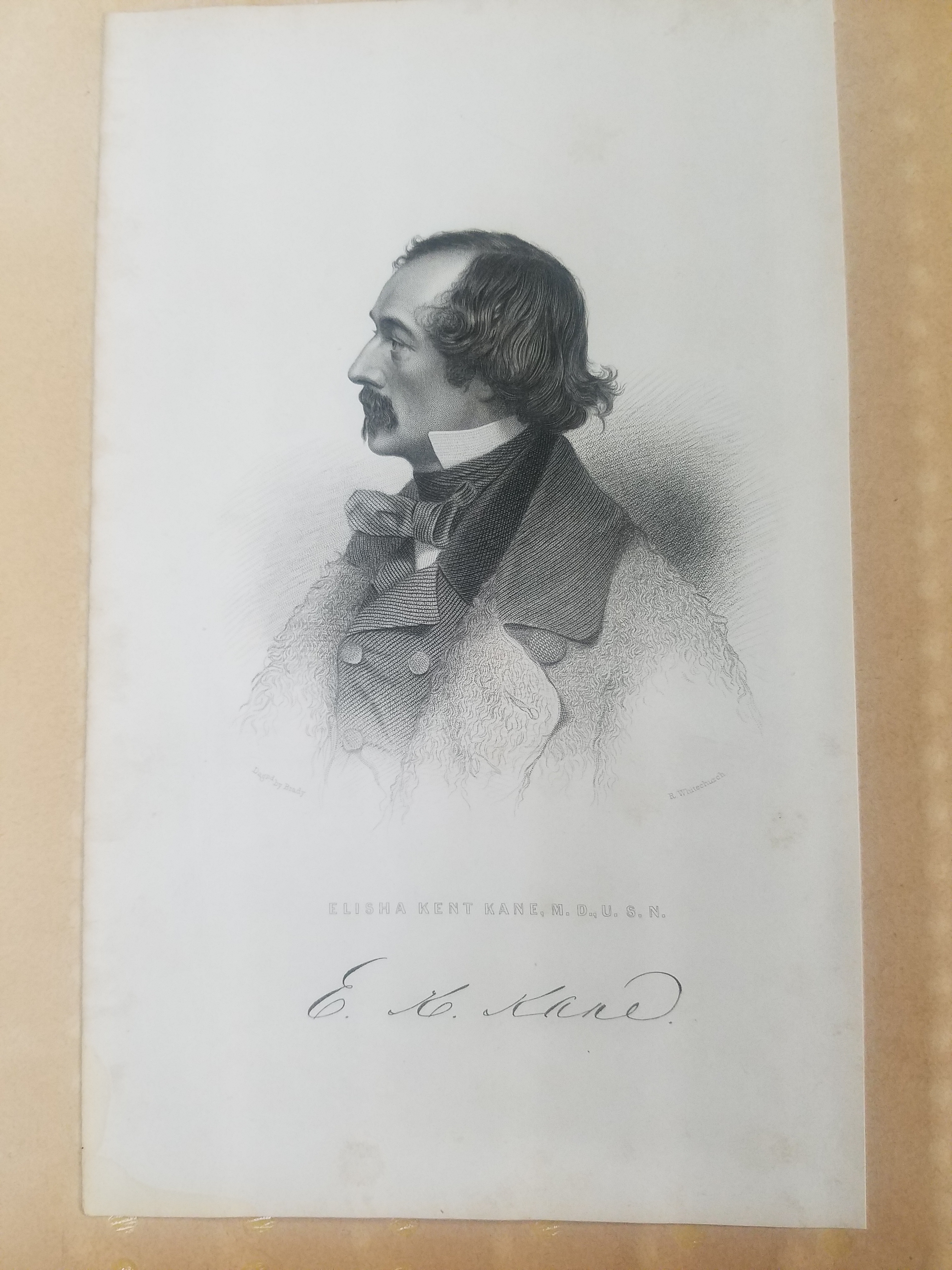
Click the link to see this Portrait of Kane from the Edmund Mills Scrapbooks in the AGSL Archives
Elisha Kent Kane, who appeared in last week’s post about the lost Franklin expedition, lived a life of adventure, and his harrowing escape from the arctic became an iconic expedition in the era of romance and arctic exploration. The accomplished explorer died tragically after his return from the second Grinnell expedition; extreme climate and malnutrition had wreaked havoc on his health. He died just two years later in Havana, Cuba, where he had traveled with his family in the hopes of recovering in the warmer climate. His life of intrigue and excitement didn’t end in the arctic, however; apparently Kane also had a titillating love life. After his death in 1857, a rather scandalous legal dispute began: Margaret Fox, claiming to be Kane’s secret wife, took Kane’s family to court for withholding her inheritance.
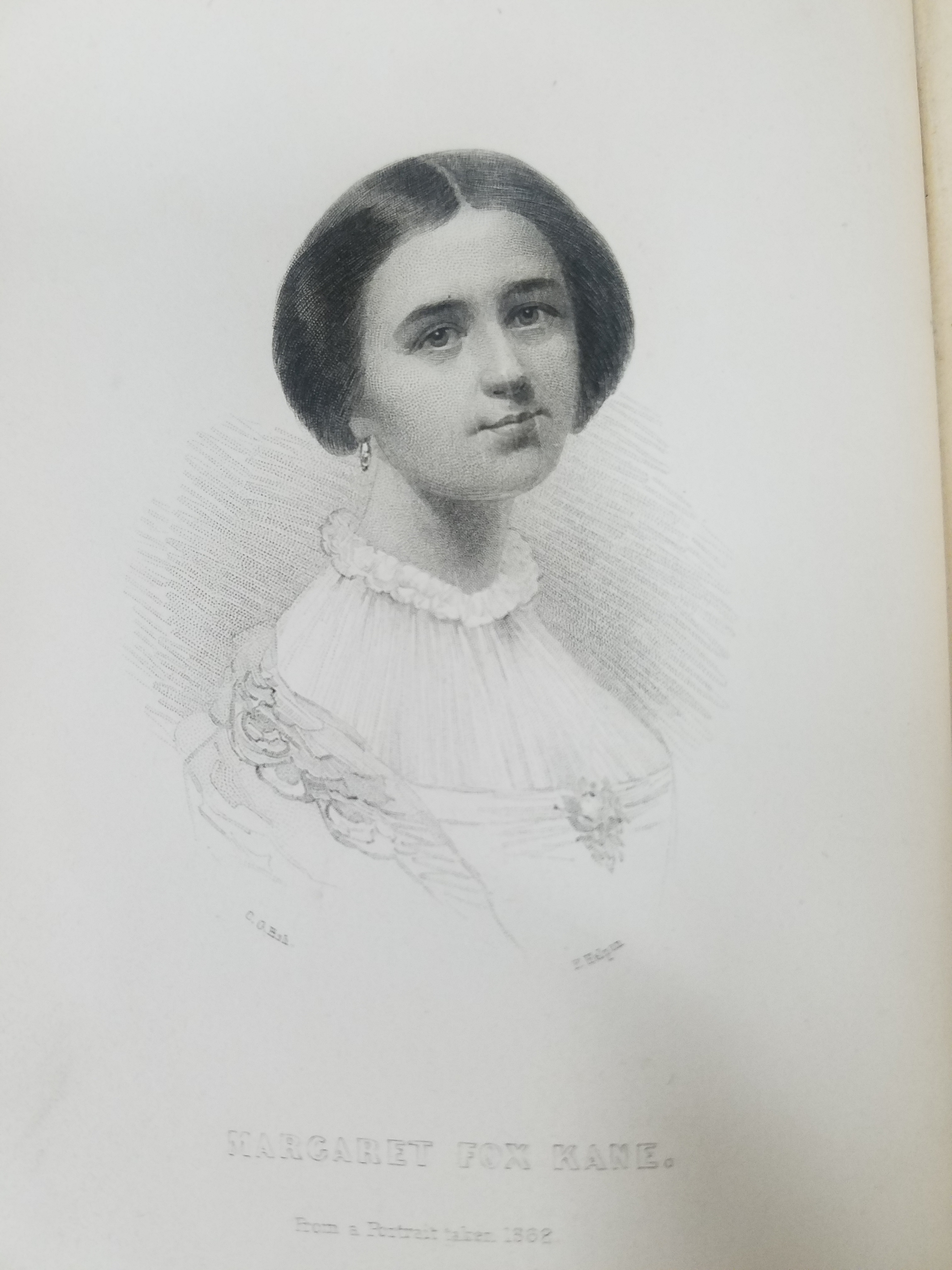
Click the link to see the Portrait of Margaret from The Love-Life of Dr. Kane
Margaret Fox was the middlest of the famous spiritualist Fox sisters. Margaret and her younger sister became famous in 1848 for supposedly communing with the entity that haunted their house in Hydesville, New York. The girls rocketed to fame and began giving demonstrations of their spiritual powers the next year. By 1850, the girls were holding public seances in New York. She and her younger sister continued their journey to spiritualist stardom under the management of their oldest sister Leah; the trio would spend years enjoying success as the centerpieces of seances attended by the well-to-do and famous.
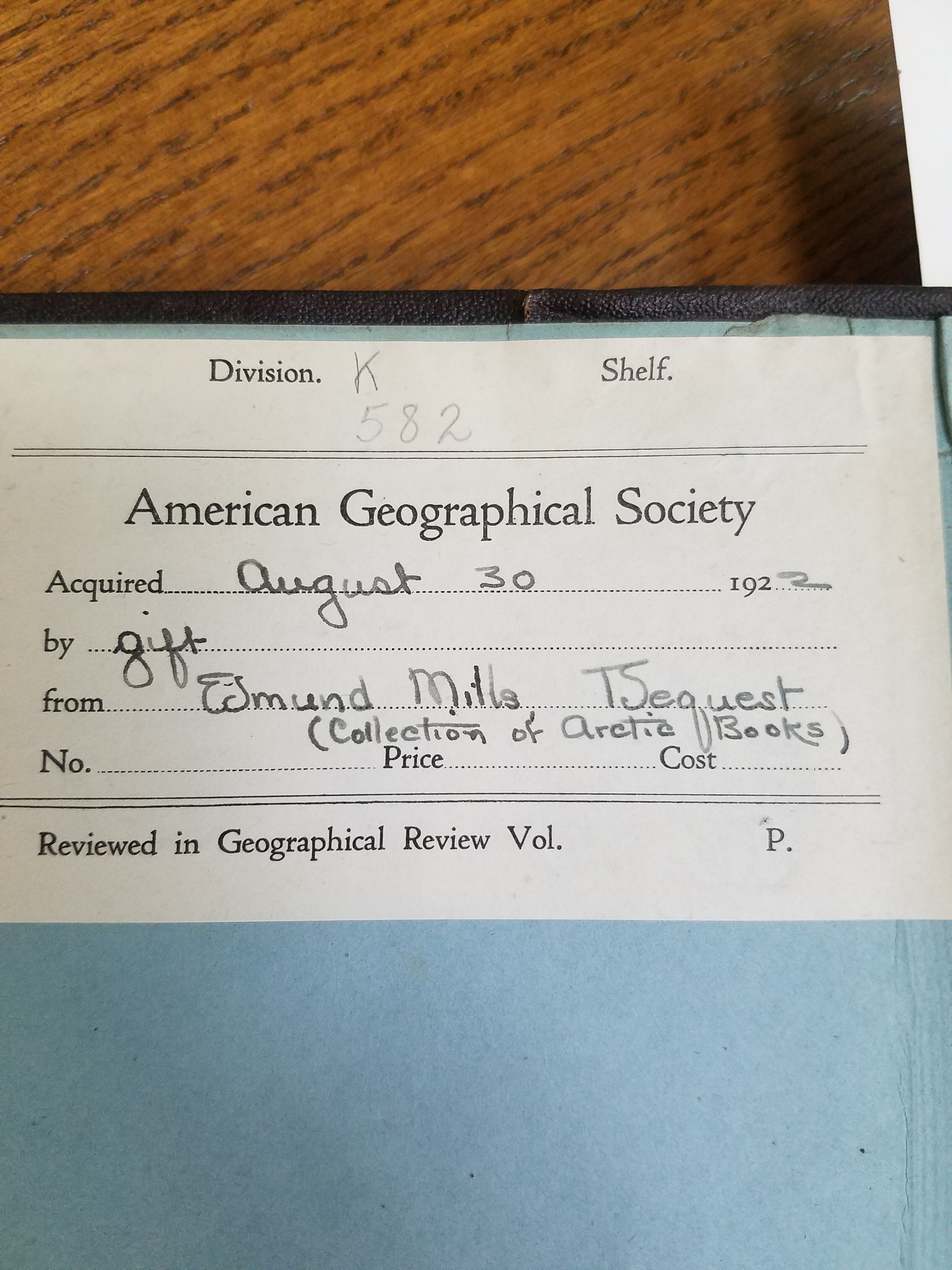
The AGS Library has in its rare collections a first edition copy of Margaret’s tell-all book The Love-Life of Dr. Kane, in which she claims to have secretly married Kane and publishes their personal correspondence to prove it. The book was gifted to the AGSL in 1922 by Edmund Mills from his collection of arctic books. The book, published in 1866, is prefaced and introduced by an unnamed author sympathetic to Margaret’s position in her legal battle with the Kane family and includes a memoir giving a narrative telling of the illicit love-match.
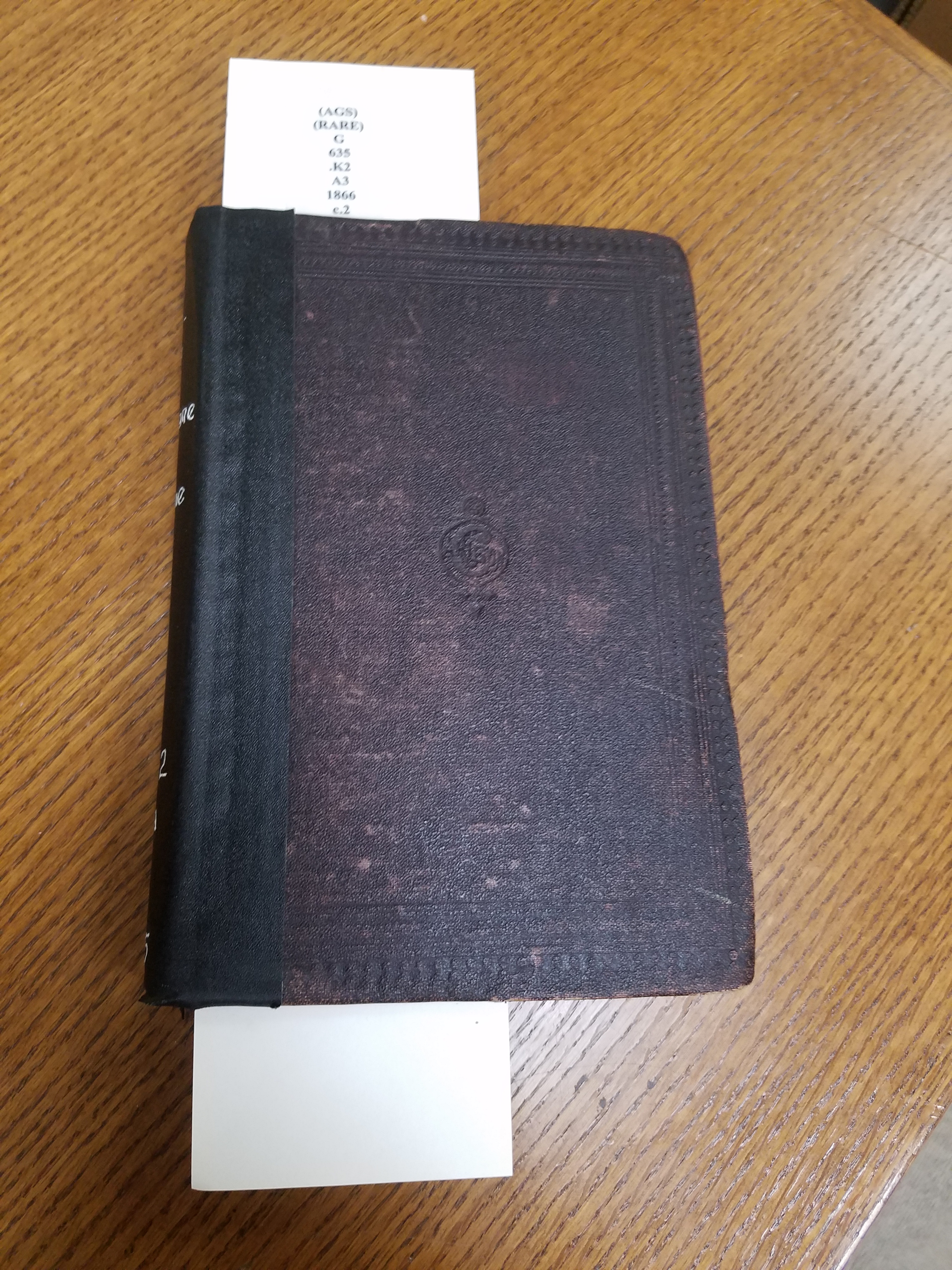
The preface first apologizes for the indecency of publishing love letters and “that which was never intended to meet the public eye,” but goes on to explain that the publication of these private letters, considered too “sacred” by Margaret to publish previously, will save her reputation from the slander she suffered by keeping them private. According to the preface, Kane had left a small inheritance to Margaret as his wife. Their marriage was vehemently denied by the surviving Kane family, and any mention of it in the press was quickly disparaged. Margaret, widowed and without an income, was forced confront the Kane family about the sum left to her by her late husband. After several disputes, several of which involved Elisha Kane’s brother breaking financial agreements, Margaret decided to publish the letters.
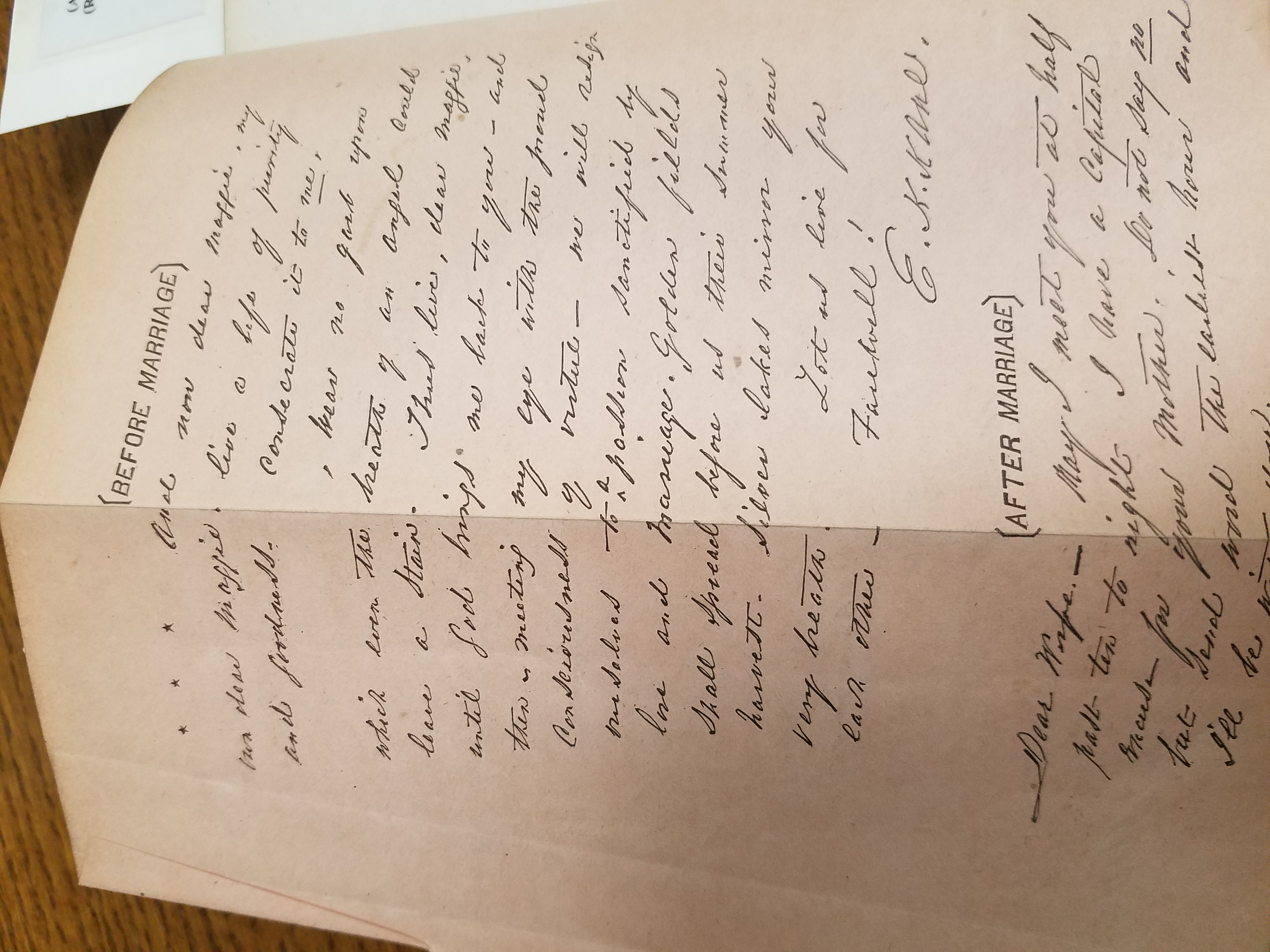
Fold out copy of letters in Kane’s handwriting tucked between the preface and introduction 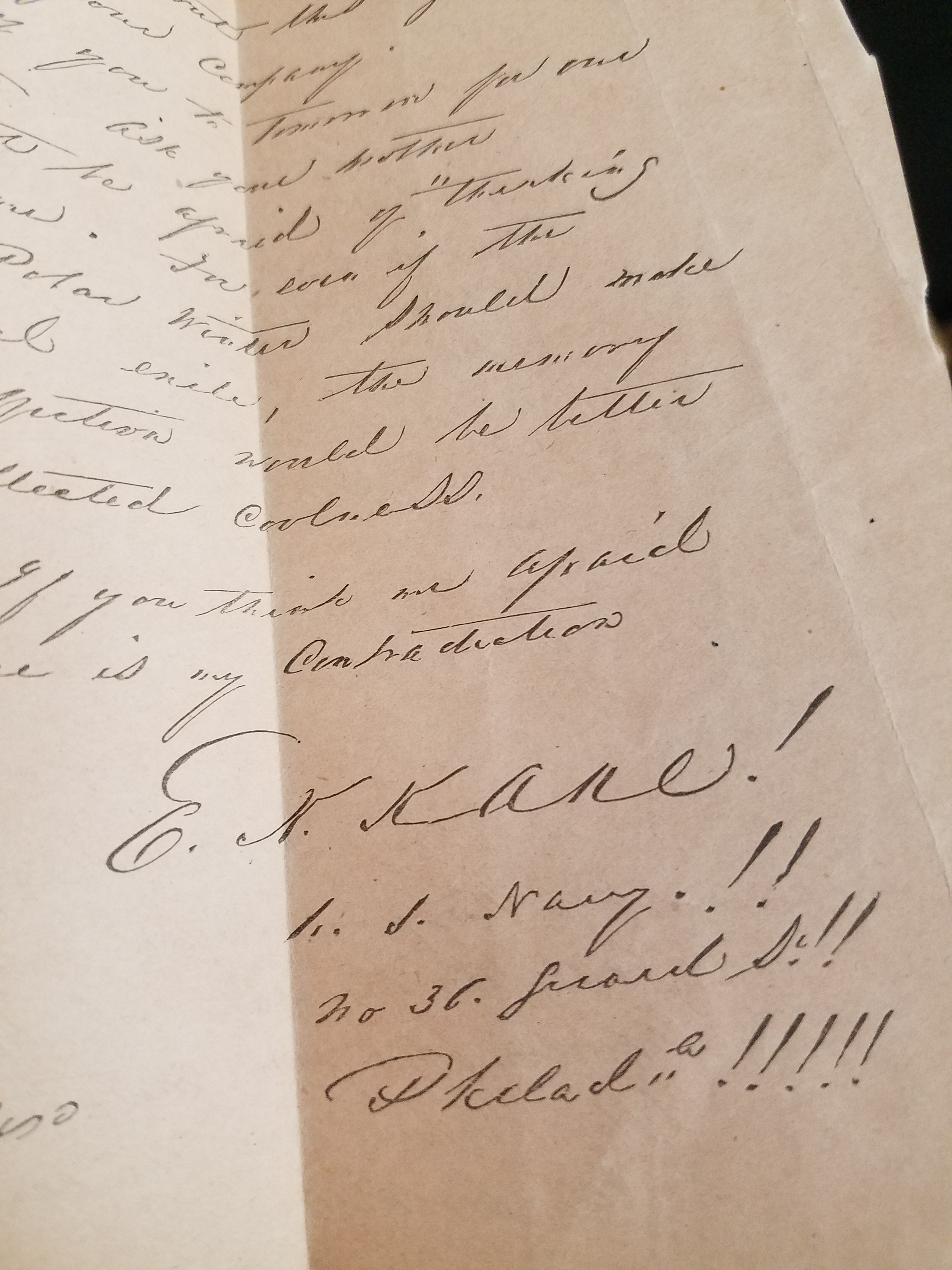
Kane’s signature
The introduction casts Kane and Margaret as star-crossed lovers kept apart by her occupation as a spiritualist, lack of social position, and his own family’s objections to her reputation. The anonymous author, rather romantically, declares, “How deep and strong that love must have been, to come off victorious from such a conflict!” Then finally, the Memoir chapter begins with the story of how the two met and the letters that they exchanged over the course their courtship. The author describes Kane’s falling in love with Margaret at first sight when he found her in Webb’s Union Hotel bridal parlor the autumn of 1852, preparing for a seance. Their epistolary romance began just days later when Kane slipped Margaret a note asking, “Were you ever in love?” And Margaret replied, “Ask the spirits.”
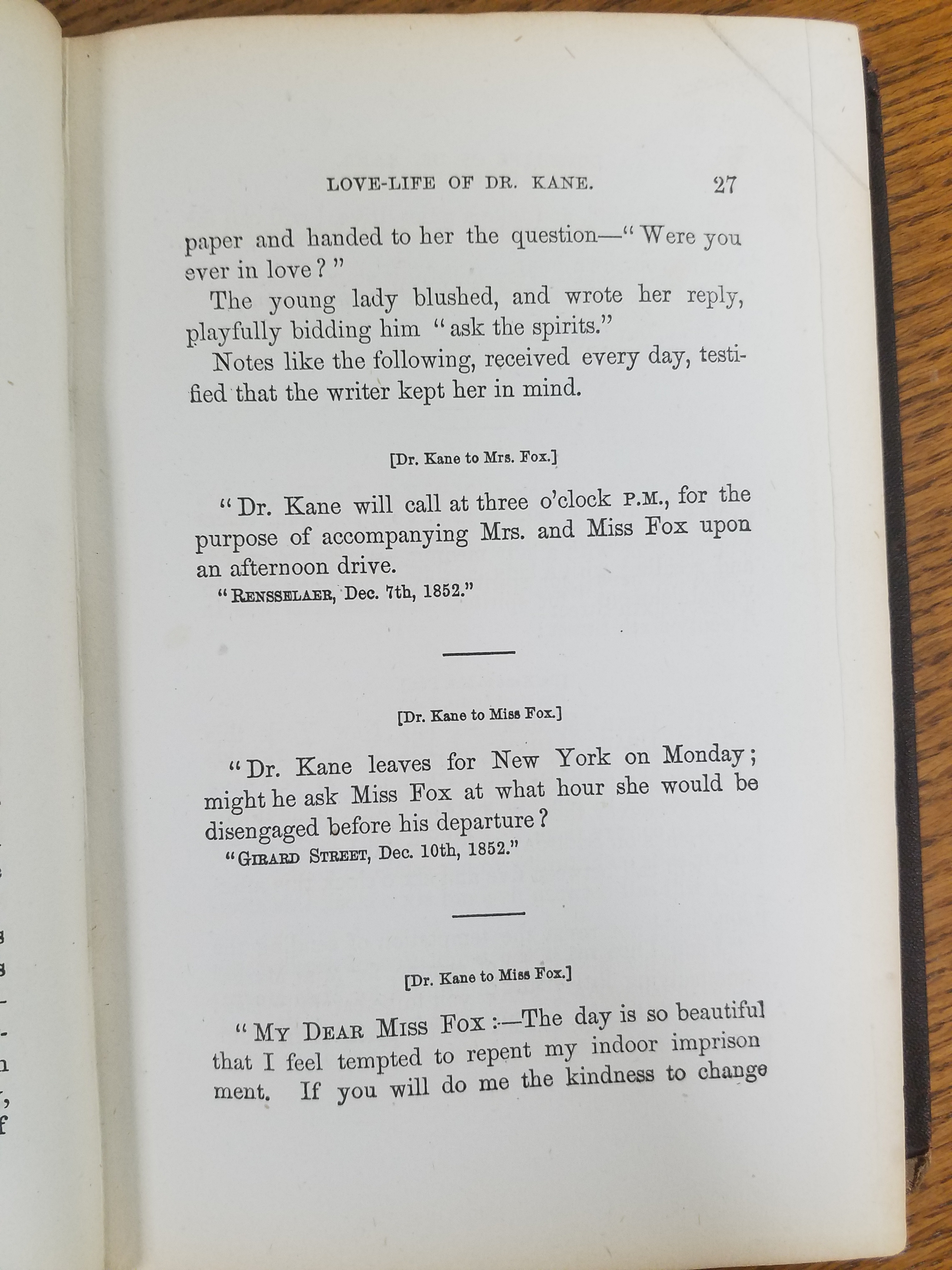
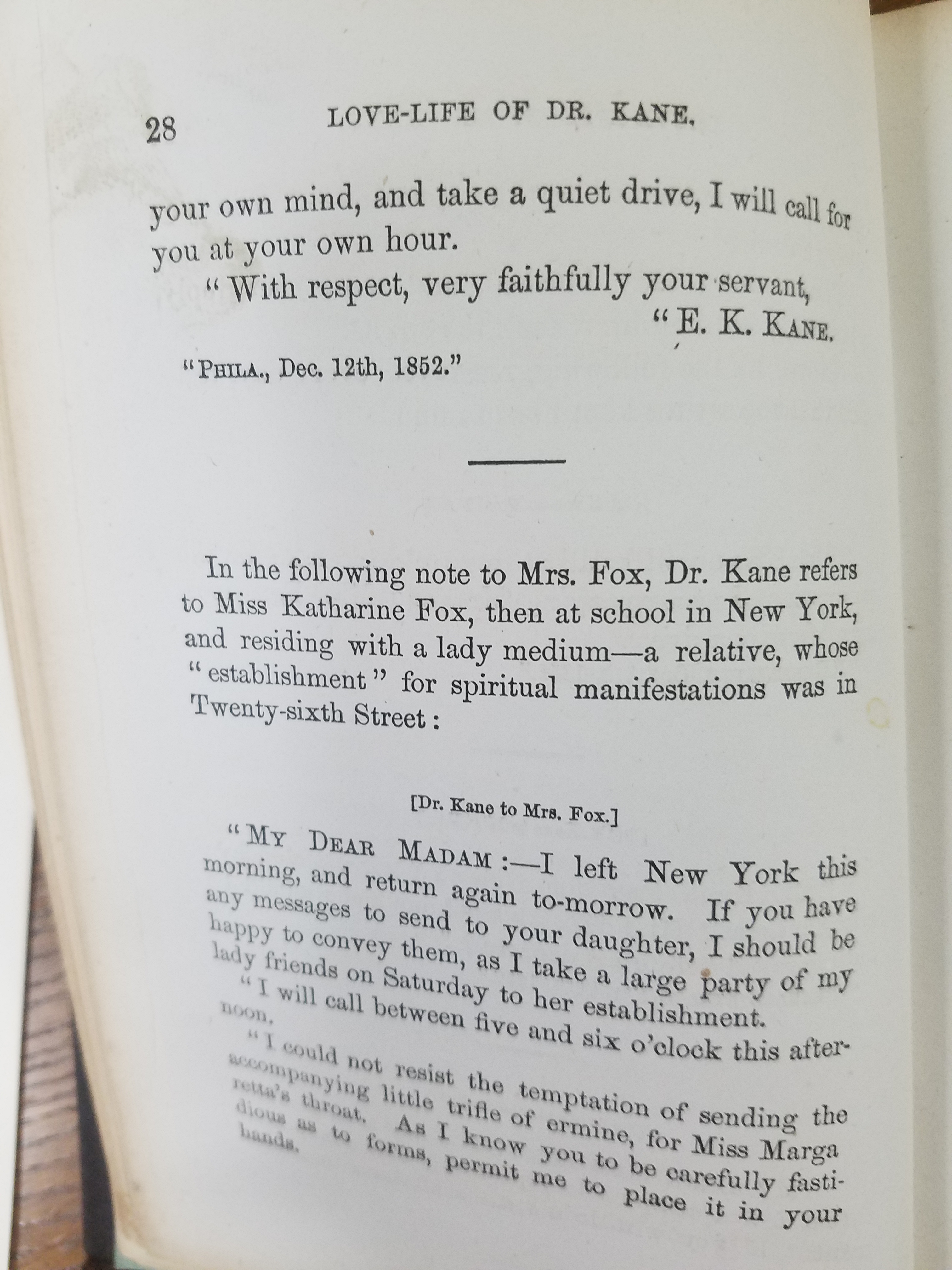
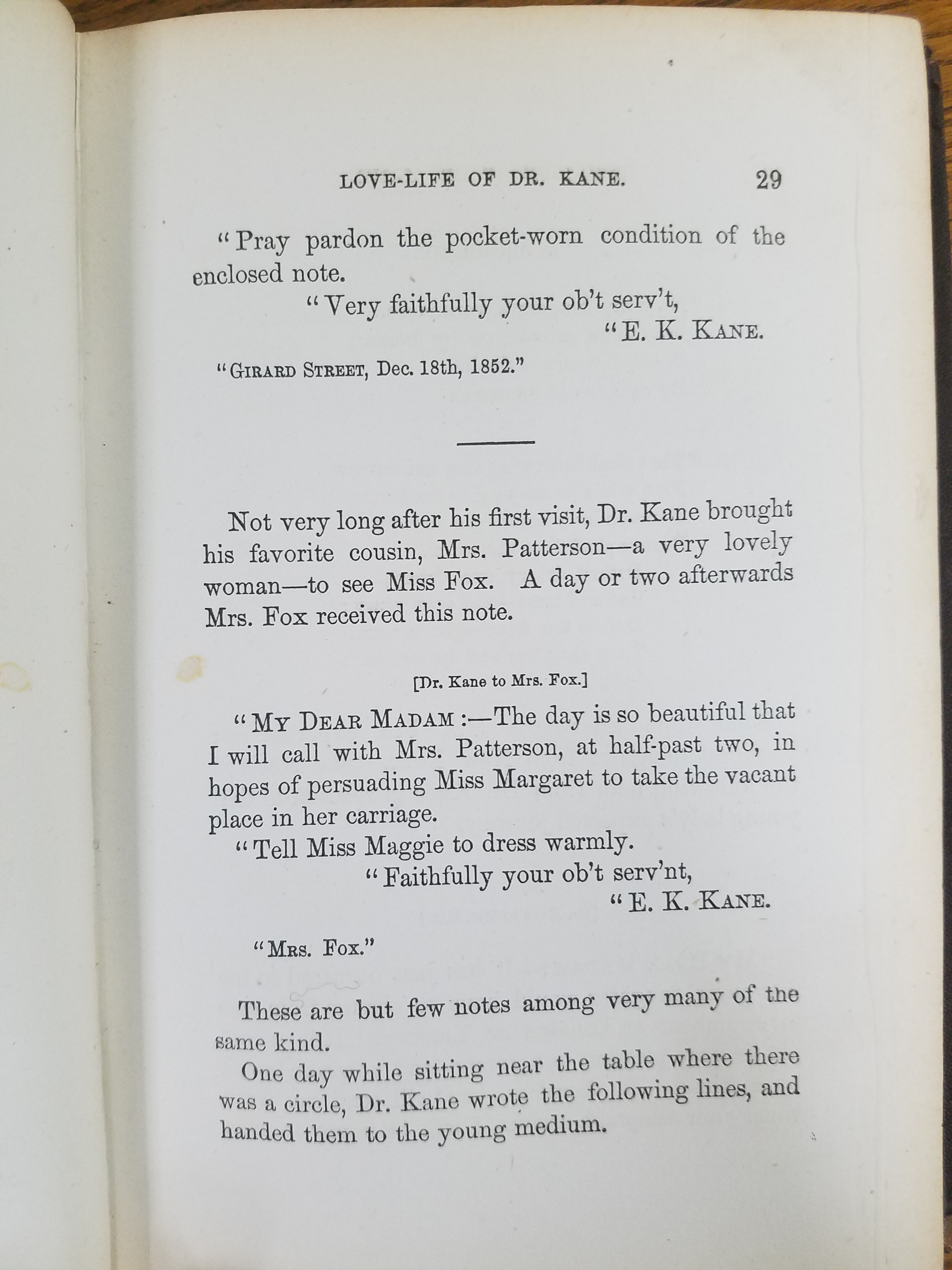
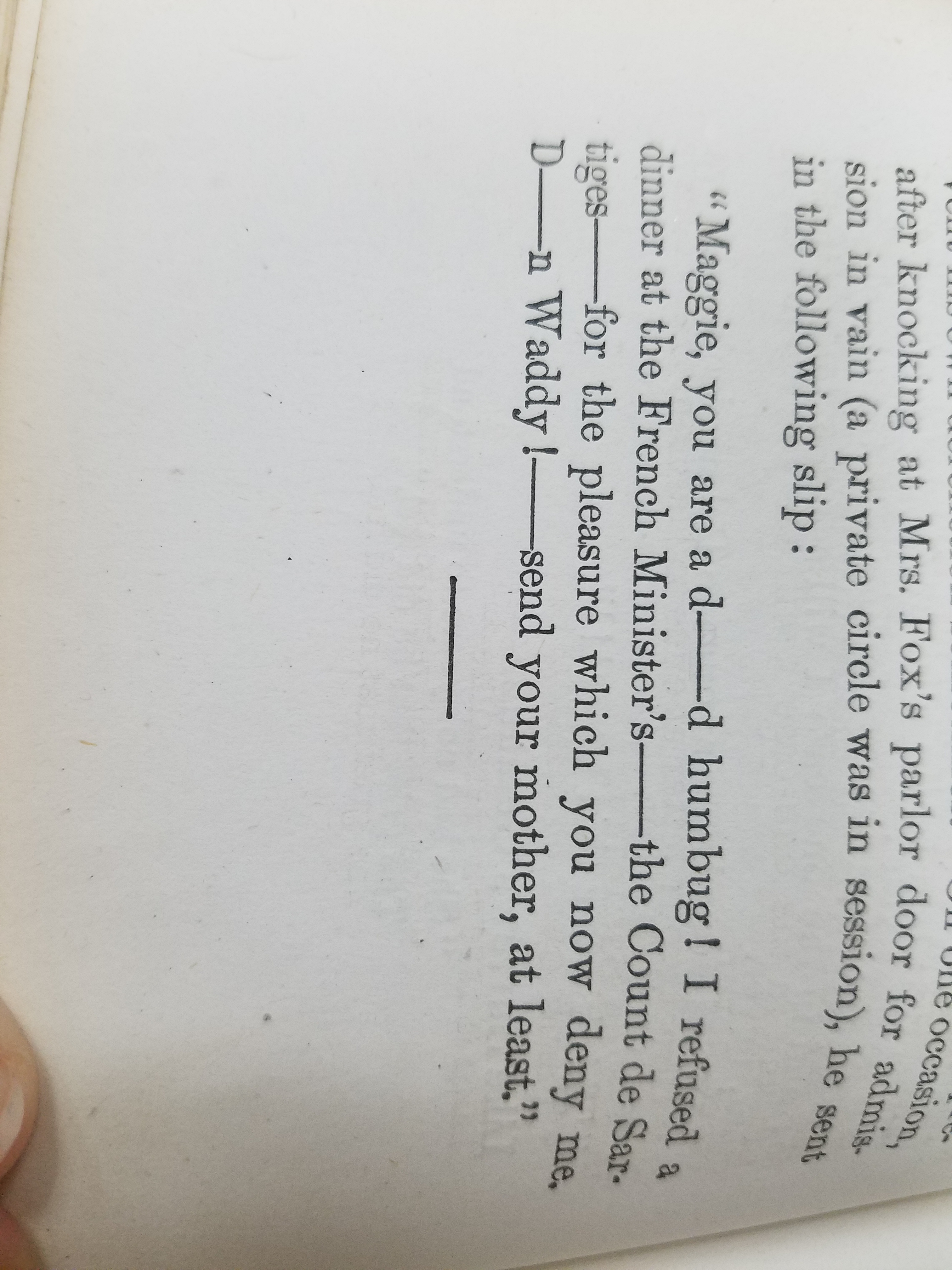
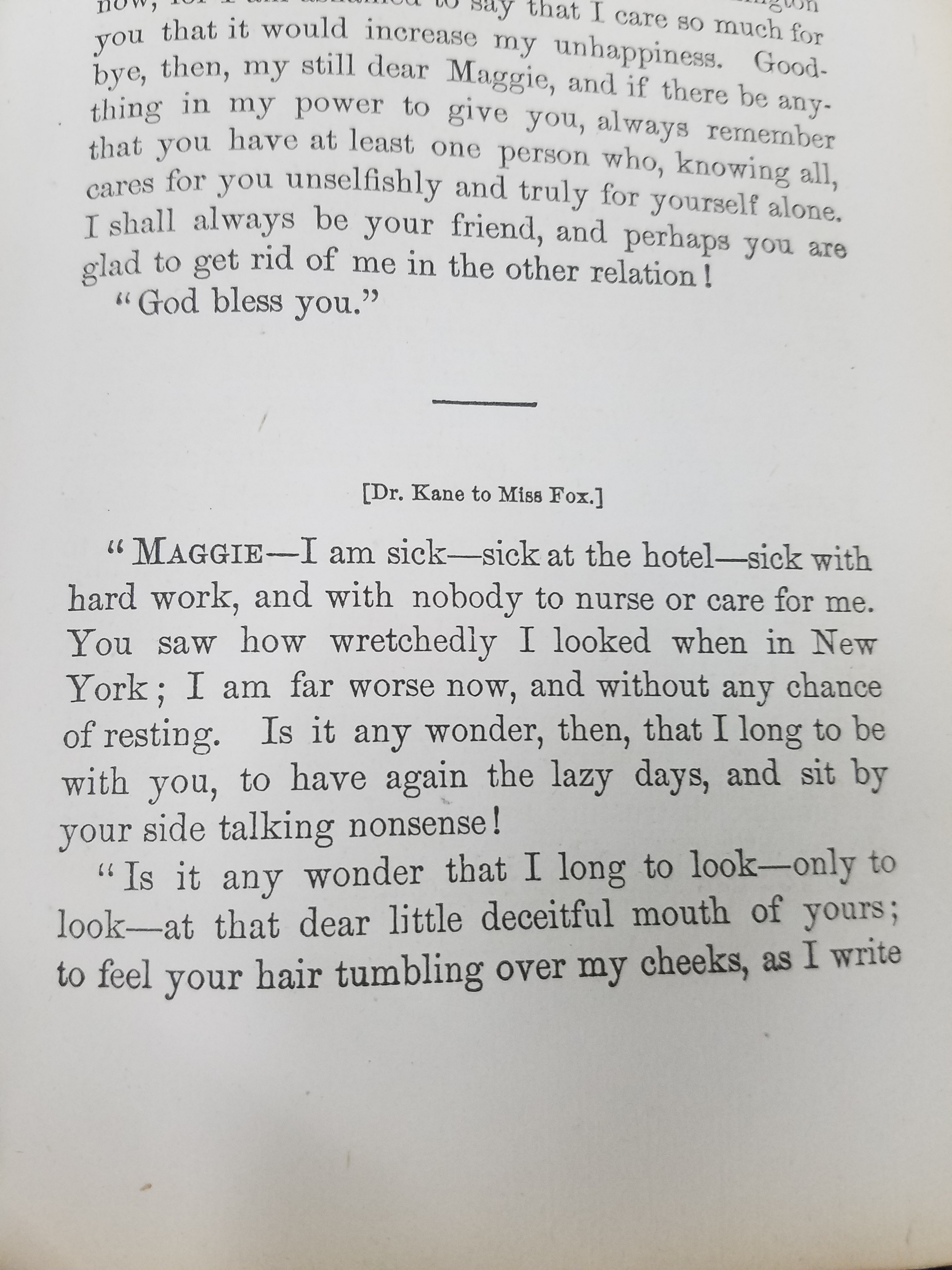
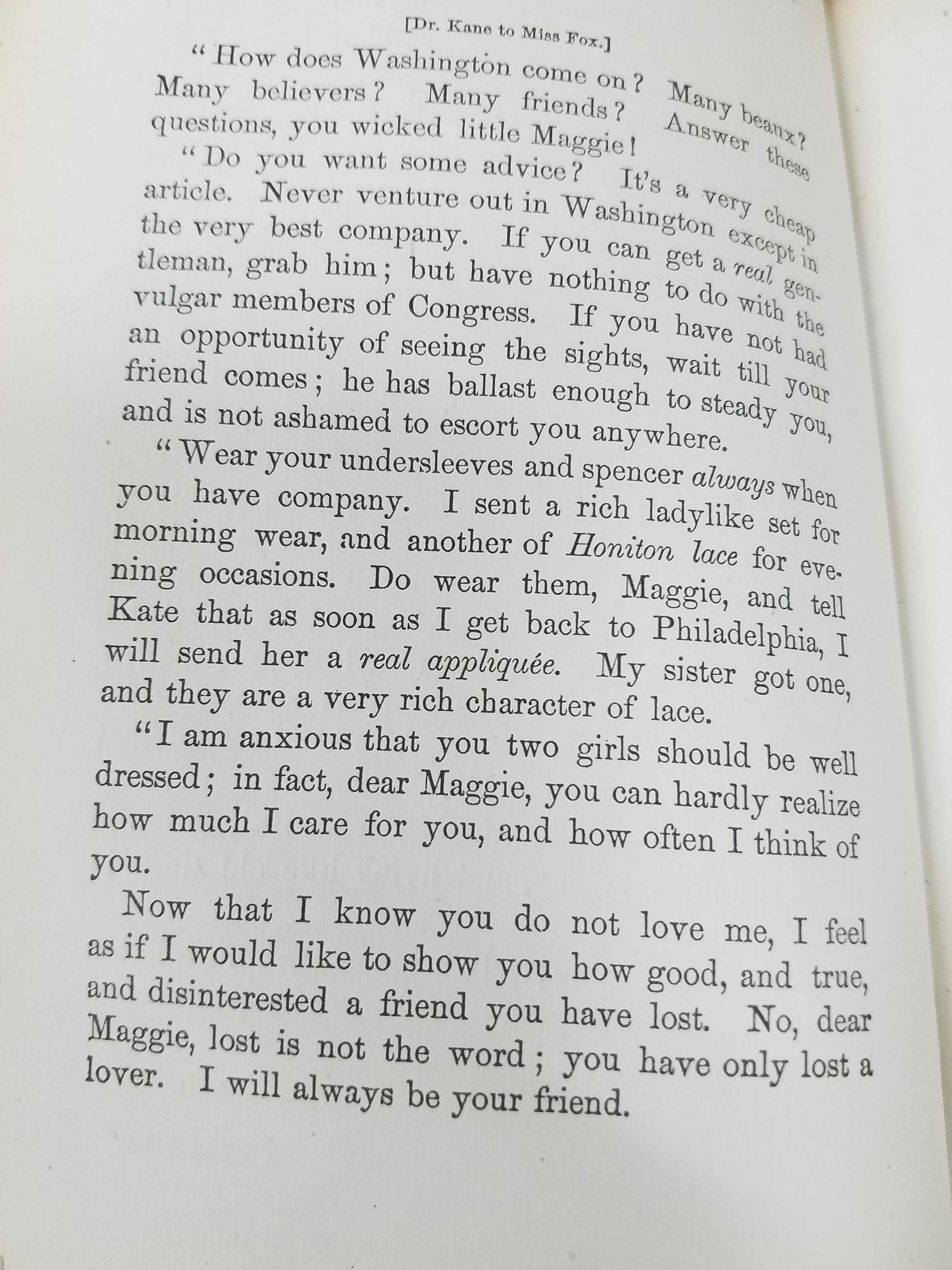
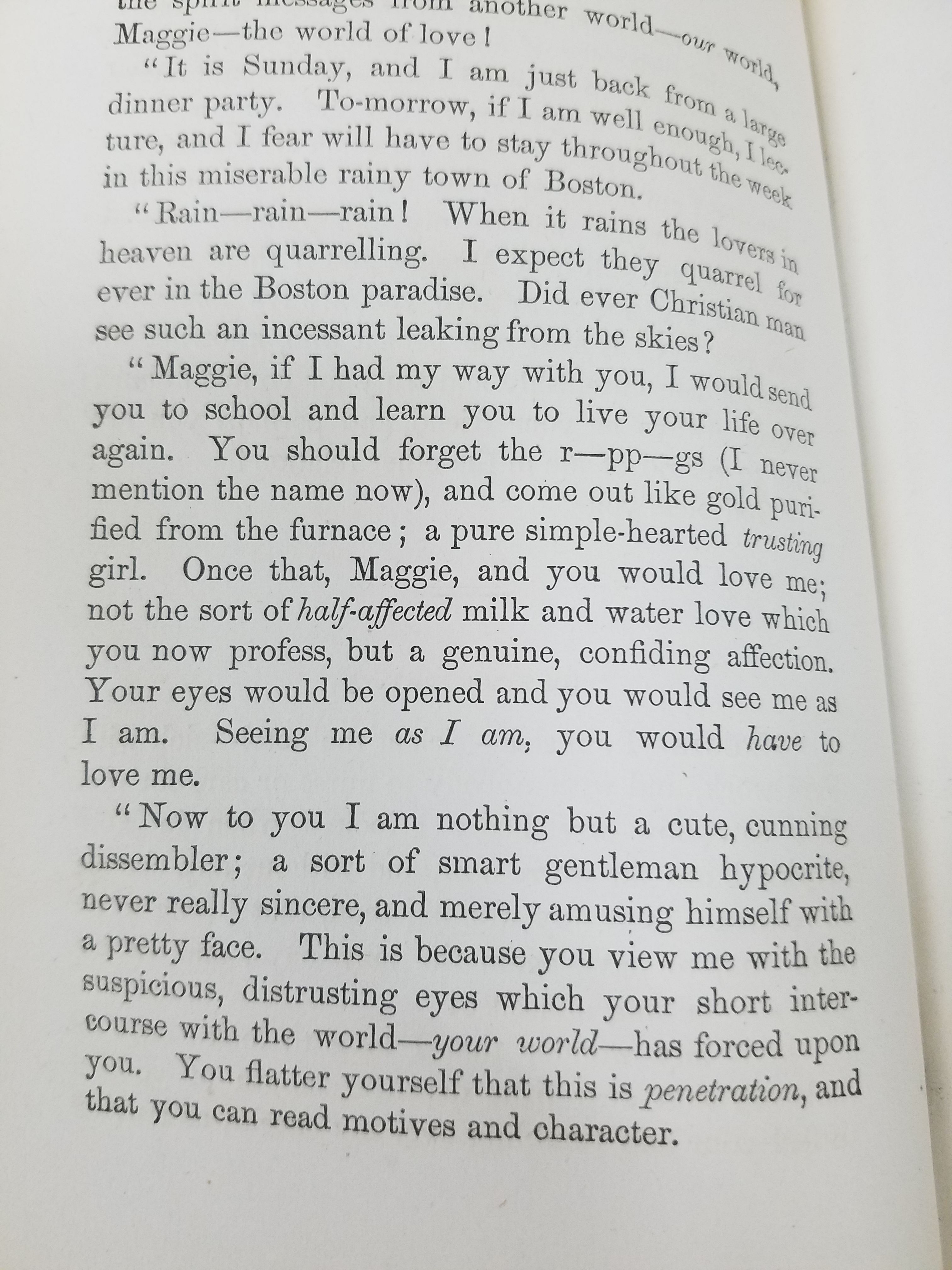
The romance, as told by the collection of letters, was tumultuous. Kane often denounced Margaret for not being affectionate enough, for continuing her work as a medium, or any number of sundry offenses. And his long absences, during which he sent Margaret to school to be educated until his return, were also a struggle. Though Henry Grinnell often wrote to Margaret to update her about Kane’s progress, the long separations created even more tension between the two. His family rejected Margaret so vehemently that her mother was forced to bar Kane from seeing her for fear of Margaret’s feelings or reputation being injured. Kane continued to seek Margaret out, and even asked her to marry him when he saw her on the street. She refused, but the press caught wind of their so-called engagement and maligned her in the papers. Kane never officially denied their engagement, which helped the gossip continue. Years passed, but in 1856, after Kane’s return from the second Grinnell expedition and the death of one of his close friends, Kane proposed to Margaret again. This time, more officially. But the two would not actually be married until days before he left for Cuba to recover his health– in the Fox’s parlor, Kane declared, in front of Margaret’s mother as their witness, that they were husband and wife. The book cites several legal precedents for this kind of common law marriage, assuring readers that the two were rightfully, if not publicly, married that night. The tone of Kane’s letters changes after this; he begins calling Margaret his beloved wife, but is filled with dread by his continually declining health. He tells Margaret that his greatest fear is dying away from her– which is, of course, what happens. And their marriage, which they had both vowed to keep secret until his return from Cuba, was never officially acknowledged by the Kane family. Margaret converted to Catholicism after Kane’s death and spent her days disavowing her own family’s legacy as mediums.
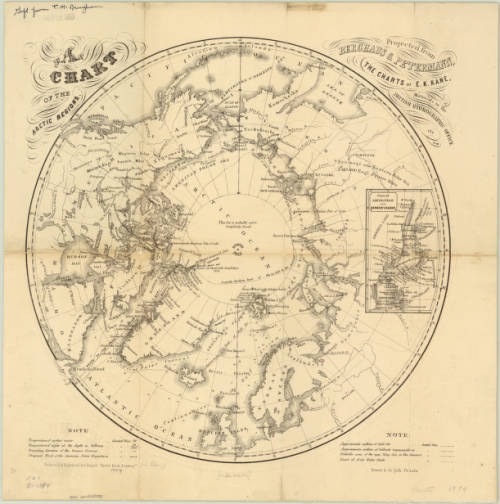
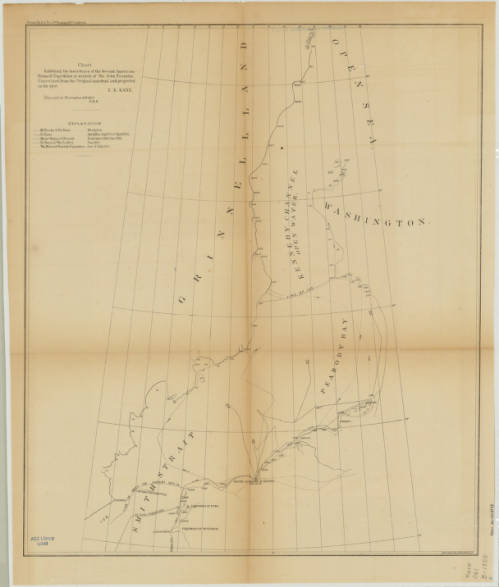
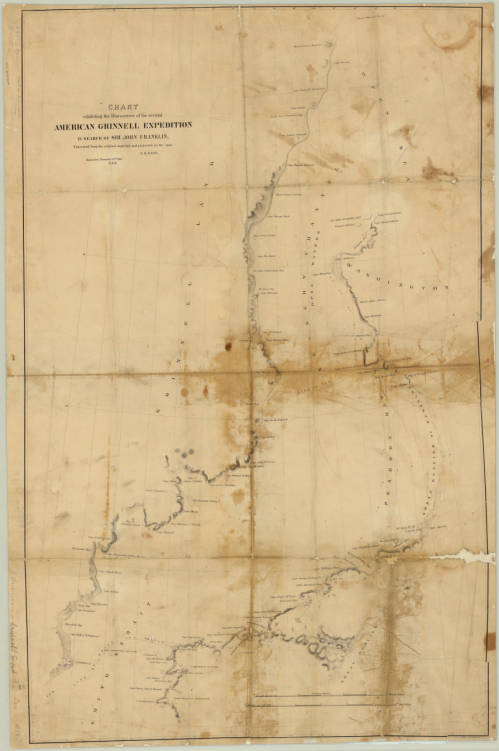
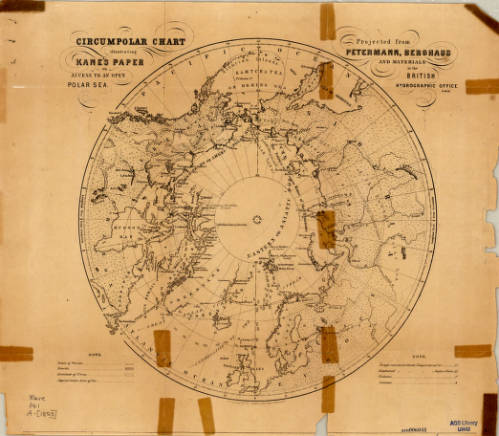
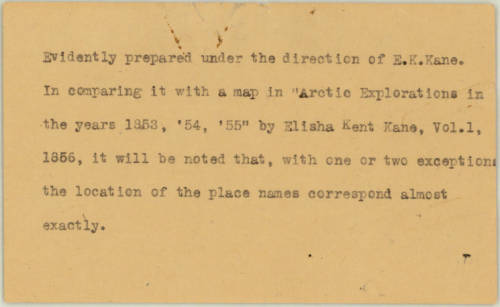
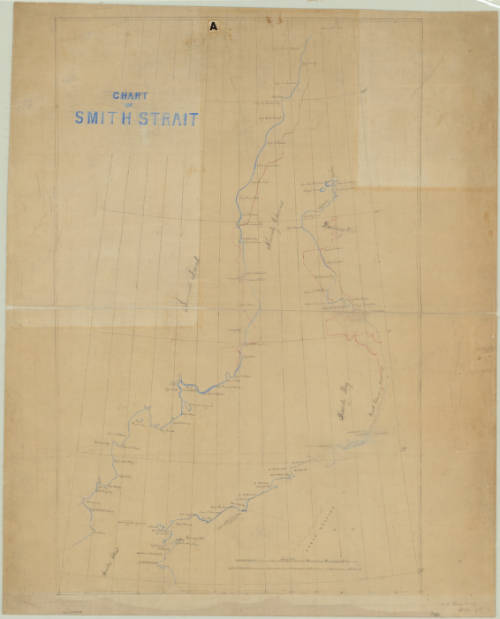
The introduction of The Love-Life of Dr. Kane claims that a man’s love letters “[reveal his] inner life and soul.” Elisha Kent Kane was a larger-than-life man who gave his life to the pursuit of discovering the unknown. The correspondence collected and published by Margaret Fox show us that Kane was also just a man, with a life and love beyond what we know. The AGSL has several maps by Kane in its collection, reminding us of his many contributions to the American Geographical Society. Below are just some of the items in the AGSL archives: his 1853 circumpolar charts and his surveys of the arctic during the Grinnell expeditions.