Bowman
American Geographical Society Councilman Roosevelt and his Geographer
By Lauren Maddox
The American Geographical Society’s council has been host to some famous and interesting members– Rockefellers and Tiffanys, even. But even with a cast of fascinating characters, it’s hard to outshine Franklin D. Roosevelt.
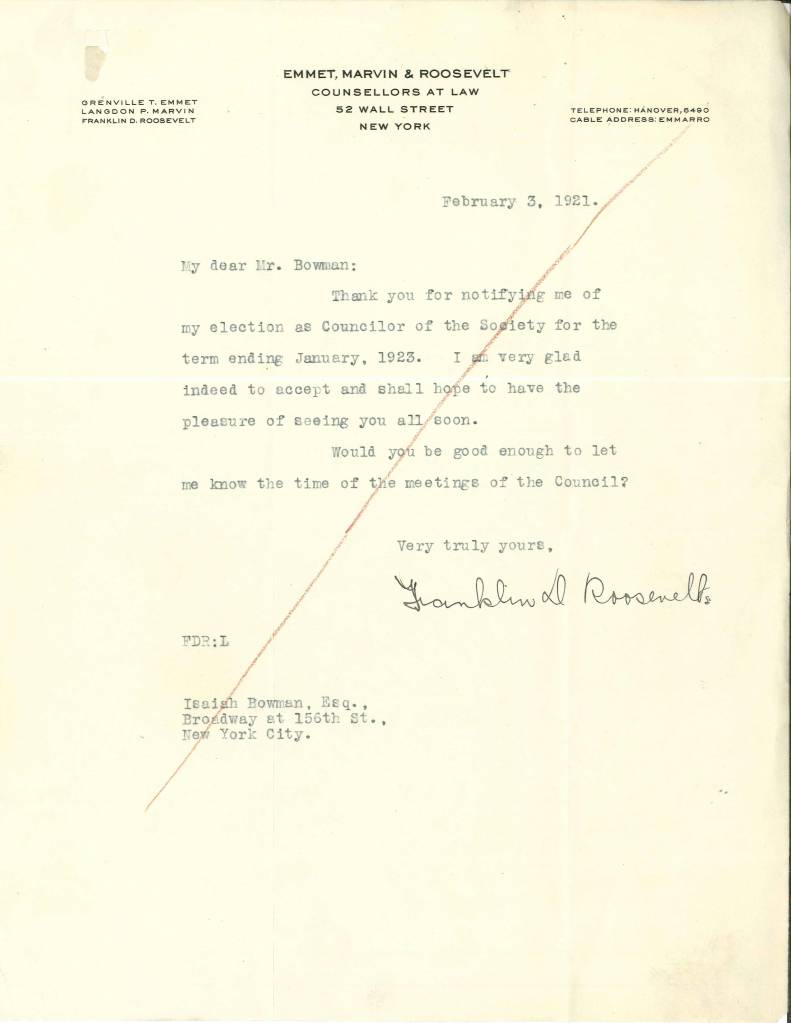
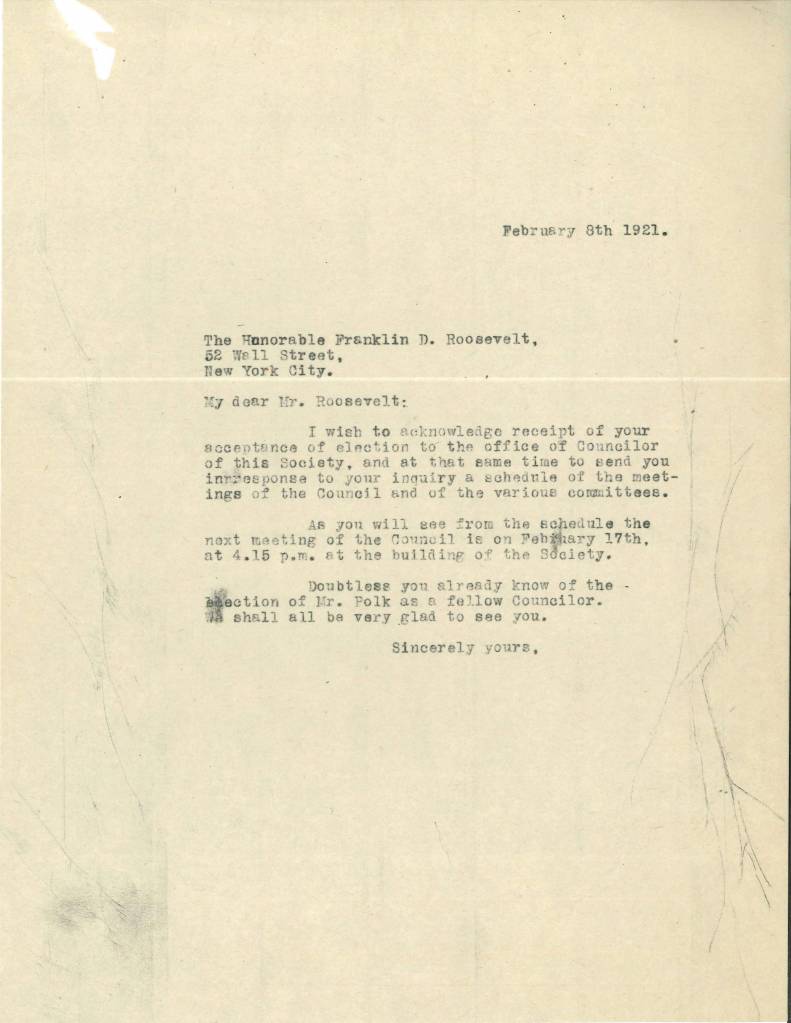
Through Roosevelt and Bowman’s letters, we can track the progression of Roosevelt’s health and his political career. Roosevelt often sent letters apologizing for his absence from AGS Council meetings, due to travel and health problems both.
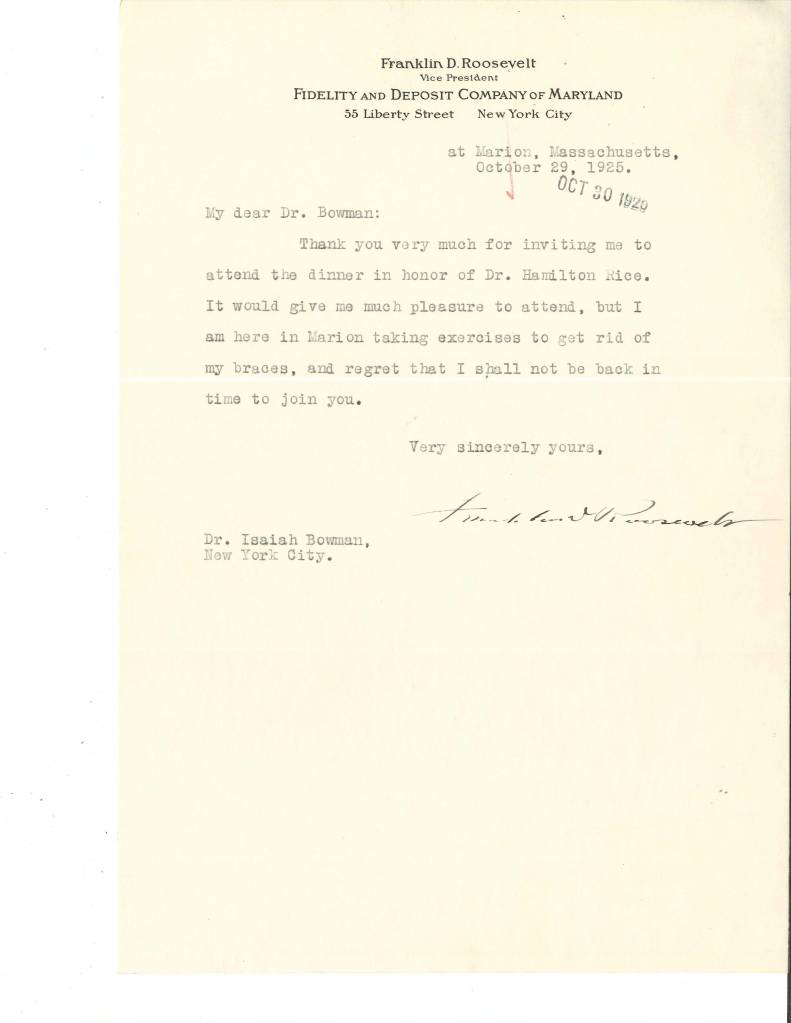
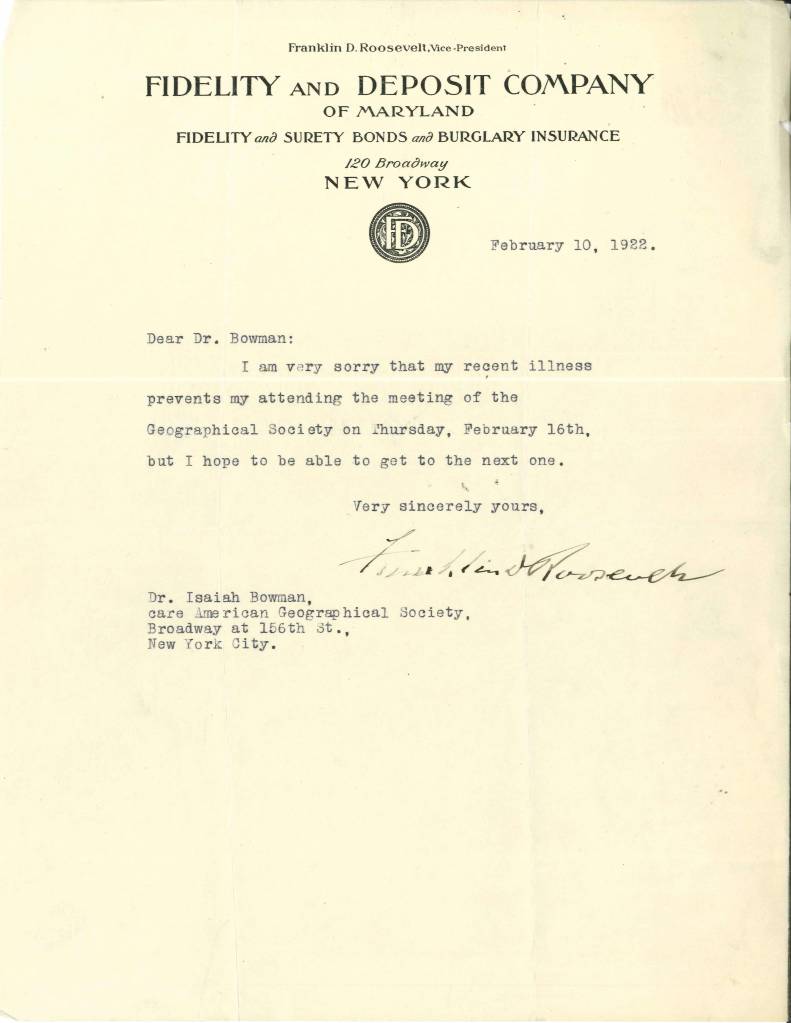
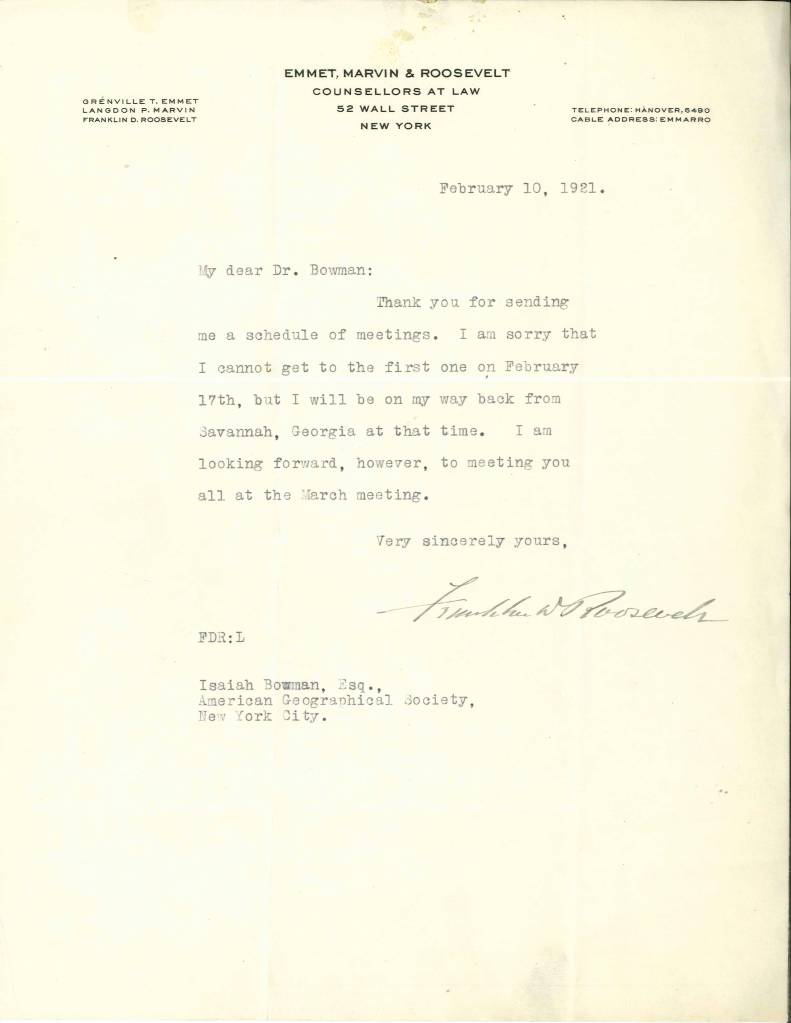
As Roosevelt’s political career progressed, his ability to attend council meetings and participate in Society work was greatly hampered. He was elected governor and then president during his tenure on the council! In 1932, he was forced to resign from his position as council member in light of his impending Presidency. Roosevelt served on the American Geographical Society’s council for more than 10 years– he was a busy man but always believed in the Society’s mission and continued to think kindly of them after his obligations to his office prevented him from participating on the council.
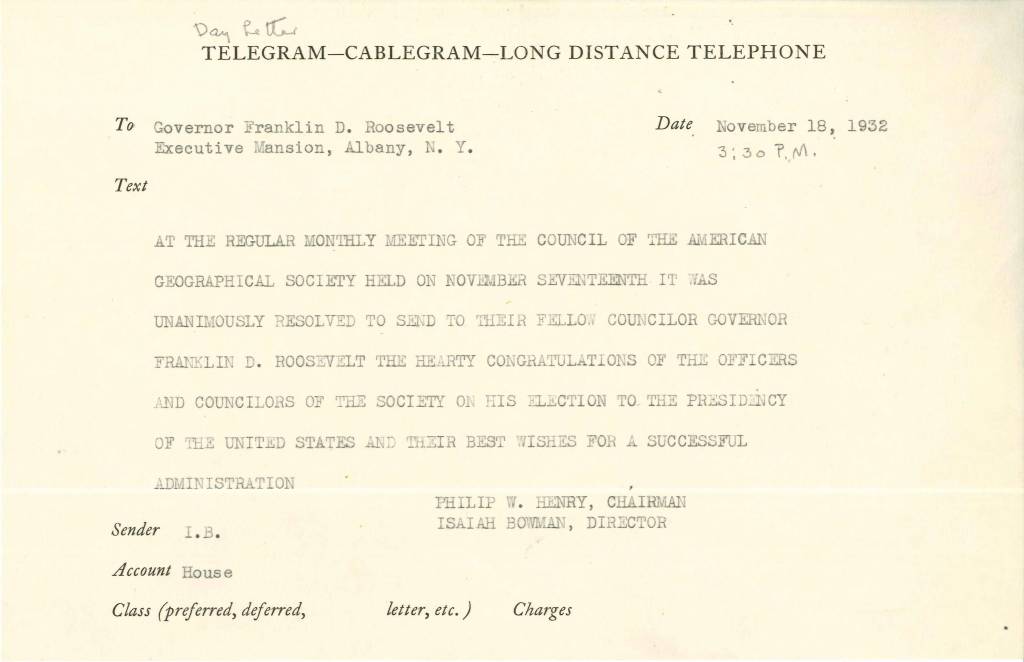
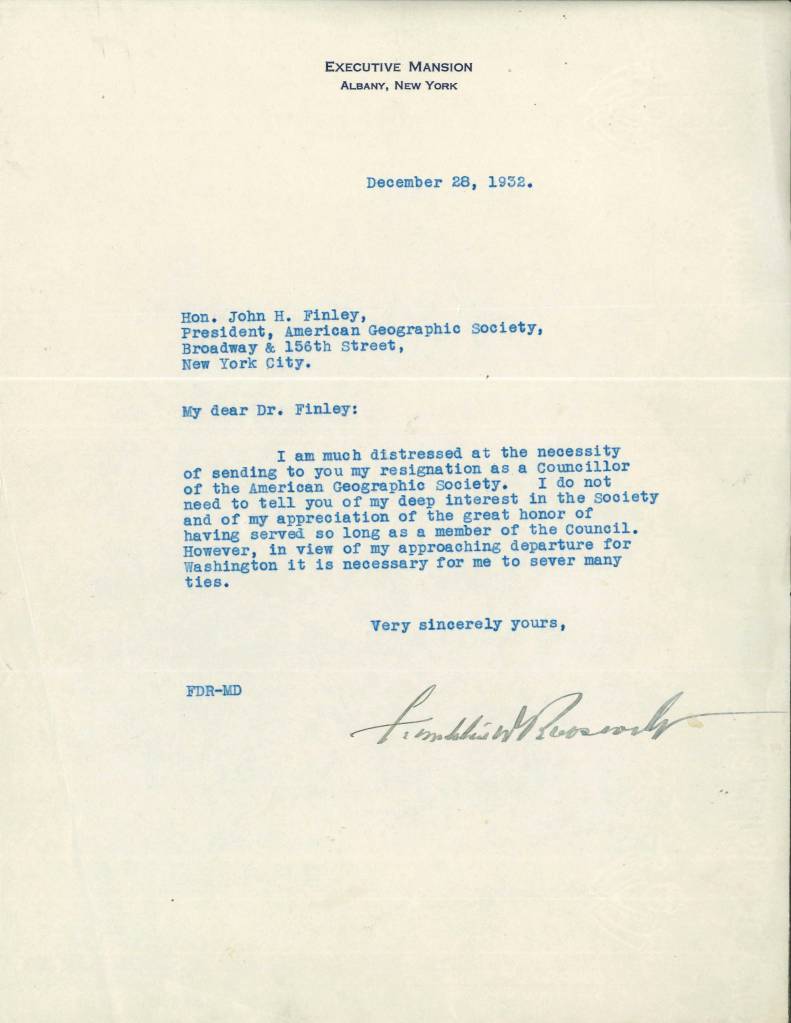
Roosevelt’s relationship with the AGS of New York didn’t end with his resignation from the council, however. The two men continued to correspond, and Roosevelt made Isaiah Bowman a State Department adviser during World War II.
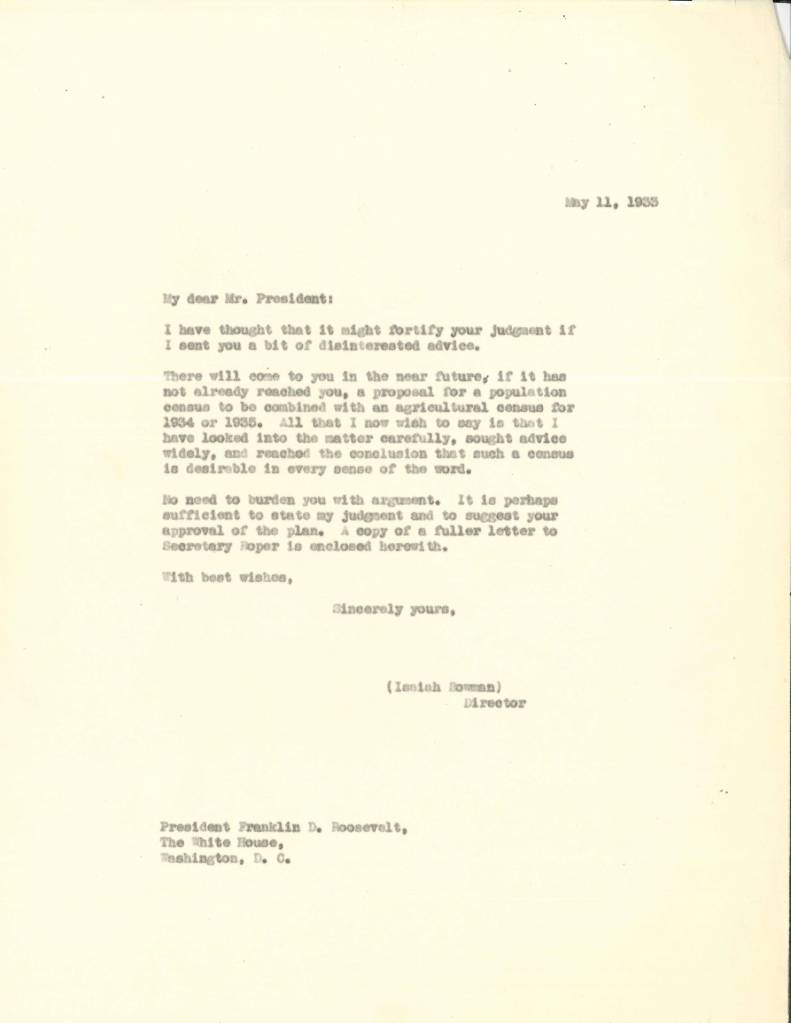
This wasn’t the first time Isaiah Bowman had gained the confidence of a President; in 1917, he offered the AGS’s resources to the government and became close to Woodrow Wilson. His insight played a key role in how territory was distributed as part of the Paris Peace Conference in 1919. It wasn’t surprising that FDR would keep Bowman and his geographical and cartographic resources in mind during World War II. As an adviser in the State Department, Bowman participated in the Dumbarton Oaks Conference and the San Francisco Conference, which established the United Nations. During this time, Bowman was still President of John Hopkins, and he established the Applied Physics Laboratory, where technologies like the Proximity Fuze were created. Bowman was a useful man for the president to rely on.
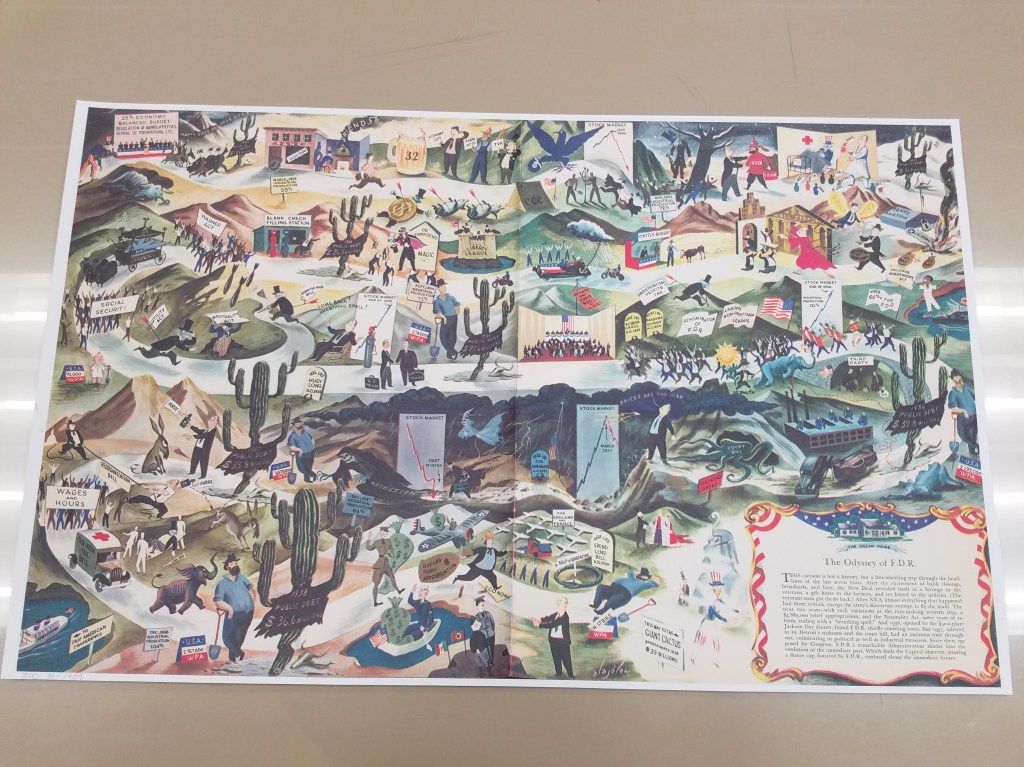
“The Odyssey of FDR” is an unflattering map of FDR’s political exploits up to 1939.
It was, however, surprising that Roosevelt enlisted Bowman to help find and establish refuge for Jewish emigrants displaced by the war. Bowman was a known antisemite who put policies into place at John Hopkins to limit the number of Jewish students admitted to the school. Neil Smith’s American Empire: Roosevelt’s Geographer and the Prelude to Globalization revealed Bowman’s prejudiced policies at John Hopkins and his treatment of Jewish students there. Unsurprisingly, Bowman’s search for refuge for Jewish emigrants lead him to five different countries, not one of which was the United States.
The collection of Roosevelt’s and Bowman’s letters in the AGSL collections help track the rise of Roosevelt to power, and the years-long relationship he maintained with the American Geographical Society and its leadership. Reading through their letters lets us watch as history unfolds before us all over again– and reminds us of the private lives that influence our public histories.
You can find more about Roosevelt and Bowman at the Archives of the American Geographical Society digital collection: https://uwm.edu/lib-collections/agsny/

