north carolina
Franklinia: The Fourteenth State in the Union
By Lauren Maddox
After the American Revolution, North Carolina was in debt. To be fair, the entire country was in debt; it was just that Congress, who was also dealing with their own debts, began to collect. North Carolina didn’t have any capital to pay off their debts to Congress– instead, they voted in April 1784 to give Congress a parcel of land, around 29 thousand acres, between Appalachia and the Mississippi River.
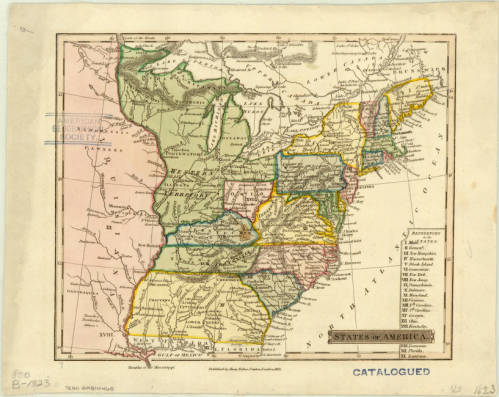
Click the link to see the States of America, 1832. Rare map recording the existence of a territory called “Franklinia” in our Digital Collections
This parcel of land– which is now East Tennessee– was left unprotected while North Carolina waited for Congress to take possession. The territory was ceded on one condition: Congress had to assume ownership of the area within two years. Without protection, the people living there were vulnerable; they weren’t well-situated for easy trade and had displaced, sometimes violently, the indigenous peoples who lived there originally.
Congress was unable to take ownership before North Carolina decided to rescind their offer just four months after their initial vote, so North Carolina made plans to reincorporate the territory– except that the people who lived there didn’t want to be reincorporated. As it turned out, despite being more exposed, being independent from North Carolina was a better deal. They weren’t as heavily taxed, and they weren’t satisfied with the protection North Carolina was providing anyway, so there didn’t seem to be any good reason to go back to being part of North Carolina.
And two men were already seeking to create a new Western state; John Sevier and Arthur Campbell had been discussing the possibility of establishing their proposed state with territory from Virginia, North Carolina, Alabama, and the region that would become Georgia, Kentucky, and Tennessee for years. Campbell’s call for a new state was well-received by other frontiersmen, but Virginia Governor Patrick Henry shot down his initial attempt by passing a law to prevent the use of Virginia territory in the creation of new states. They had made some headway in Kentucky, but the unclaimed territory ceded by North Carolina was a golden opportunity to establish the independent state they had been endeavoring to create for so long.
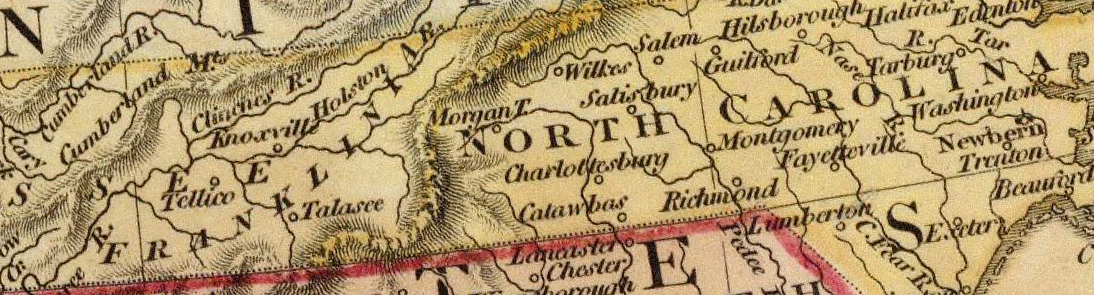
Detail of Franklinia 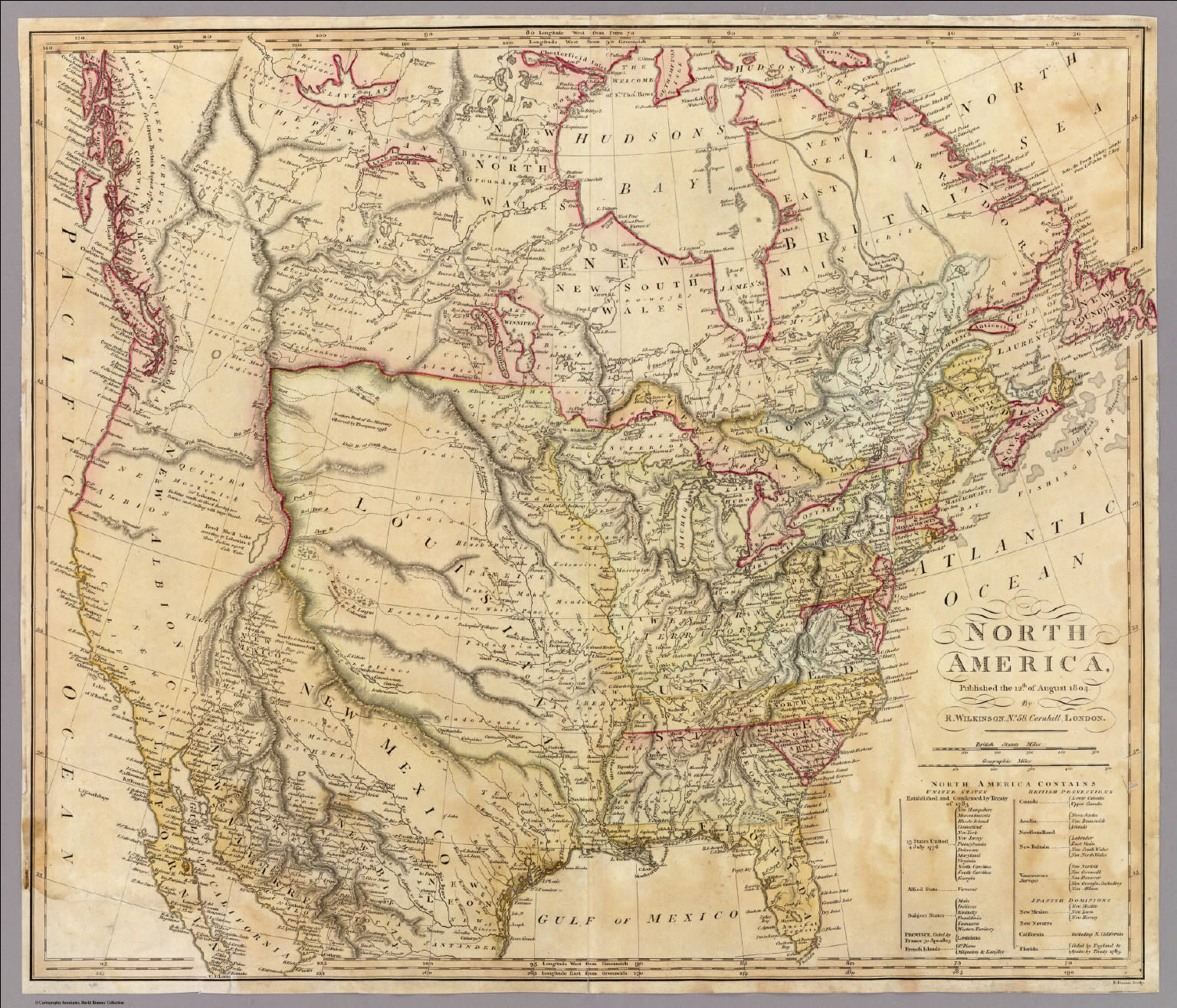
Click the link to see the 1804 Map of North America from the David Rumsey Map Collection
On August 23, 1784, delegates from the unincorporated counties met in Jonesborough to discuss whether or not they would rejoin North Carolina. They voted to become independent. Leaders were quickly elected; John Sevier became governor and a constitutional convention was called in December. The original draft of their constitution forbade doctors, lawyers, and preachers from becoming elected officials, but this was unpopular and this draft was dropped in favor of just using North Carolina’s state constitution.
The following May, just a year after the territory was originally ceded by North Carolina, a delegation petitioned Congress to become the fourteenth state in the union as Frankland. The delegation decided to use the name Franklin as an homage to Benjamin Franklin in the hopes that he might express some support for the new state. Unfortunately, Franklin wrote back that he didn’t know enough about their endeavor to support them, but wished the State of Franklin luck anyway. The final vote to establish Frankland as a state failed with less than the required two-thirds majority.
By December 1785, Franklinia (which had undergone several name changes by this point) was operating as an independent republic. Its issues with North Carolina were never resolved, and so they refused to rejoin their original state. The economy was in shambles; there was no official currency and bartering became the standard exchange. John Sevier himself was paid in deer skins. Citizens were granted a reprieve from taxes while the economy stabilized. A new capital was chosen because Jonesborough was so close to the North Carolina seat of government, and a new constitution drafted.
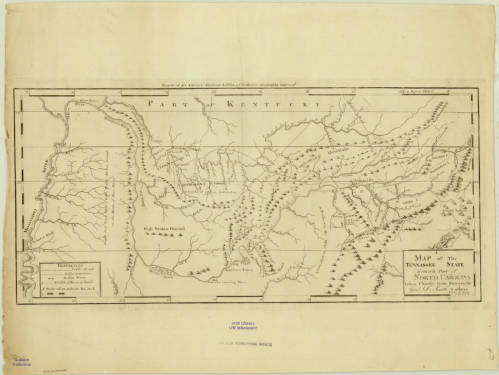
Click the link to see the Map of Tennessee “Formerly Part of North Carolina” 1796 in our Digital Collections
In 1786, North Carolina made Franklinia a new offer: if they rejoined North Carolina, they wouldn’t have to pay any back-taxes. Franklinian delegates refused this offer, which was the beginning of the end. Several key supporters of the movement withdrew and North Carolina began to militarily reunite Franklinia with its state government. Using armed force, North Carolina re-established government facilities alongside the Franklinian courts and jails. Franklinia’s decline took place over several years. In 1787, Franklin began forcibly seizing Native American territory, angering their neighbors. In 1788, three men were killed in a skirmish over John Sevier’s property; the conflict lasted ten minutes before Sevier’s handful of troops were forced to withdraw. Trying to protect Franklinia from the Chickamauga and Chickasaw tribes he had angered in his landgrab, Sevier began negotiating with Spain. North Carolina, resistant to Spanish interference, arrested Sevier. In 1789, the last few loyal Franklinians swore allegiance to North Carolina again. The government of Franklinia was officially and completely dissolved in 1791. Maps of Franklinia are rare because of how short-lived the de facto republic actually was; the AGSL has a single map featuring the state– it is not noted on other maps of the area from this time.
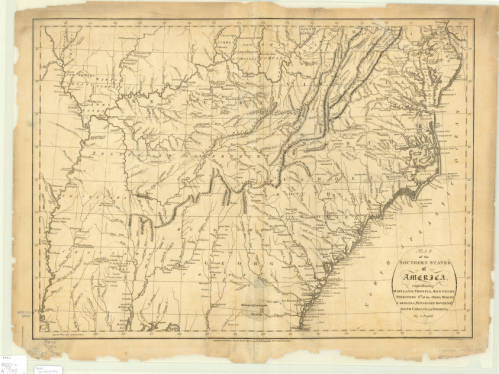
Click the link to see the Map of the Southern States of America in 1795, including territory labelled “Tennessee Government” in our Digital Collections
But after everything it took to reunite the State of Franklin and North Carolina, North Carolina ceded the territory again in 1790 to form the Southwest Territory. This territory would become Tennessee– and John Sevier was its first governor.
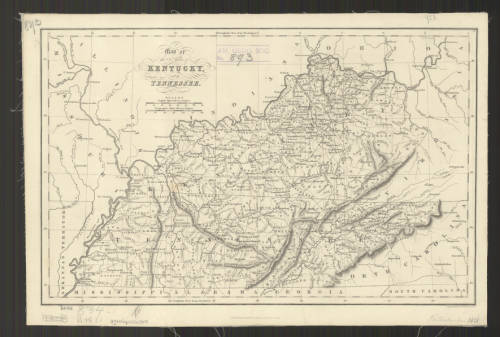
Click the link to see the 1832 Map of Kentucky and Tennessee in our Digital Collections
 American Geographical Society Library