Nurse
The Harriet H. Werley Collection: American Army Nurse Serving in the Mediterranean
by Susan Dykes
Every once-in-awhile a collection comes our way that, at first, looks to be unassuming but upon further investigation turns into quite an interesting story. Last fall, the UWM Archives shared with AGSL, a small collection of photographs taken by the late Dr. Harriet H. Werley (b. 1914 – d. 2002), Distinguished Professor in the UWM College of Nursing. The photographs were included in the Harriet H. Werley Papers, a collection that “documents Harriet H. Werley’s long and distinguished nursing career…” Werley took these photographs while she was serving in the United States Army Nurse Corps (ANC), between 1941 and 1944, in the Mediterranean theater during World War II.
Among the 210 photographs, Werley captured the landscape and places of interest in Algeria, France, Italy and Morocco. Although she was in active service, her photos were primarily taken from a tourist’s perspective. She appears in only one image, at the Pitti Palace in Florence, wearing her Army nurse’s uniform and a delightful smile on her face.
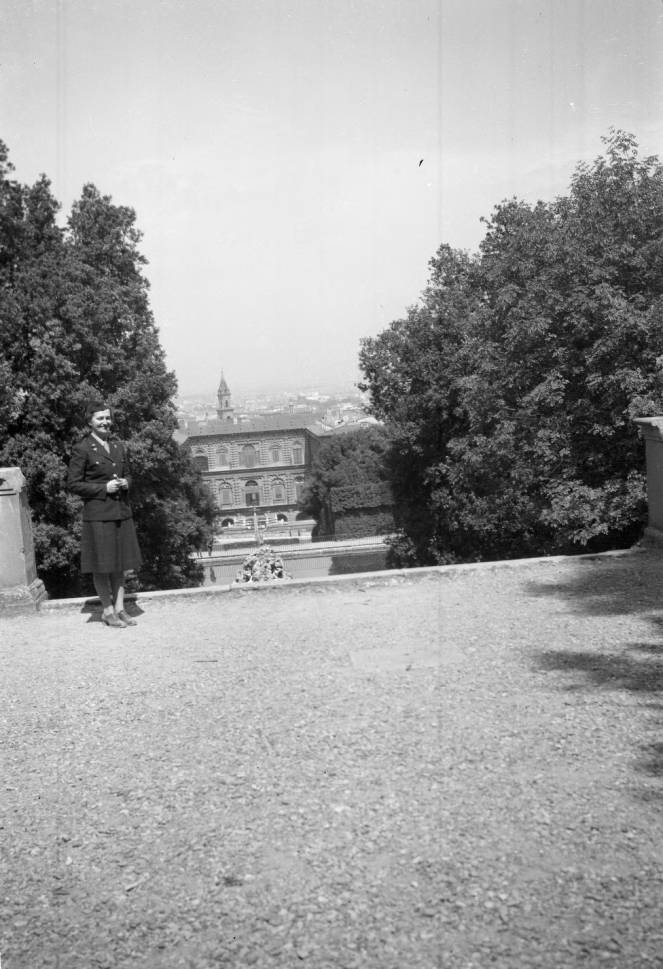
- Italy, Helen H. Werley in front of Pitti Palace in Florence http://collections.lib.uwm.edu/cdm/ref/collection/agseurope/id/6180
Others show a military parade moving through the streets of Oran, Algeria; the Sultan’s Palace in Casablanca, Morocco; ruins of the Great Mosque of Mansoura, Algeria; the Port of Oran and Fort Santa Cruz, Algeria; military nurses touring the gardens at Versailles, France; the waterfront at Cannes, France; an American military Fourth of July fair in Livorno, Italy; an American Military horse race in Pisa, Italy; and many other historic, tourist spots.
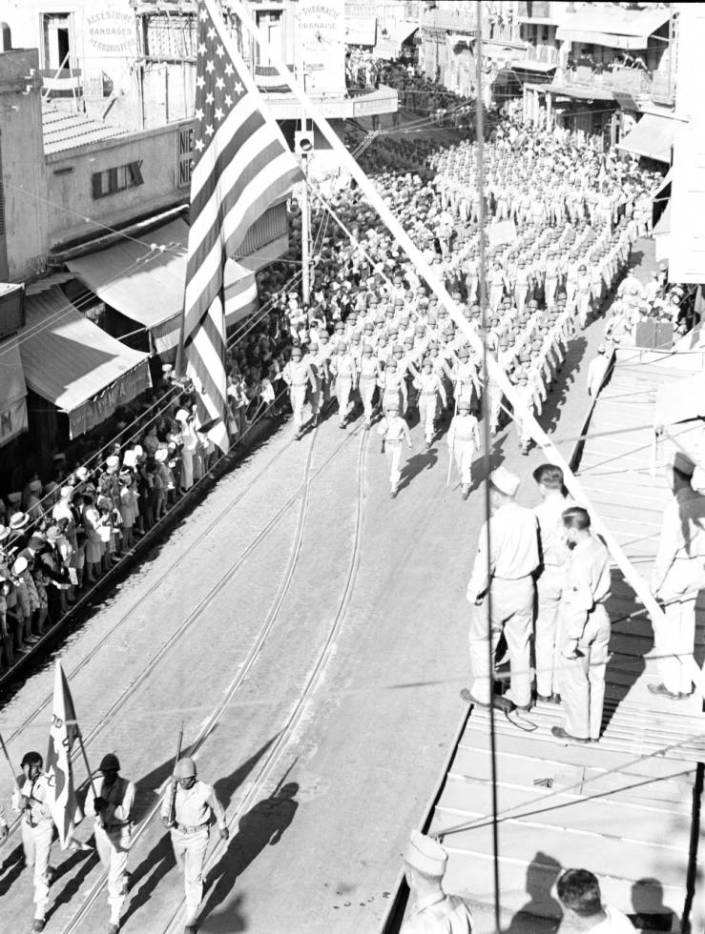
- Algeria, troops marching through Oran street in parade http://collections.lib.uwm.edu/cdm/ref/collection/agsafrica/id/6139
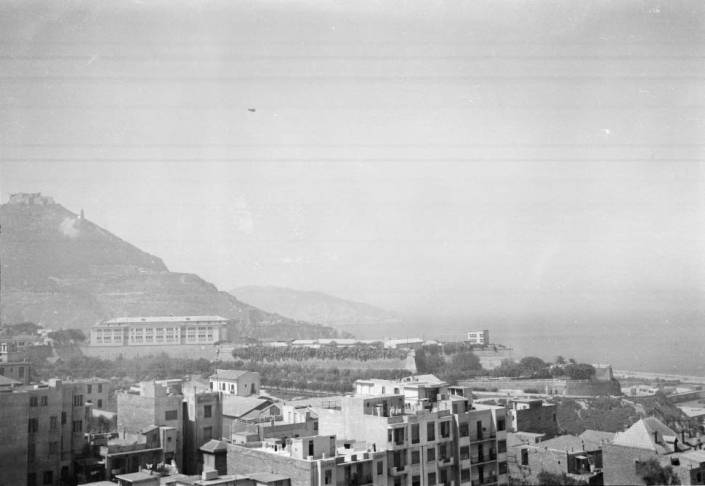
- Algeria, view of Port of Oran and Fort Santa Cruz on hill http://collections.lib.uwm.edu/cdm/ref/collection/agsafrica/id/6176
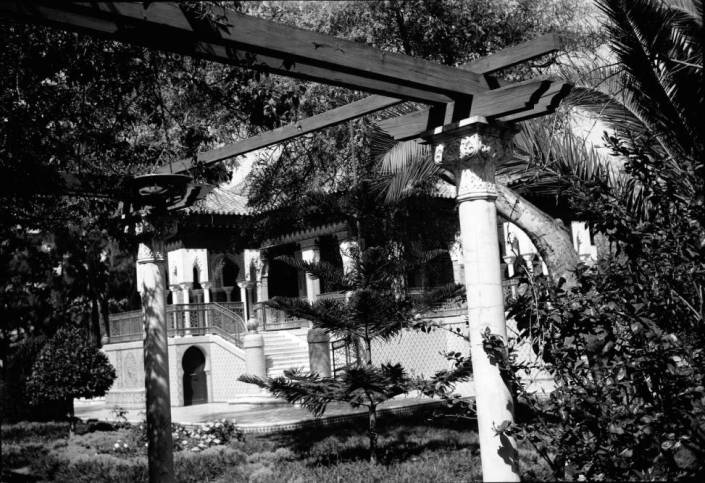
- Morocco, gardens and Sultan’s Palace in Casablanca http://collections.lib.uwm.edu/cdm/ref/collection/agsafrica/id/6146
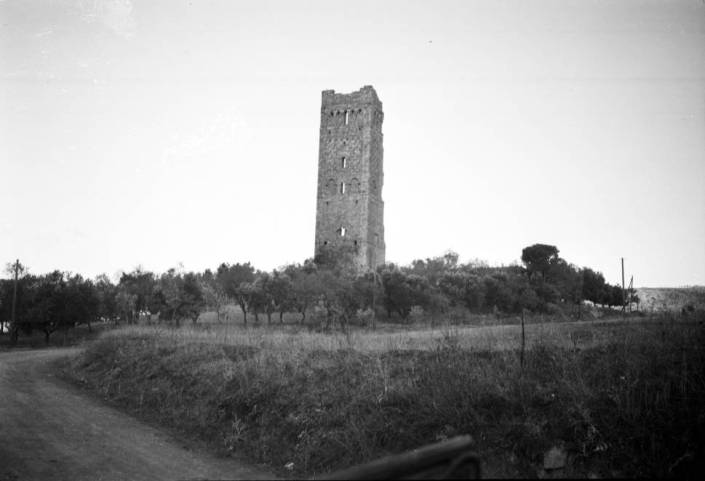
- Algeria, ruins of Great Mosque of Mansoura in Tlemcen Province http://collections.lib.uwm.edu/cdm/ref/collection/agsafrica/id/6145
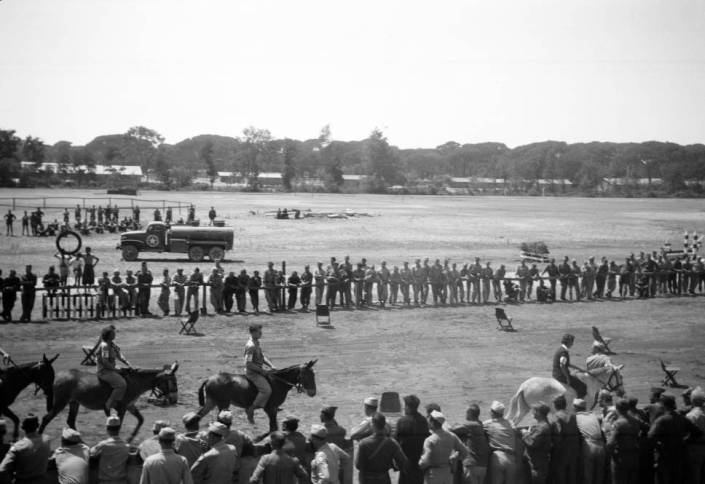
- Italy, American military at horse race in Pisa http://collections.lib.uwm.edu/cdm/ref/collection/agseurope/id/6124
However, even Werley’s tourist eye couldn’t escape the harsh reality of the war. In one photo she captures a cross at the grave of a German soldier buried in Italy. In others she shows how life continued on as people made their way around bombed out buildings in Florence and Livorno, and the bombed out remnants of buildings and abandoned military bunkers in Cannes.
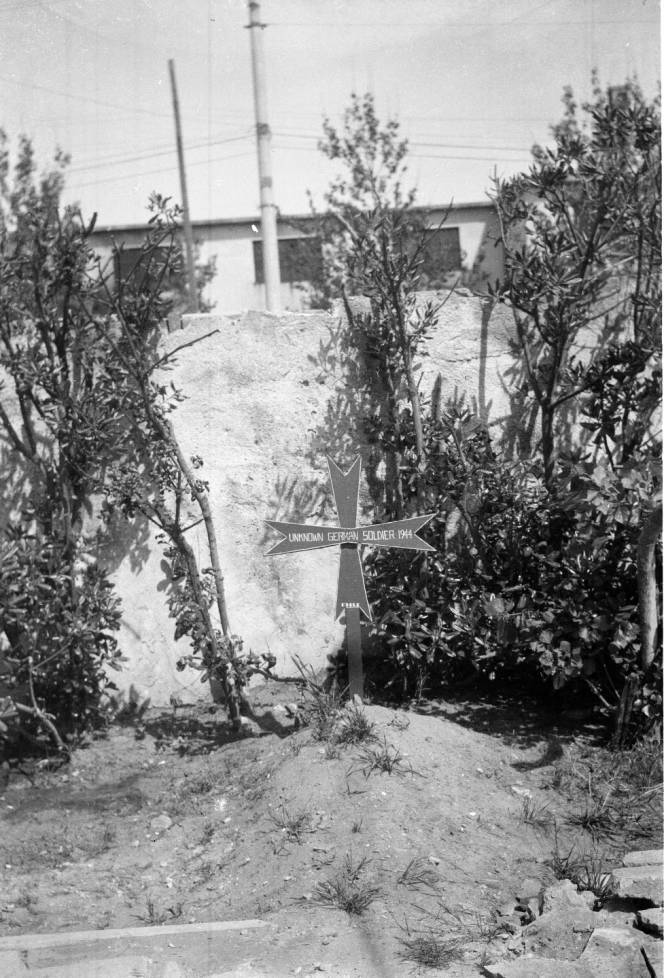
- Italy, grave of German soldier in Livorno http://collections.lib.uwm.edu/cdm/ref/collection/agseurope/id/6122
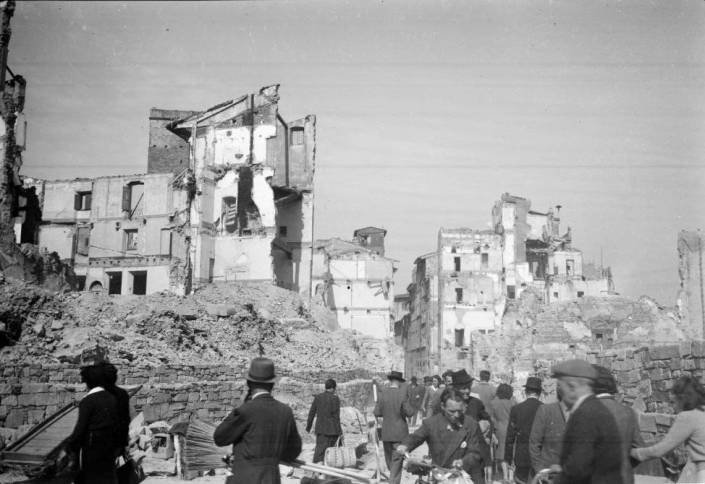
- Italy, people moving through rubble of bombed buildings in Florence http://collections.lib.uwm.edu/cdm/ref/collection/agseurope/id/6178
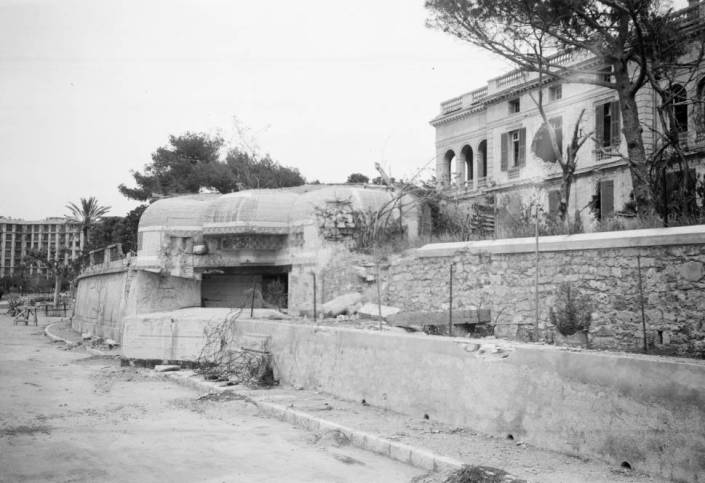
As a whole, the collection provides a sense of Werley’s experience, as an American nurse serving in a foreign land, documenting her travels and touching upon the overarching reason she was there.
What I find most fascinating about Harriet Werley, is her photographs not only serve to document World War II, they also represent a precursor to what will turn out to be Werley’s extraordinary career in nursing research and health care informatics. After the war, Werley worked in the Office of the Surgeon General, was assigned to the Department of Atomic Casualties Studies at the Walter Reed Army Institute of Research, and then she was appointed Chief of the Department of Nursing. She became Chief Nurse for the U.S. 8th Army Headquarters in Korea in 1962 and retired, as Lieutenant Colonel, from the Army Nurse Corps in 1964.
According to the U.S. Army Medical Department, it was at Walter Reed that she became “dismayed” at the lack of research positions and the realization that nurses were not more involved in studies. As a result she decided to concentrate her career on nursing research. After obtaining her Ph.D. in 1969, she promoted nursing research development through faculty and administrative positions at a variety of universities, including the University of Wisconsin – Milwaukee, became founding editor of Research in Nursing and Health and the Annual Review of Nursing Research, and was instrumental in the development of a Nursing Minimum Data Set (NDMS). As described in the Journal of the American Medical Informatics Association, Werley “…became the first nurse informatician even before the field had been named.” While at the University of Wisconsin – Milwaukee, she participated in IBM sponsored conferences to “identify data processing needs in health care and the potential for computer applications.”
This little, unassuming, yet historically important collection, turned out to be originated by a woman who, according to Laurie K Glass RN, PhD, FAAN, Professor Emerita and Director, Center for Nursing History, UW- Milwaukee College of Nursing, “…pioneered the use of computers and informatics in the health care arena.” We are pleased to be able to make available Harriet H. Werley’s images in the AGSL collections.
See all of Harriet H. Werley’s images in the American Geographical Society Library Digital Photo Archive:
See the finding aid for the Harriet H. Werley Papers:
http://digital.library.wisc.edu/1711.dl/wiarchives.uw-mil-uwmmss0284
Sources:
A salute to one of our own. Harriet Helen Werley. (n.d.) U. S. Army Medical Department, Office of Medical History. U.S. Army. Retrieved from http://history.amedd.army.mil/ancwebsite/articles/harrietwerley.html
Ozbolt JG. Harriet Helen Werley, PhD, RN, FAAN, FACMI: Lieutenant Colonel, U.S. Army (Ret.) October 12, 1914—October 14, 2002. Journal of the American Medical Informatics Association : JAMIA. 2003;10(2):224-225. doi:10.1197/jamia.M1276. Retrieved from https://www.ncbi.nlm.nih.gov/pmc/articles/PMC150375/

