John Rae
Remembering Dr. John Rae
By Lauren Maddox
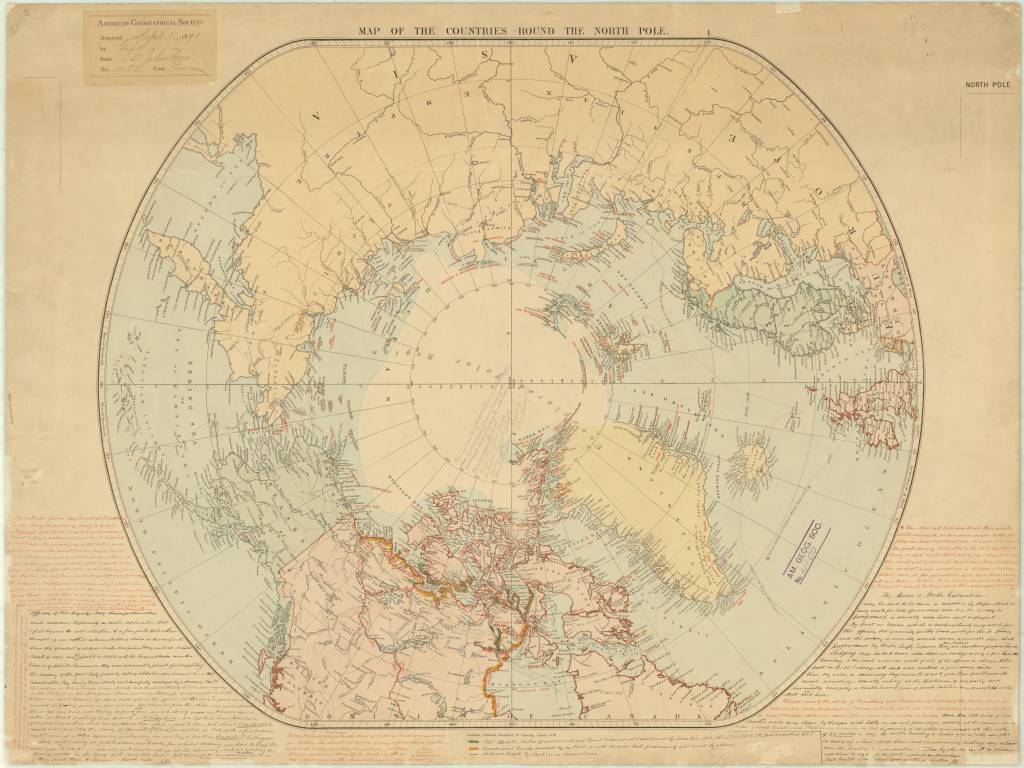
When I first began working for the AGSL and contributing to this blog, I spent a lot of time time with our polar explorers– I wrote about the Lost Franklin Expedition and the hunt to find the ship, and Dr. Elisha Kane’s affair with Margaret Fox, and about the history of the Northwest Passage. Now, as I am graduating from UWM, it seems only appropriate that I should go back to where I started: polar explorers. More specifically, I think its time to spotlight my favorite polar explorer, who has appeared in many of my posts: Dr. John Rae.
Dr. John Rae was the unsung hero in the search for the Lost Franklin Expedition– he was the first to discover what had happened in the tragic wreck that stranded Franklin and his men and report back to the British Admiralty. The discovery ruined his career; the mere suggestion that Franklin and his crew had been forced to turn to cannibalism was offensive to many, and they did not appreciate Rae’s report. It took him years to secure the reward for his crew, and they, unlike the many explorers who went searching for Franklin, were never knighted for their efforts to recover Franklin and his crew.
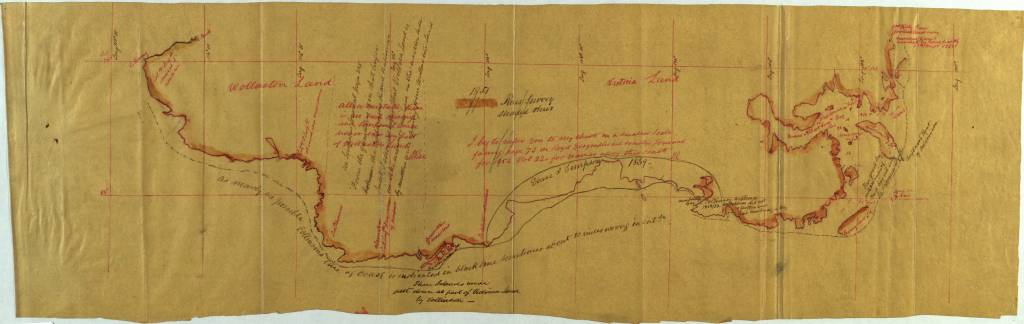
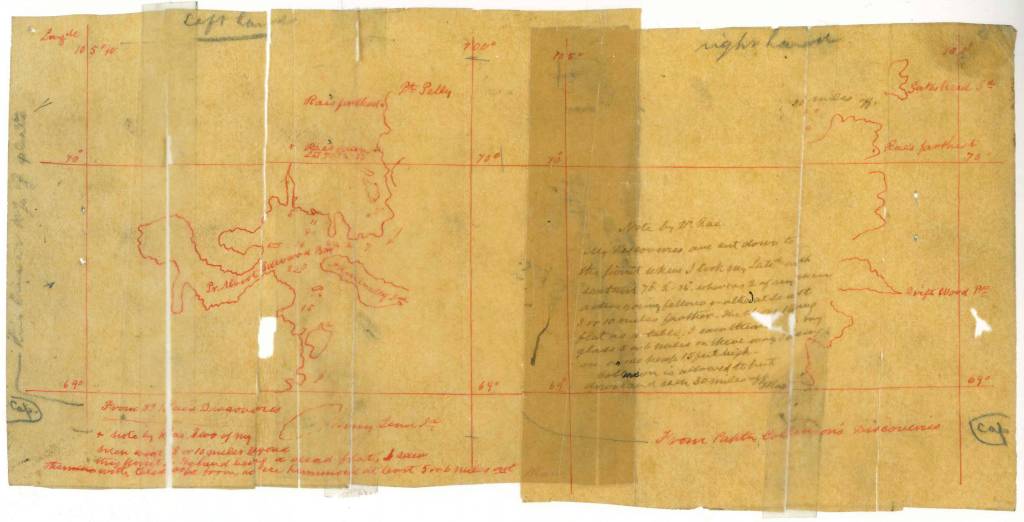
But Rae’s contributions to exploration and cartography went beyond his doomed discovery of the Franklin expedition; he was one of the greatest overland explorers of the 19th century, and has been credited with the true discovery of the Northwest Passage. More than all that, he was a great friend to the American Geographical Society.
Rae’s professional career began at the University of Edinburgh, where he studied medicine. Upon graduating, he was licensed to practice by the Royal College of Surgeons of Edinburgh, after which he signed on with the Hudson Bay Company. While posted in Moose Factory, Ontario, Rae developed many of the qualities that he would become known for as an explorer later in his career: he worked closely with his indigenous colleagues, during a time when many European explorers refused to do so, to learn survival skills and to craft his famous snow shoes. With the knowledge he gained at Moose Factory, he was able to go on long overland expeditions without being slowed down by extra supplies or crew members.
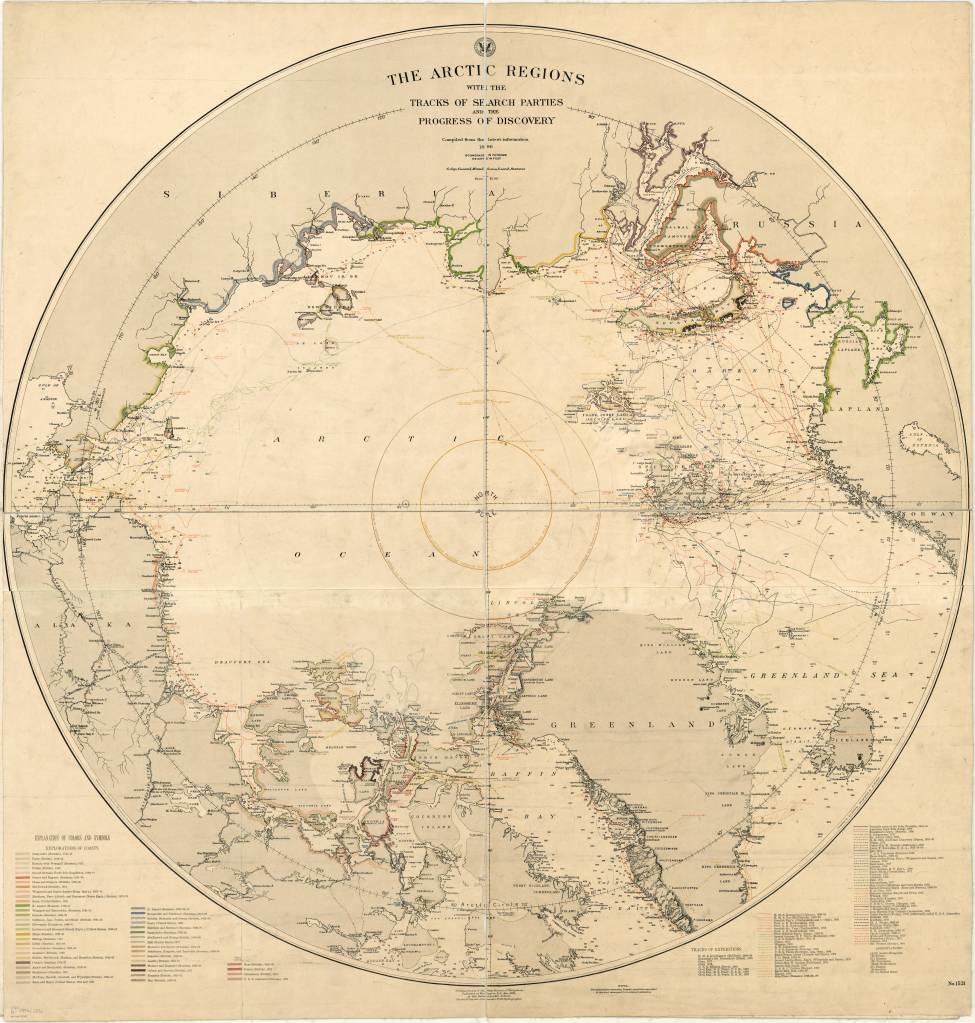
After the Moose Factory post, Rae went on a series of overland expeditions for the Hudson Bay Company. He charted miles of arctic coast, discovering unmapped terrain and recording it for map makers. Many locations were named after him, including the Rae River and the Rae Strait along the Arctic coast.
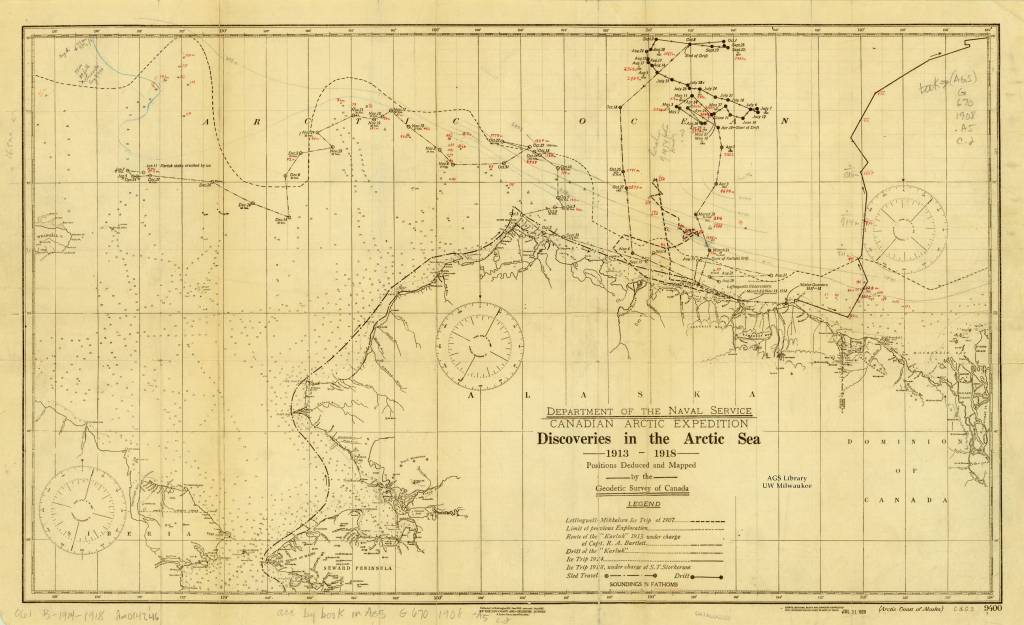
After discovering the fate of the Lost Franklin Expedition, Rae struggled for years to secure the reward money for himself and his crew. Once they had finally been paid, if not recognized or honored, for their discovery, Rae commissioned the construction of a polar exploration vessel; unfortunately, during its brief career as a cargo vessel on the Great Lakes, the Iceberg was lost on Lake Ontario and never found again– like so many other ships lost on the Great Lakes.
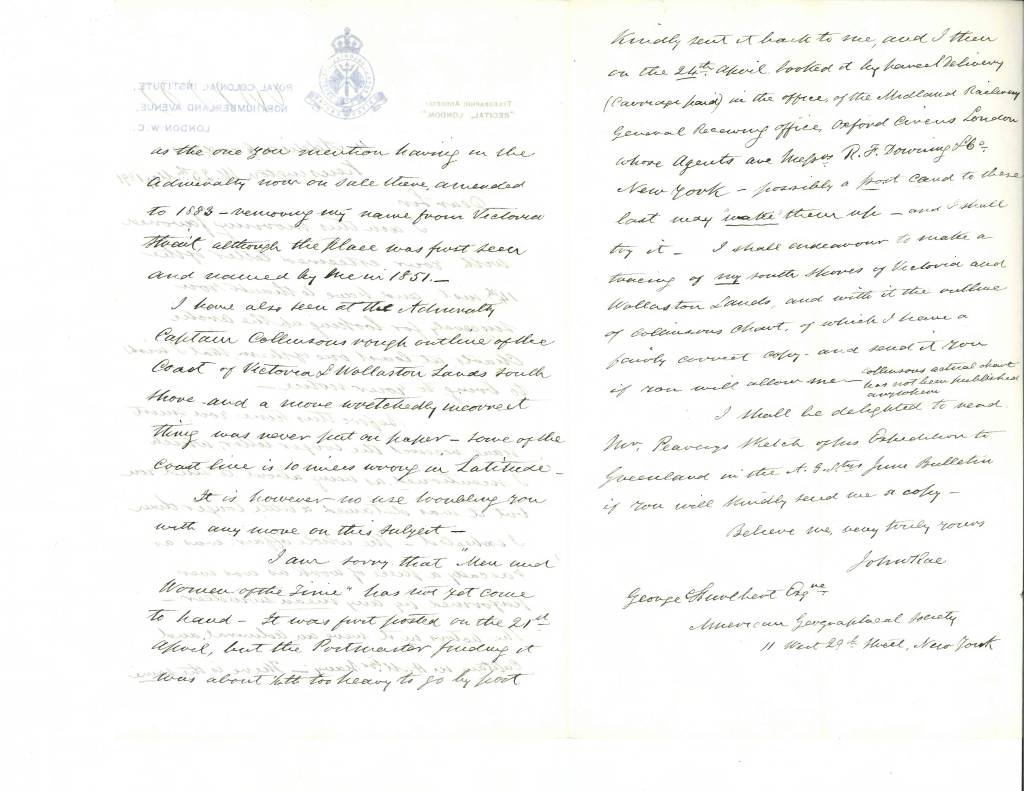
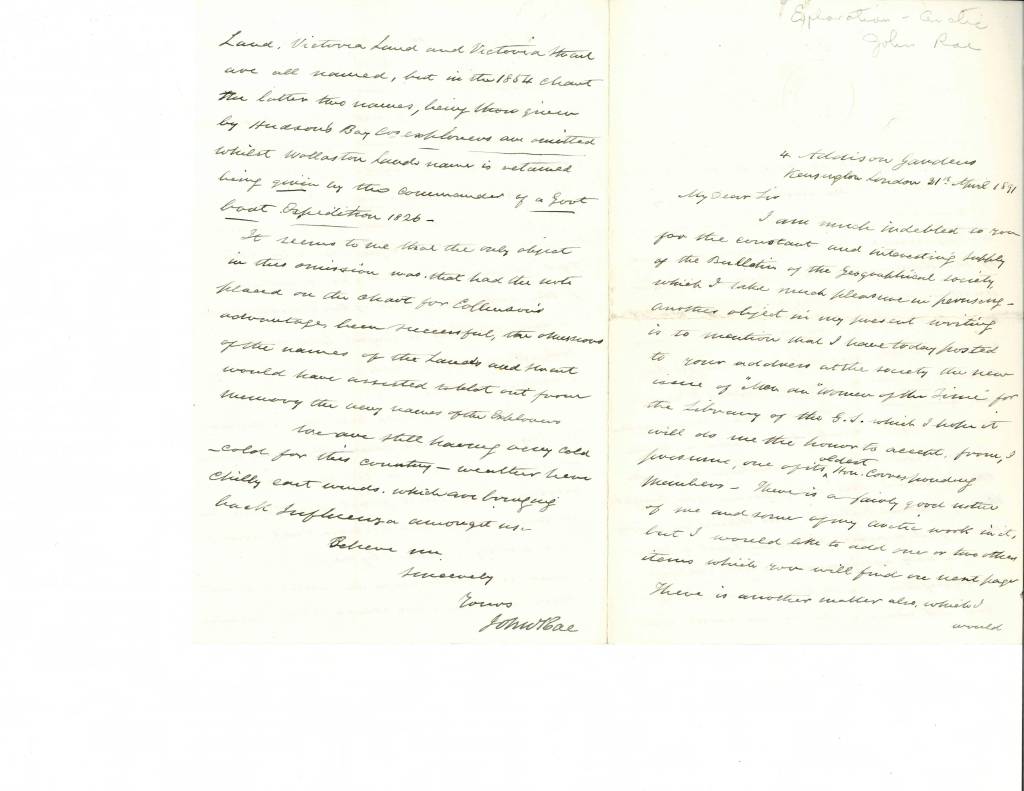
Rae continued to work for the Hudson Bay Company well into his 70s, exploring the Red River area to devise locations for a telegraph line from North America to Russia. At the age of 79, he passed away from an aneurysm and was buried at the St. Magnus Cathedral, where a memorial statue was erected in his honor.
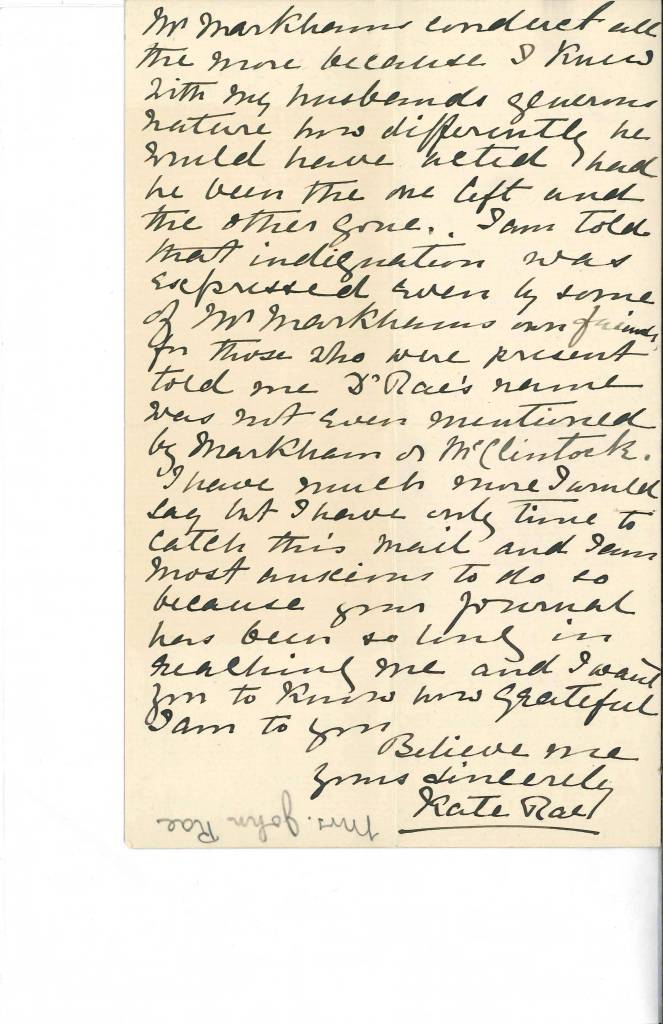
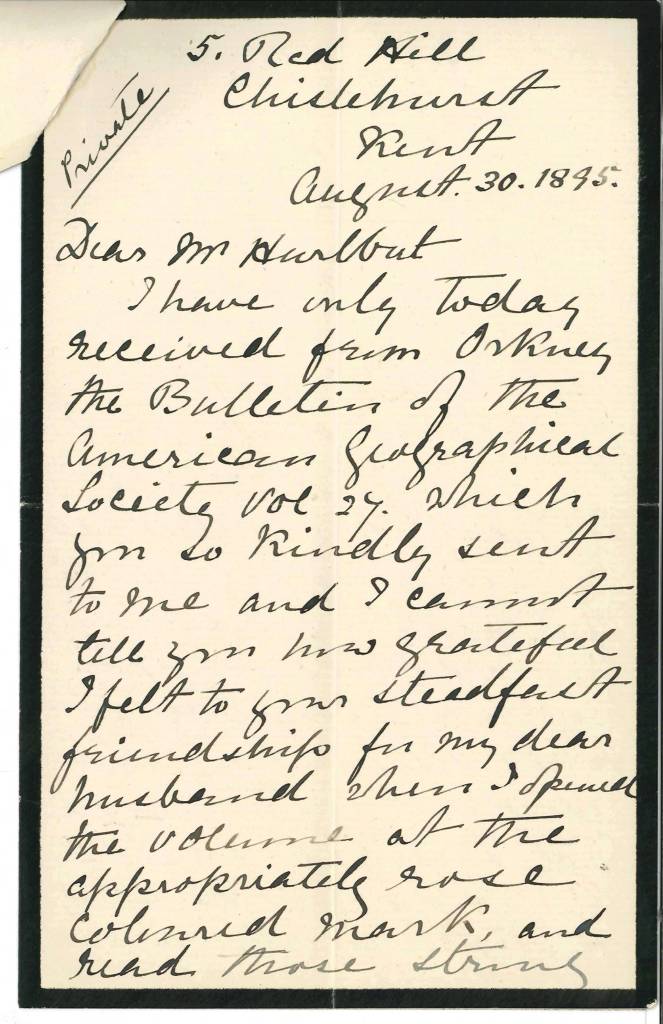
John Rae lived a full and fascinating life. Though he was never honored in his lifetime for his role in discovering the Lost Franklin Expedition, historians remember him for his many other achievements: his extensive exploration of the Arctic and the Northwest Passage; his respect for native communities and their knowledge; and his many, many contributions to the field of cartography. And personally, I will always hold an affection for John Rae, who has been my longest research-interest during my time with the AGSL.
Thank you all for reading!

